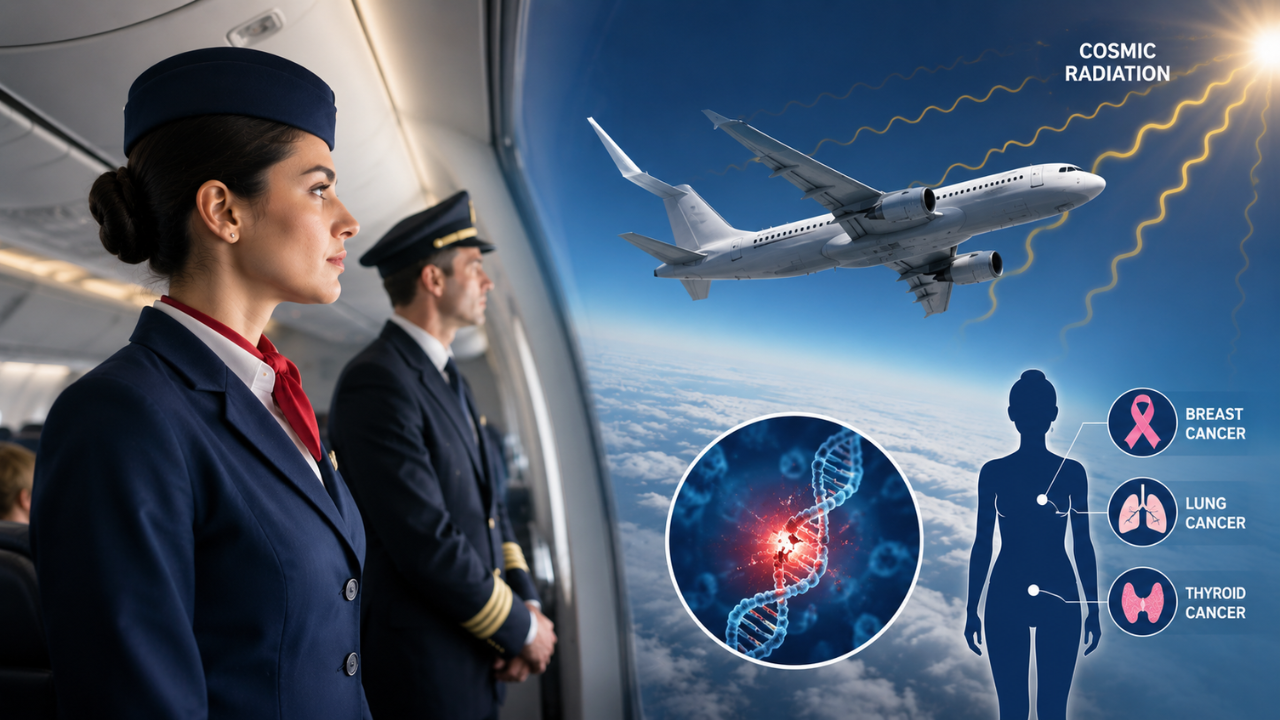
Flying thousands of metres above the ground comes with a form of exposure most passengers rarely think about: cosmic radiation. A new study has found that pilots and flight attendants have the highest and second-highest number of deaths from radiation-linked cancers among more than 500 occupations in the US. The findings pose questions about whether repeated exposure to radiation at cruising altitude could have serious consequences for aircrew health years later. The study, published August 17 in JAMA Internal Medicine, analysed more than 12.7 million US deaths between 2020 and 2024, covering 503 occupations. Researchers examined deaths from cancers known to have associations with ionising radiation, including breast cancer, melanoma, prostate cancer, thyroid cancer, leukemia, lymphoma and multiple myeloma. What Did The Study Find?About 6.9% of deaths among flight attendants and 6.7% among pilots were from the radiation-associated cancers examined.That was higher than the proportion seen in other occupations, including workers with more conventional occupational radiation exposure. Nuclear technologists, for example, ranked 12th in the analysis. The researchers also found significantly higher mortality among aircrew from several individual cancers, including breast cancer, central nervous system cancers, melanoma and prostate cancer. Pilots additionally had higher mortality from leukemia. But this study does not prove that cosmic radiation caused these deaths. The researchers did not have individual radiation-dose measurements for each worker, and factors such as lifestyle, work schedules and other occupational exposures could also contribute.Also read: Groundbreaking Experimental Vaccine May Prevent Pancreatic Cancer From Spreading, Early Trial FindsWhy Are Pilots And Flight Attendants Exposed To Radiation?At ground level, Earth's atmosphere and magnetic field provide substantial protection from cosmic radiation arriving from space. At commercial flight altitudes, there is less shielding.Aircrew therefore receive more ionising radiation during their working lives than most other occupational groups. JAMA notes that aircrew members receive the largest mean annual effective dose of ionising radiation of any occupational group in the US, primarily because of cosmic rays encountered at commercial flight altitudes. The amount varies depending on altitude, latitude, flight duration and solar activity. And unlike a passenger who flies occasionally, pilots and cabin crew can accumulate exposure repeatedly over years of employment.Also read: Does Sunscreen Really Raise Skin Cancer Risk? What The 470,000-Person Study FoundHow Can Cosmic Radiation Cause Cancer? Ionising radiation has enough energy to damage DNA. If that damage affects genes controlling cell growth and repair, it can contribute to the development of cancer over time.This is why radiation exposure has long been considered an occupational health concern for aircrew. Previous research has also found higher rates of melanoma among pilots and cabin crew, although researchers have debated how much of that risk can be attributed to radiation versus other factors. Does This Include Frequent Flyers?The study focuses on occupational exposure accumulated by people who fly regularly for their jobs. A person taking a few flights a year does not receive the same cumulative exposure as someone spending hundreds of hours in the air annually.Harvard Medical School senior author Anupam Jena and colleagues said the findings support considering occupational radiation protections for US aircrew that are appropriate for their level of exposure.