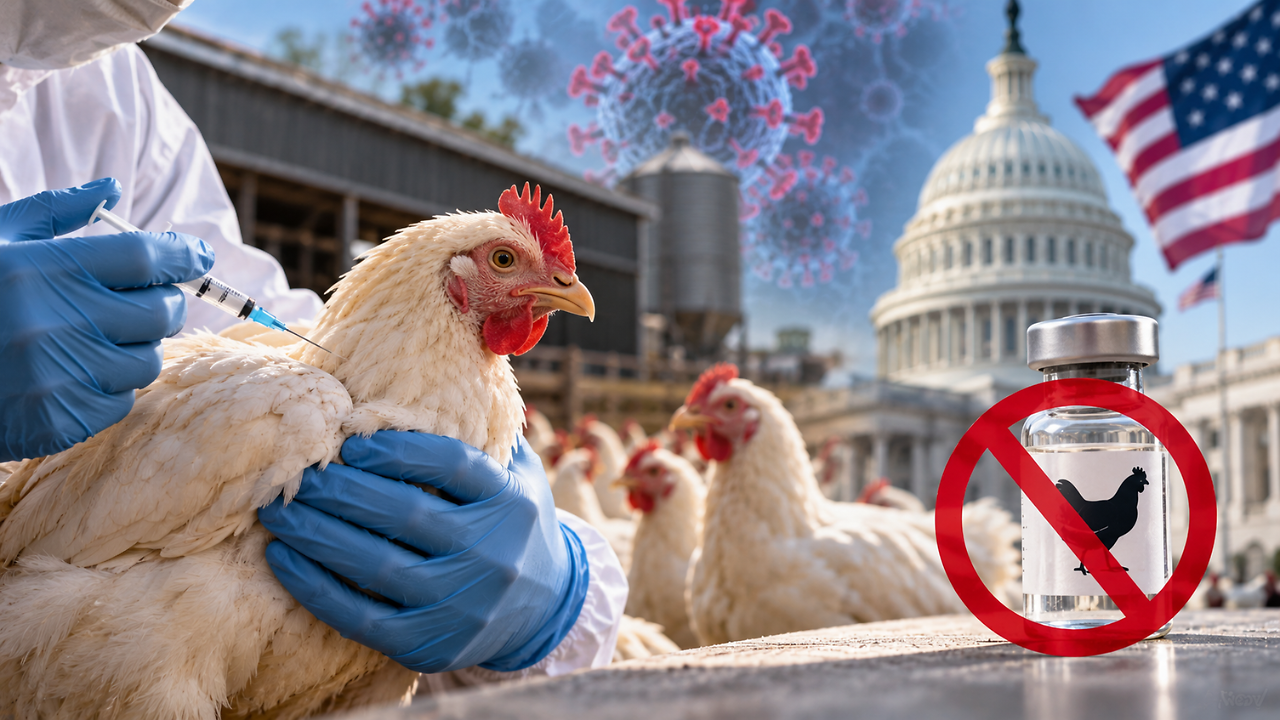
The United States shelved the decision to vaccinate poultry as a bird flu prevention measure due to HHS Secretary Robert F. Kennedy Jr.’s skeptical vaccine views According to a Politico report, the move came as highly pathogenic avian influenza, especially the H5N1 strain, continues to affect poultry farms, threatening bird populations, disrupting egg supplies and raising concerns about transmission to humans. According to Politico's findings, five people who were involved in the decision-making said that Agriculture Secretary Brooke Rollins pulled back an internal strategy for vaccinating poultry and hens that lay eggs. The plan was initially intended to be shared with governments of other countries, industry leaders and other stakeholders to help boost bird flu response. However, it remains unclear whether Kennedy directly asked Rollins to halt the strategy. However, concerns about how poultry vaccination would be received by the health secretary reportedly influenced the decision to keep the document away from wider circulation. Why Was The Poultry Vaccination Plan Shelved? Also read: Pope Leo XIV’s Lung Cancer Diagnosis: When Should You Worry About Lung Nodules?The US Department of Agriculture (USDA) announced a $1 billion bird flu response strategy in February 2025. The plan included $500 million for farm biosecurity, $400 million in financial relief for farmers and $100 million for vaccine research. Despite the resources, an internal poultry vaccination strategy reportedly failed to be executed as planned. One person familiar with the process told Politico that the technical and communication components were already in place by the summer of 2025, but the final document was circulated among fewer than a dozen people. Kennedy has publicly opposed vaccinating poultry against bird flu, arguing that vaccines that do not completely prevent infection could allow the virus to continue evolving. In a March 2025 interview with Fox News host Sean Hannity, Kennedy warned that using vaccines that do not provide complete protection could turn poultry flocks into “mutation factories”. He argued that allowing the virus to circulate among birds could help identify animals with natural immunity. The proposal attracted criticism from veterinary and vaccine experts, who warned that permitting uncontrolled infections could, in turn, increase viral replication and create opportunities for mutations. Dr Gail Hansen, a former state veterinarian for Kansas, criticised the idea of allowing bird flu to spread through poultry populations, calling it a “really terrible idea, for any one of a number of reasons”. She warned that a virus circulating through a flock containing millions of birds would have many opportunities to evolve or mutate, which increases the risk to other animals and farm workers.Also read: US Health Secretary Wants To Expand Vaccine Injury Reporting: Benefits And Risks Explained Can Vaccinating Poultry Help Control Bird Flu? Vaccination is one the effective tools for reducing bird flu infections and containing transmission. However, vaccines do not always provide sterilising immunity, meaning vaccinated animals may still become infected even if they are protected against severe disease. So, if vaccination reduces visible symptoms without fully preventing infection, infected birds may be harder to identify unless monitoring systems are efficient. However, this does not mean vaccination inevitably creates dangerous mutations. The evolution of viruses occur naturally, and vaccination can reduce the number of opportunities for viral replication. The overall effect depends on the vaccine effectiveness, surveillance, biosecurity and how the nature of the virus. Countries including France, China, Egypt and Mexico have used poultry vaccination against avian influenza. In the US, the USDA granted conditional approval for an avian influenza vaccine in 2025, but poultry vaccination has not been adopted yet.H5N1 has infected people following exposure to infected animals, but sustained human-to-human transmission has not been established yet. Hence, preventing infections in poultry remains important for reducing opportunities for the virus to spread and evolve.