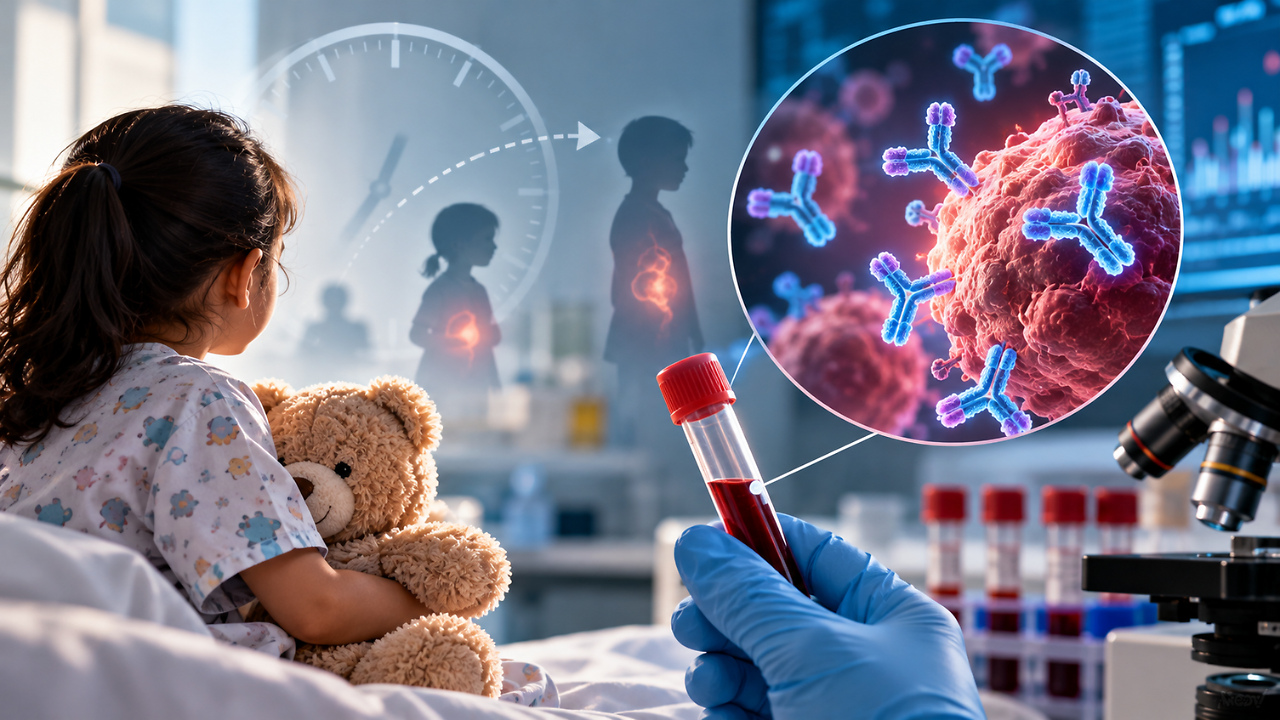
Auto antibodies that target the body’s DNA-repair process may provide researchers with some clues about why some children develop cancer. It has opened new avenues for early detection and appropriate treatment, according to a study published in Frontiers in Immunology recently. A team of researchers from Norway, through the study, identified that children with cancer were more likely to have antibodies that target proteins tasked with repairing damaged DNA. In a separate group of children whose blood samples had been collected years before they developed cancer, those who were later diagnosed were about eight times more likely to carry these antibodies than their peers who remained free of cancer. The findings suggest that these antibodies could be an important marker of early indicator of cancer risk. However, the researchers state that further studies are needed to prove whether the antibodies contribute to cancer development and whether they can reliably predict the disease years before. How Antibodies Interfere With DNA Repair? Also read: Pope Leo XIV’s Lung Cancer Diagnosis: When Should You Worry About Lung Nodules?Antibodies are proteins that are generated by the immune system. They help recognise and neutralise foreign bodies, like viruses and bacteria. Sometimes, however, the immune system produces autoantibodies, which mistakenly target the body’s own proteins. The study found that some children with cancer had elevated levels of autoantibodies against six proteins involved in DNA repair. They are RAD52, NUMA1, ALKBH7, APBB1, UNG and MGMT. DNA repair is essential because cells constantly go through damage that can lead to errors into their genetic material. When these errors are not corrected, mutations may accumulate and gradually contribute to cancer. The researchers proposed an unproven theory that the antibodies might enter cells and bind to protein responsible for DNA repair, interfering with their normal function. Their laboratory experiments provided evidence that these antibodies can enter living cells and localise to a cellular compartment called the TIGER domain. “We showed that many children with various types of cancer have antibodies against some of their own DNA repair proteins. We also demonstrated that such ‘auto-antibodies’ can enter live cells and bind to – and probably inhibit – the activity of these essential proteins,” said corresponding author Dr Ola Myklebost, emeritus professor of molecular oncology at the University of Bergen. If the antibodies do impair DNA repair, they could contribute to the accumulation of genetic damage. However, this mechanism has not yet been conclusively observed in humans. Could A Blood Test Predict Cancer Years In Advance? Also read: Landmark Study Links Air Pollution To Higher Hospital Admissions For Cancers & Mental Health Disorders: LancetTo investigate whether the antibodies appeared before cancer diagnosis, the researchers examined blood samples from 59 children who participated in two British long-term studies: the Avon Longitudinal Study of Parents and Children and Born in Bradford. Half of the children were subsequently diagnosed with cancer before the age of 30, while the other half had not developed the disease. On average, the blood samples from those who later developed cancer had been collected approximately six years before diagnosis. “Although this cohort is small, it was the best we could find internationally,” Myklebost said. He added that children who later developed cancer were about eight times more likely to have antibodies against at least one key DNA-repair protein. The researchers analysed samples from a broader group of 375 healthy individuals and patients, alongside cancer samples from adults and children with sarcoma or acute lymphoblastic leukaemia. Childhood cancers are often biologically different from adult cancers. Unlike many adult malignancies, which can accumulate mutations over decades, paediatric cancers may arise in developing cells with fewer accumulated genetic changes. The researchers believe the immune system could play an important role in some cases. However, the findings do not establish that the antibodies cause cancer. The study also cannot determine how accurately an antibody test would predict future disease in the general population. The researchers are now investigating whether these antibodies affect DNA repair in laboratory-grown cells and plan to study their potential cancer-causing effects in animal models. “At present we are investigating the effect of patient antibodies on the repair of induced mutations in cultured cells. Ultimately, we hope to clone white blood cells that secrete such auto-antibodies, and test for any cancer causing effects in mice to definitively prove our hypothesis,” Myklebost said.