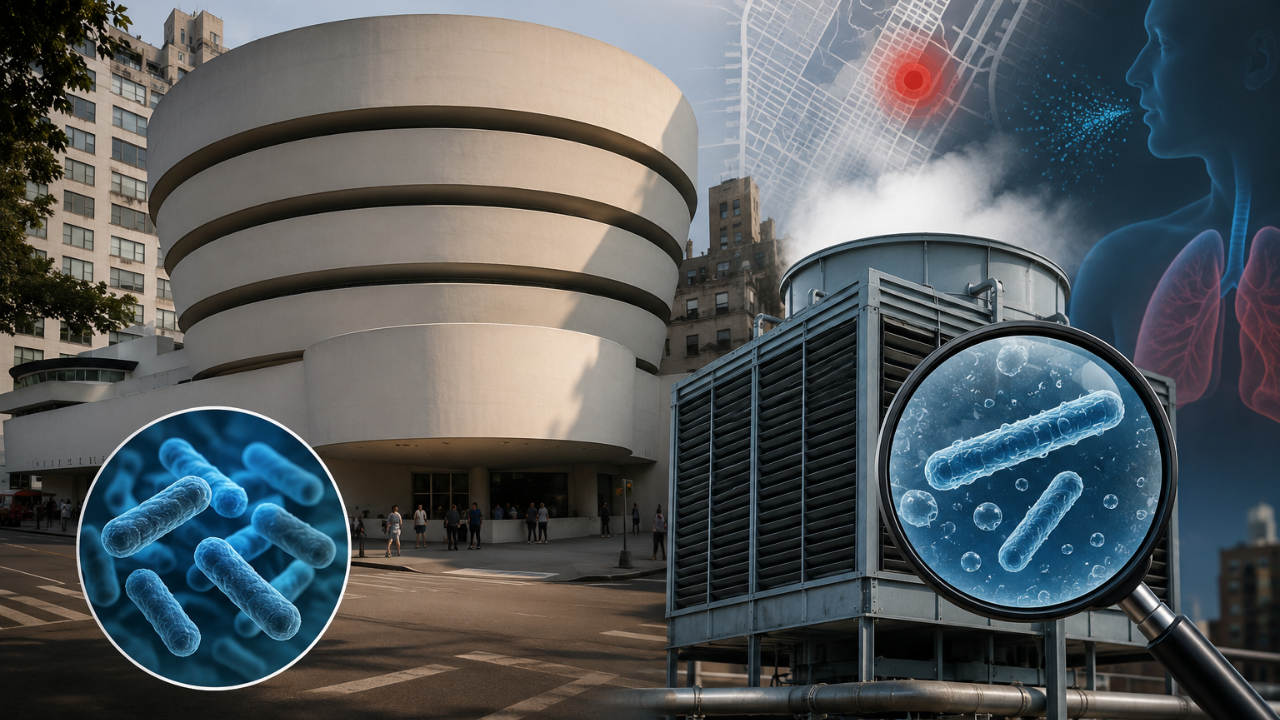
One of New York City's most iconic cultural landmarks has unexpectedly become part of an ongoing disease investigation. Amid the current Legionnaires' disease outbreak on Manhattan's Upper East Side, the officials flagged Solomon R. Guggenheim Museum after Legionella bacteria was detected in its rooftop cooling tower. NYC’s Guggenheim Museum Part Of Legionnaires Investigation While the discovery has raised concerns, authorities stress that the museum has not been identified as the source of the outbreak. The investigation began after a cluster of Legionnaires' disease cases were reported in the Upper East Side neighborhoods of Carnegie Hill and Yorkville. Since then, the New York City Department of Health has expanded testing across the area, identifying 31 buildings with cooling towers that tested positive for Legionella bacteria. The world-famous museum is among those properties. Despite the positive test, officials emphasize that detecting Legionella in a cooling tower does not mean the building caused the outbreak. Further laboratory testing is required to determine whether the bacteria found in a particular cooling tower genetically match the strain infecting patients, a process that can take several weeks.Also read: US Hospital Performs World's First HIV-to-HIV Lung Transplant, Offering Fresh Hope for HIV Patients Guggenheim Museum Takes Immediate Action The museum acted quickly after receiving the test results, disinfecting and cleaning its cooling tower in accordance with city regulations. Health officials said the building does not pose an ongoing risk to visitors, and the museum has remained open to the public. A Guggenheim spokesperson said, “The city has confirmed that there is no additional action needed at this time, and this poses no risk to anyone inside the building,” adding that the museum conducts monthly cooling tower testing and treatment. The spokesperson added, “The safety of our staff and the public are the utmost priority, and we are continuing to follow all city guidelines.” As per NY Post, at least 46 people have been diagnosed with Legionnaires, including 22 who remain hospitalized. New York City Health Commissioner Alister Martin said the bacteria were detected in 31 towers and 19 had already been disinfected. Martin said, “What we have in front of us is 160 cooling towers across this region that we are looking at, and we are not waiting.” Why Cooling Towers Are Breeding Grounds For Legionella? Cooling towers have been recognised as one of the most common sources of large Legionnaires' disease outbreaks as they contain warm water that can allow Legionella bacteria to thrive. Fans in these systems can release fine mists into the surrounding air, exposing people nearby if the water becomes contaminated. This is why New York City requires routine inspection, testing and disinfection of cooling towers, regulations that were strengthened following previous outbreaks in the Bronx and Harlem.Also read: At 2026 NATO Summit, Trump's Neck Rash and Bruised Hand Draw Attention; White House Responds List of Buildings Infected With Legionella BacteriaBesides Guggenheim Museum, here are the other prominent buildings that are currently compromised due to Legionnaires' Disease: 180 East End Avenue1750 York Avenue1660 Second Avenue1438 Third Avenue1511 Third Avenue1551 Third Avenue1071 Fifth Avenue1080 Fifth Avenue1001 Fifth Avenue240 East 82nd Street8 East 83rd Street145 East 84th Street117 East 85th Street125 East 87th Street152 East 87th Street120 East 87th Street501 East 87th Street168 East 88th Street160 East 88th Street1875 Second Avenue1110 Fifth Avenue153 East 78th Street135 East 79th Street300 East 79th Street238 East 81st Street160 East 84th Street114 East 85th Street401 East 88th Street333 East 91st Street354 East 91st Street312 East 95th Street About Legionnaires' Disease Legionnaires' disease is a severe form of pneumonia caused by Legionella bacteria. People become infected by inhaling tiny water droplets contaminated with the bacteria, often released from cooling towers, decorative fountains, or hot tubs. Symptoms typically develop two to 14 days after exposure and include fever, cough, muscle aches, chills, shortness of breath and, in severe cases, pneumonia. Health officials continue to investigate the Upper East Side cluster and are urging anyone who visited the affected area and develops flu-like symptoms or pneumonia to seek medical attention promptly.