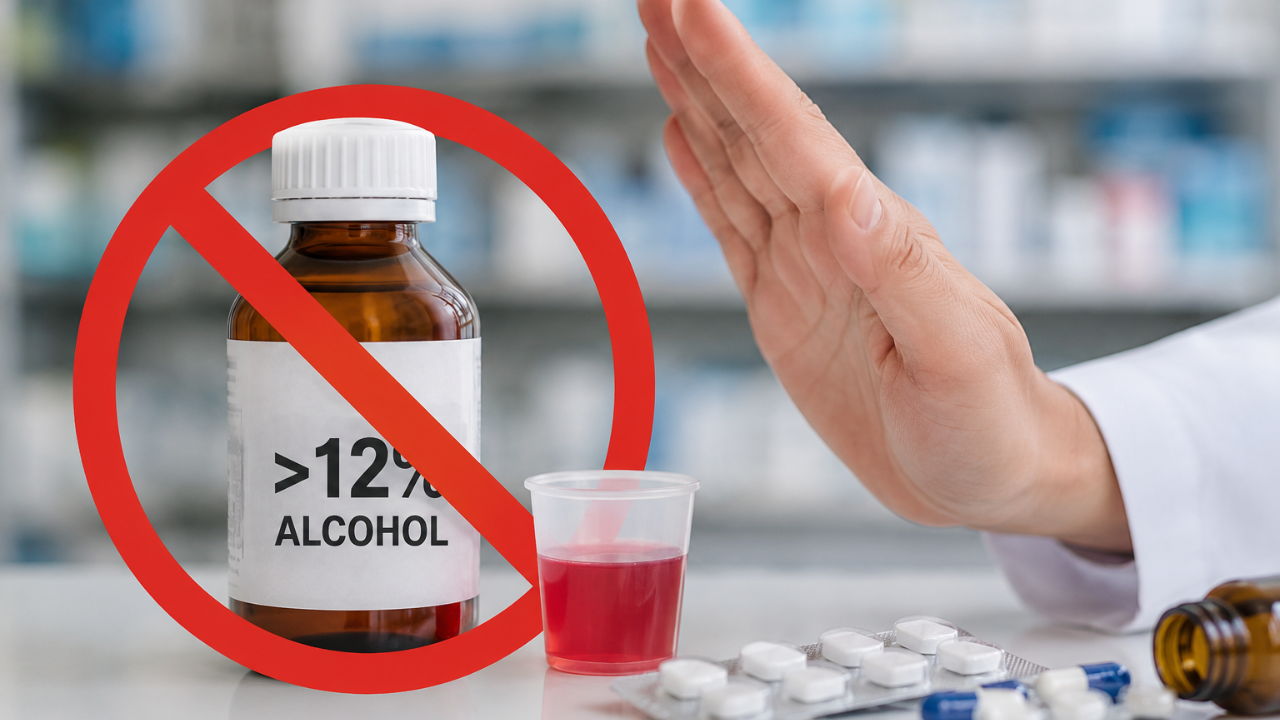
In a major regulatory move, the Centre has tightened the rules governing the sale of oral medicinal formulations with high alcohol content. The move is aimed at curbing the misuse of alcohol-containing medicines. Medicines With Over 12% Alcohol Cannot Be Sold Over The Counter Under the amended Drugs Rules, 1945, medicines containing more than 12% v/v ethyl alcohol and sold in quantities exceeding 30 mL can no longer be purchased over the counter and will now require a valid prescription from a registered medical practitioner. The Ministry of Health and Family Welfare announced that these products have been removed from the exemptions provided under Schedule K of the Drugs Rules. As a result, manufacturers and sellers must now comply with these amendments under the Drugs and Cosmetics Act, 1940, while pharmacies will be allowed to dispense these medicines only against a doctor's prescription. The amended rules also place these formulations under Schedule H1, a category that mandates stricter controls on the sale of medicines. Pharmacies will be required to maintain detailed records of such sales, including the prescribing doctor's details and the identity of the purchaser.Also read: Before You Take Another Paracetamol, Read This: Doctors Explain the Hidden Risks A Step Towards Preventing Misuse Certain oral formulations, including tinctures of cardamom, ginger and other aromatic preparations, have historically been exempt from licensing requirements despite containing alcohol levels that can reach as high as 80% to 90% by volume. Officials said these products have increasingly been susceptible to misuse for intoxication, prompting requests from several state governments for tighter regulation. The Health Ministry emphasized that the new rules are designed to ensure that these medicines remain available for legitimate therapeutic purposes while reducing opportunities for abuse. By bringing them under the regulated pharmaceutical supply chain, the government expects to improve accountability from manufacturers to retailers and strengthen patient safety. Not A Blanket Ban On All Alcohol-Containing Medicines Importantly, the amendment does not amount to a blanket ban on alcohol-containing medicines. Products that contain 12% or less ethyl alcohol, or those packaged in quantities up to 30 mL, are not covered by the new restriction. The revised rules specifically target higher-alcohol formulations sold in larger volumes, which authorities believe carry a greater risk of misuse. The Ministry also issued clarification about homeopathy medicines that tend to contain high amounts of alcohol. It said that homeopathy already has a similar rule in place since 1994. Here is section: 106B. [Prohibition of quantity and percentage. [Inserted by G.S.R. 108(E), dated 22.2.1994 (w.e.f. 22.6.1994).] - No Homeopathic medicine containing more than 12% alcohol v/v (Ethyl Alcohol) shall be packed and sold in packing or bottles of more than 30 millilitres, except that it may be sold to hospitals/dispensaries in packings or bottles of not more than 100 millilitres.] The decision is a push to promote responsible use of medicines while addressing concerns over self-medication and substance misuse. The government maintains that these regulations will help safeguard public health without affecting access to patients who genuinely need these medicines.