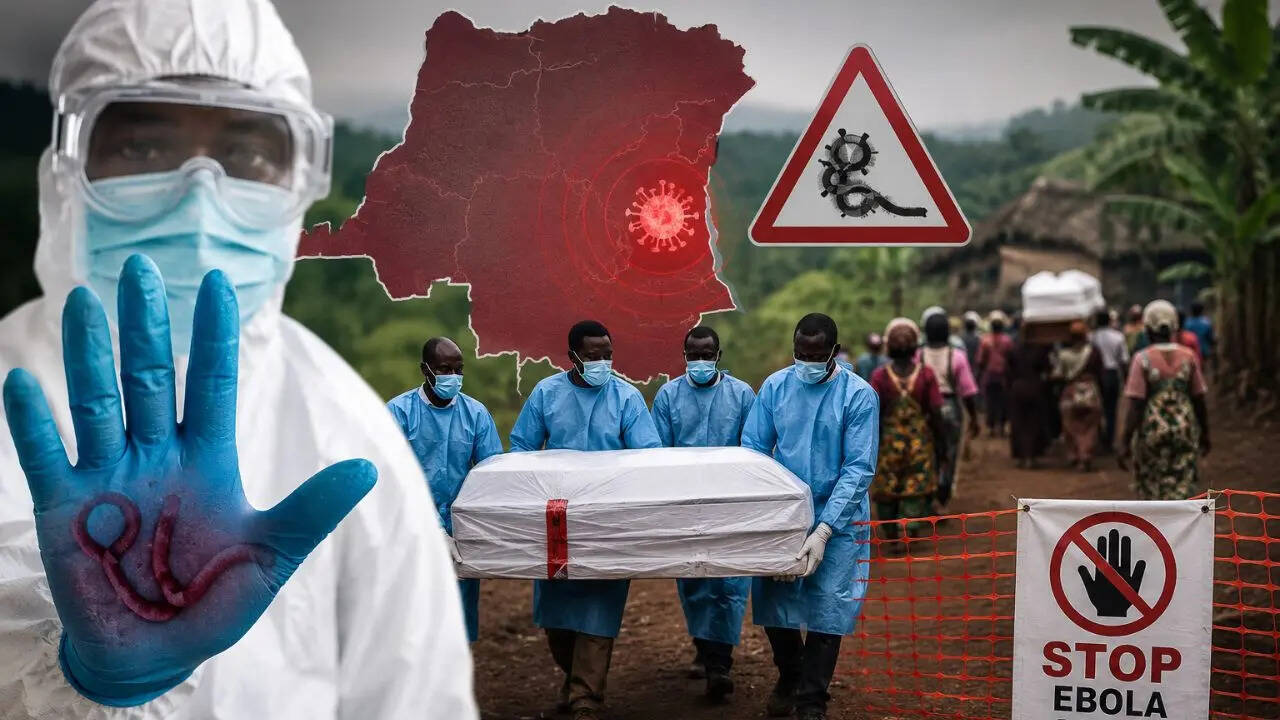
The transport of Ebola victims' bodies across provinces in the Democratic Republic of Congo (DRC) is emerging as one of the major causes of the country's rapidly expanding Ebola outbreak. The United Nations' International Organization for Migration recently issued a warning regarding the same. According to the IOM, the movement of deceased Ebola patients from the place of death to their home communities for traditional funeral ceremonies is increasing the risk of spreading the deadly virus into previously unaffected areas. The warning comes as eastern Congo battles its largest Ebola outbreak in years, caused by the Bundibugyo strain, for which there is currently no vaccine. Why Transporting Bodies Of Ebola Victims So Dangerous? As of July 14, more than 2,000 Ebola cases and over 700 deaths had been reported in Congo and neighboring Uganda. Unlike other infectious diseases, Ebola remains highly contagious even after a patient has died. The virus can be transmitted through direct contact with bodily fluids during funeral rituals, including washing, dressing, or touching the body. In many parts of the country, families prefer to bury loved ones in their ancestral villages, often transporting bodies over long distances, which can unintentionally increase Ebola transmission. The IOM stated that nearly two-thirds of Ebola-related deaths have occurred outside hospitals, making it difficult for trained burial teams to manage bodies safely before they are handed over to families. Also read: WHO Says “Fastest Growing” DRC Ebola Outbreak May Be Four Times Bigger Than Official Count As Cases Near 2,000 "If we don't really manage the dead bodies well, if we don't engage the community. Then it means there will be more spread within the community," said Andrew Mbala from IOM. According to Reuters, the agency said that at least 105 instances where bodies were transported between districts, including one case that was linked to new Ebola infections in Congo's Tshopo province. The IOM said the current outbreak has grown by nearly 70% within two weeks, with more than 40 new cases being reported daily, highlighting how quickly the virus is spreading. The agency stressed that safe and dignified burial practices, developed in partnership with local communities, remain one of the most effective tools for interrupting Ebola transmission. "Ebola remains highly infectious after death, making funeral practices a critical component of outbreak control," the IOM said in its latest update. Community Mistrust Is Another Hurdle Health officials say the outbreak response continues to face significant obstacles beyond the virus itself. Community resistance, misinformation, mistrust, insecurity, and attacks on healthcare workers have hampered contact tracing, safe burials, and treatment efforts. According to the IOM, around one in five people identified as contacts of Ebola patients cannot currently be traced, making it increasingly difficult to contain transmission chains. The outbreak, first officially recognized in May, has already spread across multiple provinces in eastern Congo. Public health experts fear that continued movement of infected bodies, combined with undetected community transmission, could allow Ebola to reach additional regions if containment measures are not strengthened.