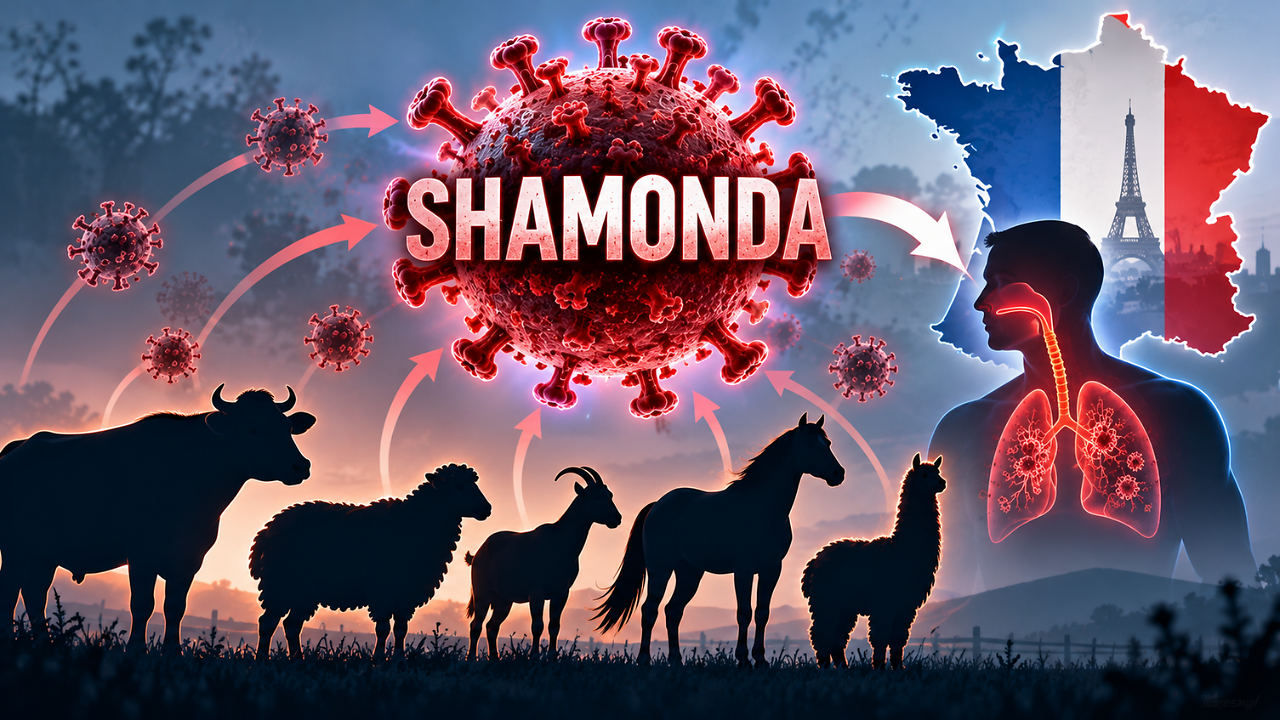
French health authorities have reported the first known human case of Shamonda virus. The infection has only been identified primarily in livestock until now. The patient, who was severely immunocompromised according to reports, died in October while receiving treatment in Lyon. French health authorities have assured that there is no risk of widespread transmission to the general population.The case, reported on October 22, 2026, has sparked concerns as well as further investigation into the virus's ability to infect humans. Authorities believe the patient may have gotten infected in eastern France, where Shamonda virus had been detected in animals during spring and summer. Investigations are in progress to determine how the infection occurred and whether the virus may have caused neurological complications. Should People Be Worried?French health authorities say that there is no reason for the general public to panic. This is a single reported human case, and currently there is no evidence that Shamonda virus is spreading from person to person.French authorities have stated, “No health risk to the general population has been identified to date.”The case is nevertheless attention-worthy as Shamonda virus had not previously been documented in humans. Scientists, therefore, need more research to understand whether this was a rare case of infection or whether the virus has crossed the animal-human species barrier permanently. All About Shamonda Virus Shamonda is an insect-borne virus that belongs to a group called orthobunyaviruses, within the Simbu serogroup. It was first identified in cattle in Nigeria in 1965 and has since been detected sporadically in animals in parts of Africa and Asia. In 2026, viruses similar to Shamonda viruses were identified in livestock in several European countries, including France, Germany and Switzerland. The virus is primarily seen in cattle, although infections have also been reported in sheep, goats, horses and alpacas. In livestock, symptoms may include fever, diarrhoea, lethargy and reduced milk production. Infection during pregnancy may also cause abortions or fetal abnormalities.The route of infection in the French patient has not been disclosed yet. Investigators suspect exposure may have occurred in an area where the virus was circulating among livestock.There is currently no evidence that Shamonda virus spreads aggressively between people. The possibility of human infection and the virus's ability to cause disease in humans require further investigation. The World Organisation for Animal Health has also highlighted the need for continued monitoring because the public health significance of the Shamonda-like viruses in Europe remain incompletely understood. Prevention Of Zoonotic Diseases The Shamonda virus case comes amid growing concerns over the rising threat of zoonotic diseases like Ebola, Marburg and Nipah. More than 60% of human pathogens are zoonotic, while nearly 75% of emerging infectious diseases originate in animals. According to the International Society for Infectious Diseases (ISID), spillover events—where pathogens jump from animals to humans—have tripled since the 1980s, fueled by deforestation, wildlife trade, industrial farming and climate change.In an interview with HealthandMe, Dr Nivedita Gupta, Scientist and Head of the Communicable Diseases Division at the Indian Council of Medical Research (ICMR), outlined the key measures to reduce the risk of future pandemics.Dr Gupta stressed that preventing the next pandemic requires a proactive approach built on integrated surveillance, coordinated data sharing, community participation and stronger indigenous research and development.She said, “I think the first part is that surveillance should be strengthened in all domains, whether it is human surveillance, animal surveillance, wildlife surveillance, as well as environmental surveillance. So, we really need to do integrated surveillance and strengthen all aspects."The second major priority, she said, is ensuring that surveillance data across sectors is connected."If I'm seeing unusual bird or animal deaths, if I'm sitting in human sector, I should also know about it and I should be able to act very timely to understand whether there are any implications on humans and vice versa."Dr Gupta said community participation is another critical pillar of pandemic preparedness."I think we really need massive community sensitization. And community should be our eyes and ears because there are many people who live in remote areas, who live in forest fringes, and they might be seeing many unusual things happening like sudden deaths among animals, carcasses."