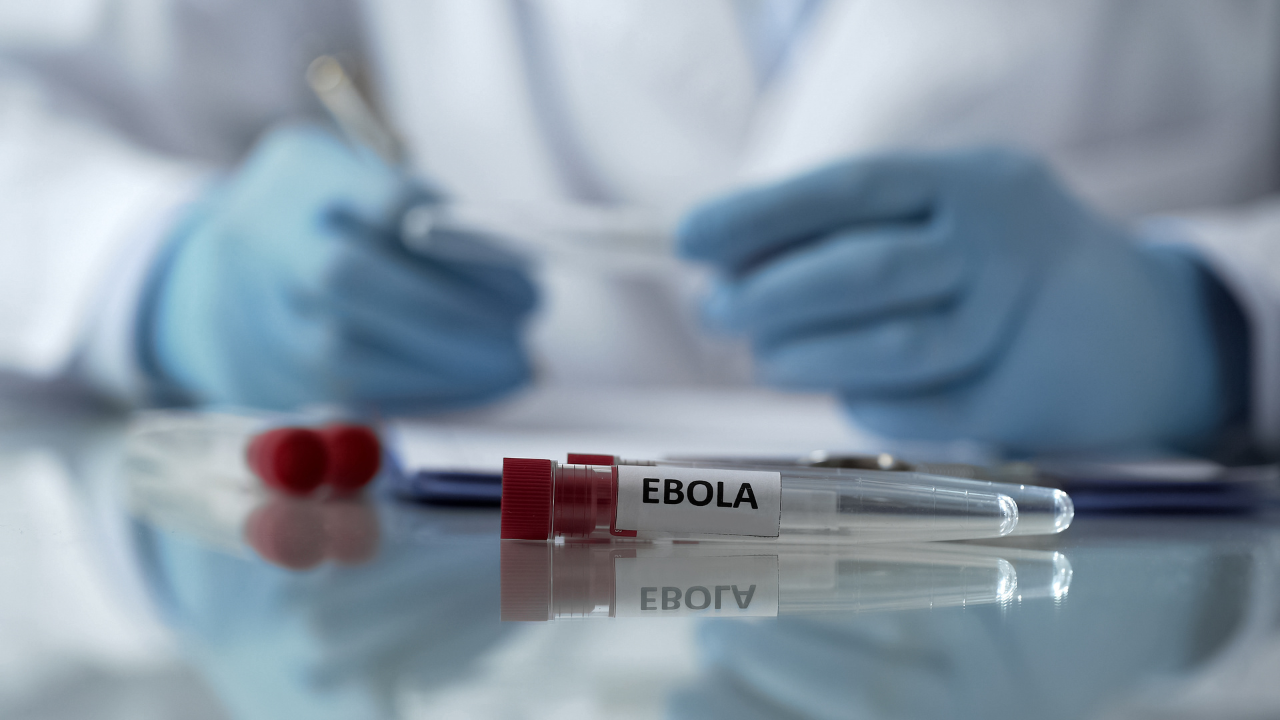
A U.S. humanitarian worker in the Democratic Republic of the Congo (DRC) has tested positive for Ebola, raising fresh concerns as the country struggles with one of the worst Ebola outbreaks. US Humanitarian Worker In DRC Tests Positive For Ebola On Friday, the U.S. Centers for Disease Control and Prevention (CDC) confirmed, saying it is working closely with the individual's employer, U.S. government health agencies, and Congolese health authorities to prevent further transmission by tracing contacts to identify people who may have been exposed. According to reports, the infected individual was working for a humanitarian organization in eastern Congo, where the outbreak has continued to spread despite ongoing response efforts. The CDC has not released details about the patient's identity or condition but emphasized that contact tracing and public health measures are underway. A spokesperson for the U.S. State Department said it is aware of the case and is assisting the affected American. The spokesperson said, “A U.S. citizen working for a humanitarian organization in the Democratic Republic of the Congo has tested positive for the Bundibugyo strain of the Ebola virus. The CDC is working with the patient's employing organization, other federal agencies and partners in the Democratic Republic of the Congo to help prevent further transmission and identify high-risk contacts.” The health regulatory body further said, “The risk of Ebola spreading in the United States remains low.”Also read: Ebola In DRC Is Still In ‘Expansion Phase’: WHO Doctor Opens About Major Challenges In Containing The Outbreak Ebola Outbreak In DRC: Latest Updates The case comes as the Democratic Republic of the Congo faces an escalating Ebola crisis. According to the Africa CDC, the outbreak has now reached 1,830 confirmed cases and 648 deaths, making it the fastest-growing Ebola outbreak ever recorded on the continent. The outbreak was officially declared on May 15, 2026, and has spread across multiple provinces in eastern Congo. Health officials say this outbreak is particularly concerning because it is caused by the Bundibugyo strain of the Ebola virus, a rare variant for which there is currently no approved vaccine or specific antiviral treatment. WHO Says Actual Number Of Cases Could Be Higher The World Health Organization (WHO) has also warned that the official case count may significantly underestimate the true scale of the outbreak. WHO modeling suggests that actual infections could be two to four times higher than reported because many cases are not being detected. Nearly 80% of newly identified infections in some of the hardest-hit communities cannot be linked to known Ebola patients, indicating widespread community transmission. The agency also reported that about 70% of deaths early in the outbreak occurred outside treatment centers, making surveillance and contact tracing even more difficult. WHO Emergencies Director Chikwe Ihekweazu told Reuters, “Eighty percent of the new patients confirmed are coming outside of known contact lists” in Bunia, the epicenter of the outbreak, highlighting widespread undetected transmission. He also warned, “The true scale of the outbreak is likely two to four times larger than the official figures suggest.” The latest case highlights the dangers faced by frontline aid workers and underscores the urgency of strengthening outbreak control measures before the virus spreads further. With no approved vaccine for the Bundibugyo strain and transmission continuing in several provinces, global health officials say rapid detection, isolation, and international cooperation remain essential to bringing the outbreak under control.