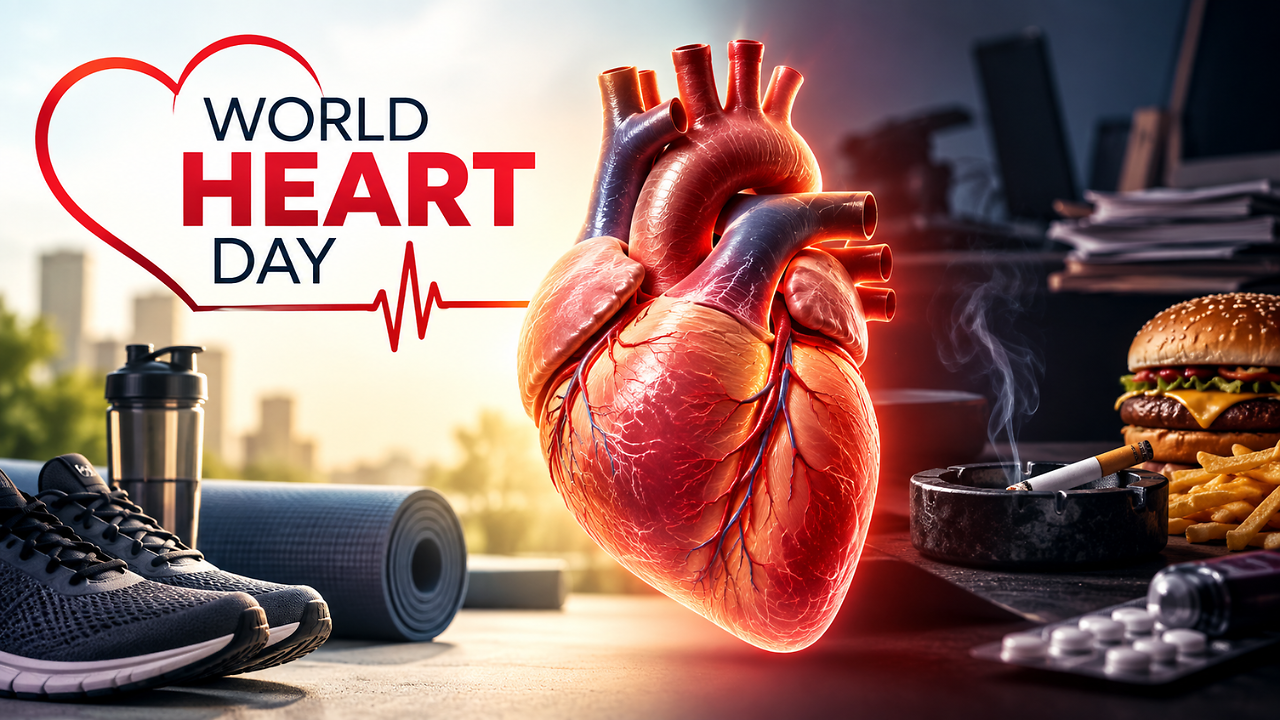
Heart attacks were largely seen as a disease of older age. But lately cardiologists have been increasingly treating patients in their 20s and 30s, including people who appeared healthy, exercised regularly and had no obvious warning signs. One of the youngest patients treated by Dr Zakia Khan, Director – Interventional Cardiology, Fortis Hospital, Mumbai, was just 18 years old. Dr. Khan told HealthandMe that the young man was a heavy smoker and developed chest pain, which he initially ignored. “At such a young age, people often do not think of chest pain as a possible heart problem, which can delay treatment,” Dr Khan said. Dr Girish B Navasundi, Cardiologist, Apollo Hospitals, Bangalore, also told HealthandMe that he has treated an 18-year-old college student with a 100% blockage in one of his coronary arteries. Dr. Navasundi revealed that the patient smoked and used recreational drugs. These cases highlight a grim reality that being young does not make a person immune to heart disease. On World Heart Day, we spoke to cardiologists about their young heart attack patients, the biggest red flags they saw, and what their advice for young people about maintaining a healthy heart. Heart Attacks Are On The Rise Among Young People Smoking remains an important reason, but doctors say it is rarely the only factor. Dr Khan says she commonly sees a combination of various factors. Experts also say that a person can look healthy on the outside while carrying several cardiovascular risk factors underneath. She said, “Smoking is one of the common risk factors I have seen in younger patients. Along with this, family history of premature coronary artery disease and an unhealthy diet, particularly one high in junk food and trans fats, can significantly increase risk. Some patients may otherwise appear healthy.” Dr Navasundi says many young patients appear well and may even report having no symptoms. But several lifestyle factors can contribute to risk. “Most of them have four lifestyle factors in the form of stress at work, smoking, improper sleep, lack of physical exercise as some of the precipitating factors for heart attack. Also at least one third of them have had abnormally high cholesterol, blood sugar or blood pressure,” he said.Also read: Inflammation May Be Quietly Changing Your Heart: Study Finds 43% Higher Risk Of Heart Attack & Stroke Symptoms May Not Look Like A Heart Attack According to the doctors, one of the biggest problems among younger people is that they don't recognise their symptoms as a cardiac problem. Chest pain is a common symptom, but young patients may dismiss it as acidity, gas, indigestion or even muscle pain. “Many young people describe it as acidity, gas or indigestion and do not take it seriously. Some ignore the discomfort altogether, assuming it will settle on its own. This can delay medical attention,” Dr Khan said. Dr Navasundi has seen an even wider range of symptoms. “Common symptoms that they’ve had is uneasiness in the chest, centre of the chest, in the form of burning or choking or as pain, gas, not able to burp or tightness in the chest. Some of the people have had slightly unusual symptoms such as pain only in the left arm or both arms or upper back without having pain in the front of the chest.” Other patients, he said, have reported excessive tiredness, jaw pain, a sensation of something being stuck in the throat, or a feeling of gas and not being able to burp. The problem is compounded by the misguided belief that heart attacks happen to older people. Young adults may therefore wait for symptoms to become severe before seeking help, which may lead to preventable fatalities.Also read: Your Heart After A Cardiac Event: What Recovery Really Looks Like Sometimes It Could Be Genetic The experts also say that not every young heart-attack patient may arrive with an obvious lifestyle explanation. Dr Navasundi says some patients have clotting disorders, familial hypercholesterolaemia or a strong family history of premature heart disease. “Some young people truly have unconventional risk factors like clotting disorders, familial hypercholesterolaemia, that means very high cholesterol from a very young age, and a strong family history of premature heart disease even when these people have a very disciplined lifestyle including eating very healthy, exercising very well, sleeping well. In spite of that, their genetic make-up, the gene and family history make them more vulnerable.” Dr Khan similarly emphasises that family history can be a warning sign even when someone feels completely healthy. “A person may feel completely healthy but still carry an inherited tendency towards cardiovascular risk. Knowing your family history can help you identify the need for earlier screening and lifestyle changes.”Also read: How To Reduce Heart Disease Risk Naturally: Diet, Exercise & Lifestyle Tips Can You Be Fit And Still Be At Risk? Regular exercise is beneficial for heart health, but doctors caution against treating gym habit as proof that the cardiovascular system is healthy. Exercising everyday is not enough to believe that your heart is completely healthy. “Going to the gym does not automatically mean that a person has no cardiovascular risk. People can overlook smoking, family history, high cholesterol, blood pressure, or an unhealthy diet. Fitness should not be judged only by how much one can exercise,” Dr Khan said. This is noteworthy for young adults who exercise intensely but do not know their blood pressure, blood sugar, or cholesterol levels. Dr Khan recommends a baseline health assessment with a family history of early heart disease or other risk factors before undertaking very intense training.Also read: Stopping Ozempic, Wegovy, Mounjaro Linked To 22% Higher Heart Attack, Stroke Risk: Study If You Are Going To Engage In Intense Exercise... Dr Navasundi recommends that healthy young adults who are planning to begin intense gym training, marathon running or strenuous recreational activities undergo a comprehensive cardiovascular and lung-function test after consultation with a cardiologist. Dr. Khan said, “A baseline health check is important, especially for someone with a family history or other risk factors. Blood pressure, blood sugar and cholesterol should be assessed, and any symptoms should not be ignored. It is better to understand your cardiovascular risk before starting very intense training.” Depending on the person, a cardiologist may recommend tests like an ECG, echocardiogram, stress treadmill test, lipid profile, blood sugar and other investigations. In people with a strong family history of premature disease, further testing may sometimes be considered.Also read: Preeclampsia May End With Pregnancy. Your Heart Risk May Not Cardiologists Reveal An Alarming Heart Attack Pattern Dr Navasundi says the biggest change he has observed over his three-decade career is the age at which heart attacks are occurring and the severity of disease in some young patients. He said, “Compared to my early career I see much younger patients right from the age of 20 onwards having heart attacks and much larger number of heart attack patients. Patients are younger these days. At least 25% of my heart attack patients are less than 40 years of age and close to about 40% of our heart attack patients are less than 50 years of age.” He also says he is seeing recurrent heart attacks in young people, multiple blockages and, in some patients in their 30s, three-vessel disease. He added, “Many young people are having severe damage during the very first heart attack compared to people in earlier years.” Dr. Khan said that young cases are showing much earlier than they expected. She said, “I have been seeing this trend of heart attacks occurring in younger patients, sometimes nearly a decade earlier than what we traditionally expected, for the past 10 to 15 years. The increasing presence of risk factors such as smoking and unhealthy dietary habits in younger people is concerning.” Three Things Young Adults Should Not Ignore Dr Khan has three simple messages for people in their 20s and 30s: “First, age does not completely protect you from heart disease. Second, never dismiss chest discomfort as acidity without considering other possibilities. Third, know your family history and get a baseline health check, particularly if you smoke, have risk factors or are planning intense exercise.” Dr Navasundi urges young adults to know their numbers, including blood pressure, heart rate, blood sugar and cholesterol, rather than simply being told that their results are “normal” or “abnormal”. His final message is that heart health should not become a concern only after a cardiac event. He added, “So live with sense of vulnerability and responsibility to prevent heart disease in your early life. Know your family history, know your numbers.”