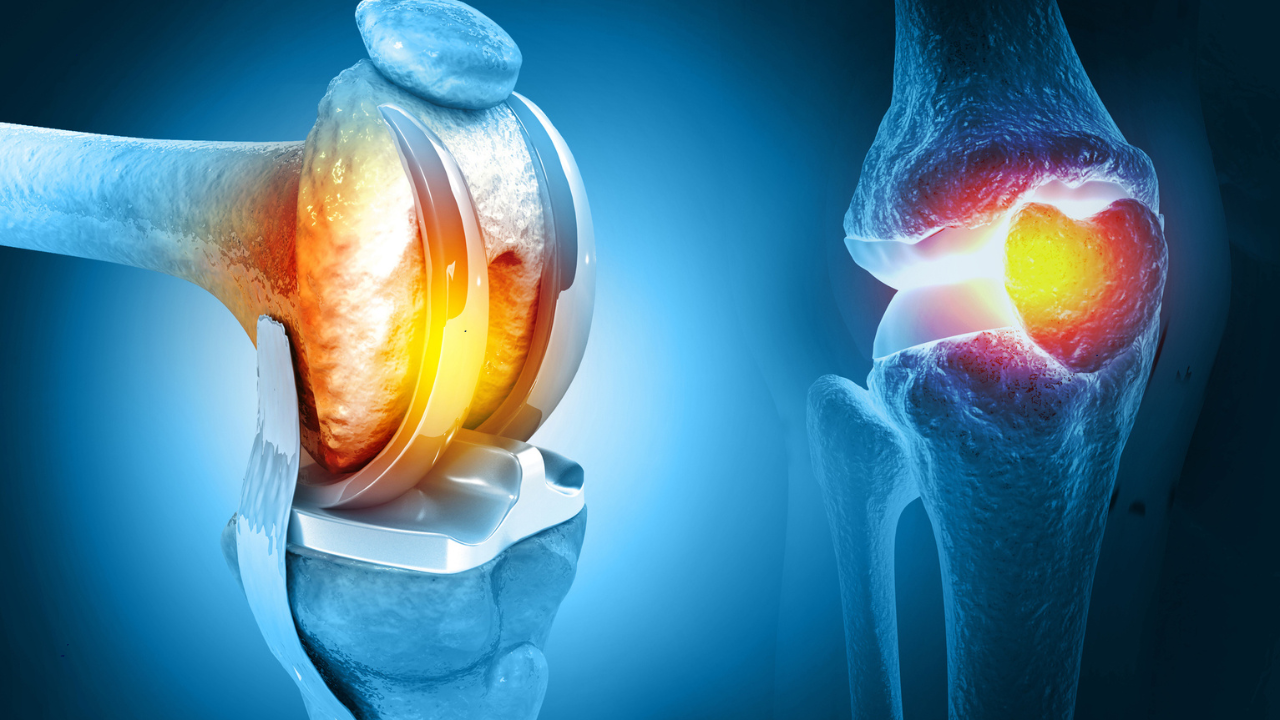
Knee replacement surgery has witnessed remarkable advancements over the past few years. Traditionally, total knee replacement was performed as a uniform procedure ("one procedure fits all"), where the entire knee joint was replaced regardless of the extent or location of damage. However, with the evolution of modern orthopedics, the focus has shifted towards precision and personalized treatment. In this direction, an A La Carte or Modular approach towards patients who need knee Replacement has emerged, which customizes or personalizes the surgery according to the patient’s specific condition.Understanding The “à la carte” ConceptThe term “à la carte” refers to selecting individual items from a menu. In knee replacement surgery, it means replacing only the damaged portion of the joint instead of the entire knee.The knee is anatomically divided into three compartments:Medial compartment (inner side)Lateral compartment (outer side)Patellofemoral compartment (front portion involving the kneecap)In many patients suffering from osteoarthritis, the disease affects only one or two of these compartments—most commonly the medial compartment. In such cases, replacing the entire knee may not be necessary. Modular implants allow surgeons to selectively treat the affected area while preserving healthy bone and ligaments.The à la carte technique helps preserve the natural structure of the knee while effectively treating only the damaged portion, resulting in better and more natural functional outcomes for patients.However, this approach is not suitable for all patients. It is generally not recommended in inflammatory conditions such as rheumatoid arthritis.How It Differs From Total Knee ReplacementIn Total Knee Replacement (TKR), all three compartments of the knee are replaced, making it an effective solution for advanced and widespread arthritis.In contrast, Modular Knee Replacement offers a more targeted approach:Replacement of a single compartment (Partial Knee Replacement)Replacement of two compartments (e.g., medial + patellofemoral)This selective treatment helps maintain the knee’s natural structure and function.Advantages Of The Modular ApproachFor carefully selected patients, this technique offers several important benefits:More natural knee function: Preservation of ligaments and bone provides a more natural feel.Faster recovery: Less invasive surgery leads to quicker rehabilitation.Reduced pain and blood loss: Minimal surgical trauma results in less discomfort.Improved mobility: Patients often achieve a better range of motion.Enhanced lifestyle comfort: Activities like sitting cross-legged or squatting may be easier and can be done unrestricted compared to total knee replacement.Who Is the Ideal Candidate?Not every patient is suitable for this procedure. Proper patient selection is one of the most critical factors in ensuring the success of this procedure. Ideal candidates typically include people:Having arthritis limited to one or two compartmentsHaving stable knee ligamentsWho do not have a severe deformity in the kneeA thorough clinical evaluation, along with imaging such as X-rays or sometimes an MRI, is essential to determine the most appropriate treatment plan.Long-Term OutcomesWhen performed in the right patient, modular knee replacement delivers excellent long-term outcomes (90 to 95 per cent survivorship for 15 years). Its success largely depends on accurate patient selection and flawless surgical expertise.In some cases, if arthritis progresses in the remaining compartments over time, conversion to total knee replacement can still be done. However, this is relatively uncommon when proper indications are followed.Role Of Robotic TechnologyRobotic-assisted surgery has further enhanced the precision of this technique. It enables:Millimeter-level accuracyPrecise implant positioningRestoration of patient-specific knee alignmentThis not only improves surgical outcomes but also supports faster recovery and long-term durability.ConclusionAla Carte or Modular Knee Replacement represents a significant shift toward personalized orthopaedic care. Instead of a "one-size-fits-all " approach, surgeons can now tailor treatment based on the patient’s anatomy and disease pattern.For many patients, this means less invasive surgery, faster recovery, improved function, and a more natural-feeling knee. Individuals experiencing persistent knee pain are advised to consult an orthopaedic specialist early to determine the most appropriate treatment option.