
- Health Conditions A-Z
- Health & Wellness
- Nutrition
- Fitness
- Health News
- Ayurveda
- Videos
- Medicine A-Z
- Parenting
Air Pollution Is The Single Largest Health Risk In Delhi, Finds Study
Air Pollution Is The Single Largest Health Risk In Delhi, Finds Study
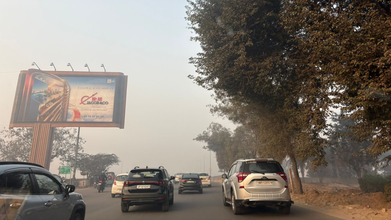
Delhi's air pollution continues to remain in the 'severe' category, and an analysis of Global Burden of Disease (GBD) 2023 found that in Delhi, 15% of all deaths are due to the air pollution. The study suggests that air pollution is city's single largest health risk. The deaths rose from 15,786 in 2018 to 17,188 in 2023.
Are Men Breathing In More Pollution?
Another study published in Scientific Reports, a five-year study titled Respiratory Deposition of Particulate Matter in Delhi: A Five-Year Assessment of Exposure Patterns and Health Risks tracked how particulate matter settles inside the respiratory system and found that men's exposure can be up to 1.4 times higher, especially while walking or commuting. The study noted that men on average spend more time outdoors while working, commuting, or walking in traffic-heavy areas. This leads to an increase in exposure.
Also Read: Barry Manilow Is Diagnosed With Lung Cancer At 82
Another reason is physiological, men have larger lung volumes, which means they inhale a greater volume of air with every breath. While women breathe slightly faster, the overall dose of pollution that settles in lungs tends to be higher in men because of how much air they inhale at once, and how long they stay outdoors.
While sitting, men inhale 1.5 times higher than women when it comes to PM2.5, and while walking, they absorb 1.2 times more than women. The same pattern is seen in PM10, while sitting, men record 1.34 times higher, and while walking, they inhale 1.15 times higher.
Delhi's AQI Today: On Tuesday, December 23, Delhi's AQI stood at 408 which is under the 'severe' category, around 5.30 am.
Read: British Man Compares Breathing In Delhi To Smoking 18 Cigarettes
Clean Air Is A Basic Right, Not A Luxury
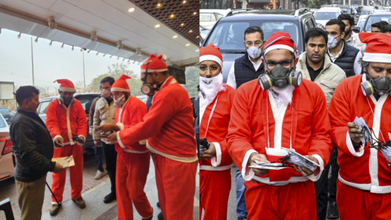
This is happening in Delhi as we come closer to the festive time of Christmas. To draw attention to the continuously worsening AQI, National Students' Union of India (NSUI) representatives dressed as Santa Clause with gas masks. The NSUI volunteers walked in Santa Claus costumes, wearing gas masks to convey the message about Delhi's deteriorating air quality and growing public health emergency, and distributed face masks, candies, as well as handwritten notes that explained what exposure to polluted air can do to one's health. The NSUI representative also led an awareness walk and one of the office bearers said, "Santa represents joy, gifts and care for children. When even Santa needs a gas mask to survive in Delhi, it forces people to think about what kind of air our children are breathing."
“People already know the air is bad, but they have started accepting it as normal. Our effort is to remind everyone that this should not be normal," said another volunteer.
How To Read AQI?
As per the Central Pollution Control Board (CPCB), here is how you can know what your AQI stands for
- 0 to 50: Good
- 51 to 100: Satisfactory
- 101 to 200: Moderate
- 201 to 300: Poor
- 301 to 400: Very Poor
- 401 to 500: Severe
Air quality is made of dust and small particles like PM2.5 and PM10, along with gases like nitrogen dioxide from car exhaust, sulphur dioxide from factories, and carbon monoxide from vehicles. The levels are measured through specialized machines. In India, the standard of the machines are carried out by the CPCB.
Anti-obesity Drugs Must Be Used Judiciously, Says Union Minister Dr Jitendra Singh
Credits: iStock and Facebook
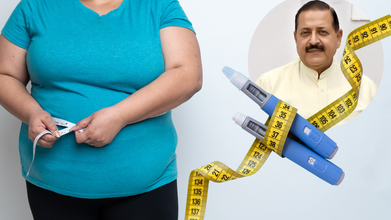
Dr Jitendra Singh, the Union Minister of State for Science & Technology, Earth Sciences and MoS PMO said that weight reducing or anti-obesity drugs must be used judiciously. Dr Singh himself is a noted diabetologist and professor of medicine. He noted that obesity is a complex, chronic and relapsing disorder, "not merely a cosmetic or lifestyle concern". He called for a "whole-of-society" approach to effectively combat this health challenge that India is facing.
His remarks on obesity and usage of weight loss drugs were made at the inaugural session of the 2-day Asia Oceania Conference on Obesity. He pointed out that obesity cannot be treated with shortcuts, as it is a chronic disease.
India and Obesity
India is facing a severe and rapidly growing obesity epidemic, and it has become a major global hotspot with rising numbers of obesity patients across all ages, especially in the urban areas, noted UNICEF-organized national media roundtable. This is due to the increase in sedentary lifestyles, and processed foods. According to UNICEF’s Child Nutrition Global Report 2025, launched recently, obesity has, for the first time, surpassed underweight globally as the most common form of Malnutrition among school-aged children and adolescents. So is the case in India.
Dr Singh highlighted that India is witnessing a worrying rise in Non-communicable diseases or NCDs, which are also linked to obesity in a way. This has accounted for nearly 63 per cent of overall mortality. He also said that conditions like type 2 diabetes, cardiovascular diseases and certain cancers are linked to obesity, including central visceral obesity, which he says is "particularly prevalent among Indians and poses independent health risks even beyond overall body weight".
What Does The Data Say On Obesity In India?
The National Family Health Survey (NFHS) data shows that India is witnessing a rapid surge in overweight and obesity among children under five, with prevalence rising by 127 per cent, which has increased from 1.5 per cent to 3.4 per cent between NFHS 3 (2005-06) and NFHS 5 (2019-21).
Similarly, overweight and obesity rates among adolescents have risen sharply, increasing by 125 per cent in girls (from 2.4 per cent to 5.4 per cent) and a staggering 288 per cent in boys (from 1.7 per cent to 6.6 per cent).
Among adults, prevalence climbed by 91 per cent in women (from 12.6 per cent to 24.0 per cent) and 146 per cent in men (from 9.3 per cent to 22.9 per cent), underscoring a nationwide health crisis (NFHS-5, 2019–21).
By 2030, India is projected to have over 27 million children and adolescents aged 5 to 19 living with obesity, accounting for 11 per cent of the global burden (CNNS 2016–18).
What Is India Doing To Combat Rise In Obesity?
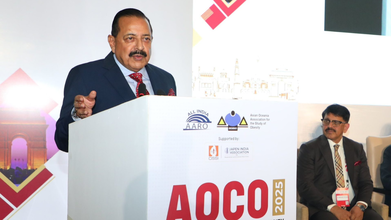
Dr Singh highlighted that under the leadership of Prime Minister Narendra Modi, India has taken steps to make health a priority. PM Modi's emphasis on small, sustainable changes in food habits and daily routines reflects a clear recognition of obesity as a national priority, closely aligned with initiatives like FIT India, Khelo India, and other versions of preventive healthcare. He also noted that Ayushman Bharat, mass screening programmes, and many health care initiative, along with integrating traditional system of medicine has also helped India to curb its obesity problems down.
Dr Singh also emphasized on the need of public awareness, especially in food habits like adoption of refined oils, or myths and disinformation that surround such health condition. To combat this, he launched the AIAARO ( All-India Association for Advancing Research in Obesity) Obesity Registry, a significant initiative aimed at strengthening India’s obesity research ecosystem through systematic data collection, evidence-based insights, and long-term policy support.
Is Air Pollution Causing Early Nearsightedness In Children? Expert Explains The Link
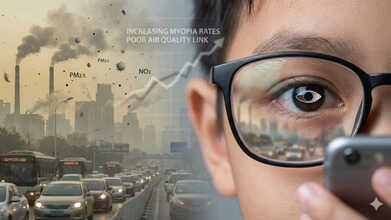
Credits: Gemini
For a long time, screens have taken most of the blame for declining eyesight among children. Doctors, however, are now drawing attention to another factor that often goes unnoticed: polluted city air.
Delhi continues to struggle with severe smog. On December 23, 2025, residents woke up to a thick blanket of haze as air quality worsened sharply across the capital. At 8 am, the average Air Quality Index stood at 414, placing it in the ‘severe’ category, according to data from the Central Pollution Control Board (CPCB). While toxic air is known to harm the lungs, skin, and heart, eye specialists are now observing a worrying trend. Children are developing myopia, or near-sightedness, at much younger ages, and the condition appears to be progressing faster than before.
As India faces some of the highest pollution levels in the world, new research is shedding light on how fine particulate matter, limited exposure to natural daylight, and ongoing eye irritation may be affecting the visual health of children growing up in urban areas. To understand this better, we spoke to Dr Rishi Raj Borah, Country Director, Orbis (India), who explained how air pollution may be playing a role.
Is Smog Affecting Children’s Vision?
Healthy eye development during childhood relies heavily on regular exposure to bright outdoor light. This light helps regulate dopamine release in the retina, which plays a key role in preventing the eyeball from growing longer than normal, a defining feature of myopia. Multiple studies have shown that children who spend more time outdoors are less likely to develop near-sightedness.
Although excessive screen use remains a concern, polluted air is now being recognised as an added risk. High smog levels can lead to:
- Eye irritation and redness
- Dry eyes and allergic inflammation
- Discomfort that discourages outdoor play
Explaining the connection, Dr Rishi Raj said, “With rising air pollution and high concentrations of PM2.5 in the environment, children may spend less time playing outside and more time on screens. Exposure to polluted air can also trigger inflammatory changes on the eye surface, reducing comfort and causing strain or irritation, especially in children.”
What Is Myopia?
Myopia, commonly known as near-sightedness, is a vision condition in which distant objects appear blurred because light entering the eye focuses in front of the retina instead of directly on it. This usually happens when the eyeball grows longer than normal. While close objects remain clear, far-off objects become difficult to see. Myopia often develops during childhood or adolescence and is typically managed with glasses, contact lenses, or, in some cases, surgery, according to the Cleveland Clinic.
How Is Smog Leading To Myopia In Children?
Smog may contribute to the development and progression of myopia by causing inflammation and oxidative stress within the eyes. This can damage ocular tissues, thin the sclera, and encourage axial elongation of the eyeball. Pollutants such as PM2.5 and nitrogen oxides (NOx) are small enough to affect eye tissues, triggering inflammatory responses and activating enzymes that break down collagen. Research cited on ScienceDirect.com also suggests these pollutants may interfere with dopamine pathways that help regulate eye growth, further speeding up myopia progression.
Highlighting the long-term risks, Dr Rishi Raj said, “When myopia starts at a very young age, it tends to worsen more rapidly over time. As vision continues to decline, the risk of serious eye conditions later in life, including retinal detachment, glaucoma, and myopic maculopathy, increases significantly. Early detection and timely management are therefore extremely important.”
How To Protect Children From Myopia?
Dr Rishi Raj suggests several practical measures parents can take to support their children’s eye health:
- Follow the 20-20-20 rule. Every 20 minutes, look at something 20 feet away for 20 seconds.
- Reduce recreational screen time and encourage frequent breaks.
- Make sure children get at least one to two hours of outdoor play each day, when air quality allows.
- Arrange regular eye check-ups, even if there are no obvious vision complaints.
- Ensure proper lighting and good posture during reading and screen use.
Doctors caution that if air quality continues to worsen and outdoor time keeps shrinking, India may see a sharp rise in childhood vision problems in the years ahead. While parents cannot fix pollution on their own, adopting healthier daily habits, staying alert to early signs of vision changes, and creating safer indoor environments can still go a long way in protecting a child’s eyesight in today’s polluted cities.
This Mysterious New Virus Could Spread Faster Than Covid-19 And Flu
Credits: iStock
A new virus is going around the world, and experts say that it is stronger than COVID and flu. This has been termed as the new 'untreatable' mystery virus, and some even have warned that disinfectant cannot get rid of it.
This is the adenovirus, which exhibits same symptoms as a serious flu, including shortness of breath, a runny nose, and a sore throat. However, one difference is that this virus has lack of treatments. So for anyone who may have caught it, will have no other option but to "tough it out". However, the silver lining here is that in most cases, adenovirus is fairly mild, but if you are immunocompromised, then the symptoms could become more serious, reports the Mirror.
Eric Sachinwalla, Jefferson Health's medical director said that this virus is still unfamiliar and thus not much can actually be done to treat adenovirus. Speaking to PhillyMad, he said, "It is pretty contagious because it is heartier than other viruses - soap and water, or everyday disinfectant, won't kill it, so it tends to live in the environment longer."
Common Symptoms Of Adenovirus
- Shortness of breath
- Runny nose
- Sore Throat
- Diarrhea
- Pink eye
The good news is that for most part, these symptoms are manageable with rest. However, people who are more vulnerable, like the elderly, pregnant, or immunocompromised, may have to be more careful and keep a closer eye on their symptoms.
If the fever takes the body temperature to 40 Celsius, then it could be a serious situation, and you must consult your GP.
Read: Mystery Disease Adenovirus: New Virus Said To Be Stronger Than Covid And Flu — All You Need To Know
How Long Do The Symptoms Of This Mysterious Disease Last?
The symptoms usually start to subside within two days, however, if the symptoms stay even after three days without any relief, it might be a red flag. The best thing to do during such a situation is to go consult your GP.
What Is Adenovirus?
Adenovirus is a virus that has more than 60 different strains, which is why it is able to cause a variety of symptoms. Adenovirus refers to a group of common viruses that usually trigger cold- or flu-like illness. It spreads easily because it is far more resilient than many other viruses. Ordinary soap, water, and standard disinfectants do not reliably destroy it, allowing it to persist in the environment. As a result, infections often cluster in places where people spend time close together, such as daycares and military barracks. The virus spreads through the respiratory tract, can be shed in stool, and can survive for some time on contaminated surfaces, according to the CDC.
The reason for its spread right now is due to the surge of flu cases in the southern hemisphere which has influenced the outbreaks in the northern hemisphere. Another reason is the lower flu vaccinate rates, which has now made a large number of population more vulnerable to infections, overall, including adenovirus.
How Can You Stay Safe?
Since adenovirus spreads through close contact and is resistant to many everyday disinfectants, hygiene remains the key. The best way to stay safe is by avoiding close contact, especially with those who are unwell. You may also keep an eye on your symptoms, including your body temperature and take steps to prevent the virus from spreading by taking precautions, as well as getting the flu jab.
- Follow Us :


© 2024 Bennett, Coleman & Company Limited