
- Health Conditions A-Z
- Health & Wellness
- Nutrition
- Fitness
- Health News
- Ayurveda
- Videos
- Medicine A-Z
- Parenting
Ancient Chinese Medicine Could Hold The Secret To Hair Regrowth
Credits: Canva
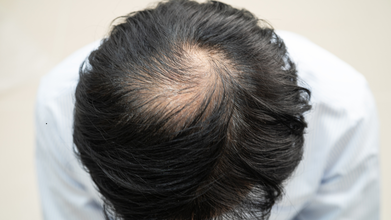
Can Chinese medicine cure baldness? Baldness has long been dealt as a matter of shame over health. Products focus on hiding the bald patch rather than curing it. Baldness has in the past made global headlines when South Korean president Lee Jae Myung said 'Baldness is the new enemy' and suggested that insurance should cover the treatment as a part of medical treatment.
Androgenetic alopecia (AGA), better known as pattern hair loss, is the most common form of hair thinning worldwide. While medications like finasteride and minoxidil remain the standard line of treatment, concerns around side effects, lifelong use, and mixed results have led many people to explore gentler, more holistic alternatives.
A new scientific review now suggests that Polygonum multiflorum—a root used in traditional Chinese medicine for over a thousand years—may hold real promise in managing AGA. Historically described as a remedy that can “blacken hair and nourish essence,” the herb is gaining renewed attention as modern research begins to unpack how it actually works at a biological level.
A Multi-Pathway Approach to Hair Health
Most conventional hair-loss treatments target a single biological mechanism. Polygonum multiflorum, however, appears to work on several fronts at once. According to the review, the herb helps reduce the activity of dihydrotestosterone (DHT), a hormone strongly associated with hair follicle shrinkage in AGA.
At the same time, it protects hair follicle cells from premature cell death and activates key growth-related signalling pathways, including Wnt and Sonic Hedgehog (Shh), both crucial for maintaining a healthy hair growth cycle. The herb may also improve scalp blood circulation, potentially enhancing the delivery of oxygen and nutrients to hair follicles—an often overlooked factor in hair thinning.
Ancient Records Meet Modern Biology
“Our analysis bridges ancient wisdom and modern science,” said Han Bixian, the lead author of the review published in the Journal of Holistic Integrative Pharmacy. “What surprised us was how consistently historical texts—from the Tang Dynasty onward—described effects that align closely with today’s understanding of hair biology.”
The researchers examined a wide range of evidence, including laboratory studies, clinical observations, and historical herbal literature. Together, these sources suggest that Polygonum multiflorum does more than simply slow hair loss—it may actively support healthier hair function.
Beyond Slowing Hair Loss
One of the most striking findings is the herb’s potential role in hair regeneration. Rather than only delaying further thinning, Polygonum multiflorum appears to influence multiple growth factors involved in restarting and sustaining the hair cycle. This broader mode of action could give it an edge over treatments that focus on just one biological target.
Safety, Processing, and What Comes Next
The review notes that when properly processed—a critical step in traditional preparation, the herb shows a relatively favorable safety profile. This could make it more appealing to patients concerned about side effects such as sexual dysfunction or scalp irritation commonly linked to existing medications.
That said, the authors stress the need for more high-quality clinical trials to confirm effectiveness, establish safe dosing, and standardize preparation methods. Even so, the findings highlight how rigorous scientific study of traditional remedies can uncover new possibilities for treating common conditions like androgenetic alopecia.
Ordinary Movement, Extraordinary Pain: FAQs On Bursitis Answered By Expert

Bursitis is often linked to lifestyle. (Photo credit: iStock)
You pick up a jar on the kitchen shelf and shudder. You take a flight of stairs, and that old pain sinks into your hip. You get up in the morning, and your shoulder feels as though it has been wrung out. You attribute it to age, to a long day on your feet, to just how things are now. But what if your body is trying to tell you something very particular and you have been missing it?
Dr Apoorv Dua, Consultant, Orthopaedics, ISIC Multispeciality Hospital, in an interview with Health and Me, said that this may be a sign of bursitis—a condition that is much more widespread than most people realise, and much more treatable than most people are aware. The expert went on to answer common questions regarding extreme pain that comes with this condition.
What is bursitis?
Bursae are small, fluid-filled sacs located between your bones, muscles, and tendons. Imagine them as the natural cushioning system of the body—shock absorbers that ensure your joints move smoothly and painlessly. Under normal circumstances, you do not even think about them. However, when inflamed, due to repetitive motion, prolonged pressure, injury, or infection, they make their presence known in a very noticeable manner. This is bursitis. Although it most often appears in the shoulder, elbow, hip, and knee, it may occur in nearly any joint in the body.

Who gets bursitis—and why?
This is where the lifestyle connection cannot be overlooked. Bursitis does not discriminate, but it has definite patterns. The weekend warrior who runs ten kilometres on Saturday after sitting at a desk all week. The housewife who spends hours cleaning floors or squatting in the kitchen. The office worker who has been stooped over a computer. The gym enthusiast who does not warm up. The retired teacher who begins a walking routine too vigorously. All these individuals may be silently placing stress on their bursae, and in many cases, bursitis is the eventual outcome.
Age also plays a role—the bursae, like most of our connective tissue, grow weaker with age. Certain medical conditions such as rheumatoid arthritis, gout, and diabetes can increase the risk. However, in many instances, the cause is simply the way we move—or do not move—in our day-to-day lives.
What does bursitis feel like?
A key characteristic of bursitis is pain that is disproportionate to the activity causing it. Reaching overhead, sitting on a hard surface, pressing on your elbow, or walking downhill—these are not dramatic movements, yet with bursitis, they may trigger a sharp, deep, or burning pain that interrupts you mid-action. The affected joint is usually swollen and tender. The area may feel warm to the touch. Movement becomes guarded. Sleep, particularly in cases of shoulder bursitis, can be difficult, as lying on the affected side aggravates the pain.
The challenge with bursitis is that its symptoms can resemble other conditions—tendinitis, arthritis, a muscle strain, or even a ligament tear. Many individuals self-diagnose, self-treat with painkillers, and hope it will go away. Sometimes it does. However, chronic, untreated bursitis may persist for months and, in some cases, lead to complications.
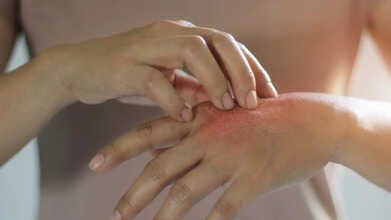
Bursitis diagnosis
A thorough clinical examination is usually the first step. A skilled orthopaedic specialist can identify the affected bursa through specific physical assessments. Imaging, such as ultrasound or MRI, may be recommended depending on the case to confirm the diagnosis, rule out structural damage, or guide treatment.
If infection is suspected—indicated by increased redness, fever, and rapidly worsening pain—fluid may be aspirated from the bursa and tested. Septic bursitis is a serious condition that requires immediate medical attention and is treated differently from the more common non-infectious type.
Bursitis treatment
The encouraging fact about bursitis is that it responds well to treatment, particularly when detected early. Most cases are managed with a combination of rest, activity modification, ice application, and anti-inflammatory medication. Physiotherapy also plays an important role, helping to correct movement patterns, strengthen supporting muscles, and restore the full range of motion.
In more persistent cases, a corticosteroid injection into the bursa may provide rapid and significant relief by reducing inflammation at its source. Surgery is rare and is typically considered only in chronic, recurrent cases that do not respond to conservative treatment.
Prevention is better
In many instances, bursitis is linked to lifestyle—and that presents an opportunity for prevention. Even small changes can help: warming up before exercise, avoiding excessive strain on joints, maintaining a healthy weight to reduce pressure on hips and knees, and ensuring workstations are ergonomically designed.
Pain often becomes background noise—something we get used to, work around, and push through. However, bursitis reminds us that the body communicates with precision. That pain when you pick up a jar, that discomfort on the stairs—it is not simply ageing. It is a signal worth discussing with your doctor.
Have Hernia Surgeries Become Less Painful?

Robotic hernia surgery is less invasive. (Photo credit: iStock)
The bulge that appears when an internal organ pushes through a weakened muscle wall will not recede with rest or medication—it will, in most cases, grow larger and more uncomfortable over time. Surgery is the only definitive treatment. What has changed significantly in recent years is what that surgery looks like and what recovery from it requires.
Dr Rajesh Sharma, Director – General Surgery, Minimal Access & Bariatric Surgery, CK Birla Hospitals, Jaipur, in an interview with Health and Me, spoke about the introduction of robotics in hernia treatment and how it can benefit patients.
How hernia surgeries are becoming less painful
With advances in surgical technology, minimally invasive approaches have significantly improved patient outcomes. One of the most important developments in recent years is robotic-assisted hernia surgery using the da Vinci Surgical System. In robotic surgery, the surgeon operates from a console equipped with a high-definition, three-dimensional, magnified view of the surgical field. The robotic system translates the surgeon’s hand movements into extremely precise movements of miniaturised instruments inserted through small incisions. The system also filters natural hand tremors and provides a greater range of motion than the human wrist, enabling meticulous dissection and suturing.
For hernia repair, these capabilities allow surgeons to perform delicate steps such as accurate defect closure and optimal mesh placement, which are important for the long-term durability of the repair.
Benefits for patients
Robotic hernia repair offers several advantages for patients:
- Smaller incisions and minimal scarring
- Reduced postoperative pain
- Lower risk of wound complications
- Shorter hospital stay
- Faster return to normal activities
Because the procedure is minimally invasive, most patients experience earlier mobilisation and quicker overall recovery compared with traditional open surgery. Robotic surgery is particularly useful in complex, recurrent, or large ventral hernias, where precise reconstruction of the abdominal wall is important. While not every hernia requires a robotic approach, the technology expands the surgeon’s ability to perform advanced minimally invasive repairs with improved ergonomics and visualisation.
The future of hernia surgery
The integration of robotic platforms such as the da Vinci system represents a major step forward in modern general surgery. By combining surgical precision with minimally invasive techniques, robotic hernia repair aims to enhance patient comfort, improve recovery, and deliver durable surgical outcomes.
How Liver Disease Affects The Heart
Credit: iStock
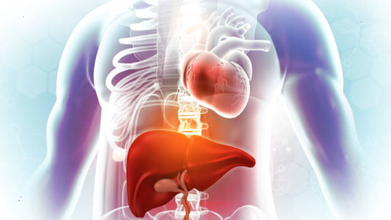
The liver and heart are two of the most vital organs of the body, and although they perform very different functions, they are closely connected. When the liver is not functioning properly, it can place significant stress on the heart and circulatory system of the body.
Liver disease not only affects the digestion process, metabolism, and detoxification but can also trigger serious cardiovascular changes that may go unnoticed in the early stages. Understanding this particular connection is significant for timely diagnosis and better overall care.
The Liver-Heart Connection
The liver helps to regulate the flow of blood, fluid balance, cholesterol metabolism, and inflammation as well. When liver disease develops—whether due to fatty liver, hepatitis, cirrhosis, or alcohol-related damage—all these processes become disturbed.
As a result of the same, the heart may have to work harder to maintain circulation, while blood vessels may also undergo certain changes that impact blood pressure and delivery of oxygen as well.
Changes In Blood Circulation
In well-advanced liver disease, especially cirrhosis, the flow of blood through the liver becomes restricted. This can also increase pressure in the portal vein, a condition known as portal hypertension. At the same point in time, blood vessels in the rest of the body may also widen, causing a drop in effective blood pressure.
To compensate, the heart pumps faster and harder. With the passage of time, this constant strain can weaken cardiac function and even lead to a condition sometimes referred to as cirrhotic cardiomyopathy, where the heart does not respond normally under stress.
Fluid Retention And Heart Stress
Liver disease often causes the body to retain both salt and water. This can also lead to swelling in the legs, abdomen, and surrounding tissues as well. Extra fluid in the body increases the workload on the heart, making it more difficult for it to pump blood in an efficient way. In severe cases, this may also contribute to shortness of breath, fatigue, and worsening cardiovascular strain.
Inflammation And Metabolic Impact
Some of the conditions, such as non-alcoholic fatty liver disease, are also linked with diabetes, obesity, high levels of cholesterol, and high blood pressure – all of which are the major risk factors for heart disease. Chronic inflammation, well-associated with liver damage, may further increase the risk of atherosclerosis and other cardiac complications.
- Follow Us :


© 2024 Bennett, Coleman & Company Limited