
- Health Conditions A-Z
- Health & Wellness
- Nutrition
- Fitness
- Health News
- Ayurveda
- Videos
- Medicine A-Z
- Parenting
Are You Still An Adolescent At 32? Study Says Yes

Credits: iStock
Your adolescence lasts well up to your 30s. A new, "cool" study as Prof Tara Spires Jones, tells BBC, noted that the human brain does not follow a simple, steady path from birth to old age. Instead, it moves through five clear phases, each marked by a shift in how its networks connect and communicate. The study is conducted by the researchers from the University of Cambridge, who analyzed thousands of brain scans to track how neural connections strengthen, weaken, and reorganize over time.
This large study involved nearly 4,000 people between infancy and age 90 and has now mapped these transitions, offering new insights into why periods of life differ so much in terms of learning, behaviors, and vulnerability to mental health conditions.
Their work shows that the brain remains in an adolescent state far longer than earlier believed and reaches a peak of efficiency only in the early thirties. The findings, published in Nature Communications, highlight striking turning points at the ages of nine, 32, 66 and 83.
The Five Phases Of Brain
Childhood: Birth to Age Nine
The study showed that during childhood, the brain grown rapidly, however, it also begins trimming the vast numbers of synapses formed in early life. This is what helps the brain decide which pathways truly matter. However, this period is not very efficient. It resembles a child wandering without a fixed route, exploring freely rather than moving directly from one point to another. The purpose is exploration, not precision.
Adolescence: Age Nine to 32
A dramatic shift begins around age nine. The brain enters a long stretch of heightened efficiency as it reorganizes its neural networks with remarkable speed and intensity.
This is the phase where mental health vulnerabilities often emerge, since the brain is restructuring at an unusually rapid pace.
This part of the study also breaks the conventional idea that associated adolescence typically with the teenage years. Modern neuroscience suggests it extends into the twenties. This study pushes that boundary even further, indicating that the adolescent phase may last all the way to 32.
During this time, the brain reaches its most efficient point, and many cognitive abilities are thought to peak.
Adulthood: Age 32 to 66
After the long adolescent stretch, adulthood brings stability. The study shows that adulthood actually comes from the age 32, again a shift from what conventionally was believed adulthood to be. This is the brain’s most settled era, lasting more than three decades. Change continues, but at a gentler pace and in a more predictable pattern. The efficiency gained earlier begins to level out. Many people recognize this phase as a period when their cognitive strengths, personality and sense of self feel most consistent. The fireworks of earlier development give way to a steady rhythm.
Early Aging: Age 66 to 83
The period after 66 marks the beginning of early ageing. It does not arrive as a sudden decline. Instead, there are subtle shifts in how different parts of the brain coordinate.
Rather than functioning as one unified network, the brain begins to break into clusters of regions that work more closely within their own groups. It is similar to a band whose members start pursuing individual projects while still occasionally performing together.
Although the study focused on healthy brains, this is also the age when conditions linked to ageing, such as high blood pressure and dementia, begin to appear more frequently.
Late Aging: 83 And Beyond
The final phase begins at around 83. Data for this group was more limited, since it is harder to find older adults with no underlying health issues. Even so, the scans show that the patterns seen in early ageing become more pronounced. The brain’s networks continue to drift apart, and communication between regions becomes less synchronized.
Strokes Have Nearly Doubled Among Young Adults: Researchers Identify 4 Key Health Risks
Credit: AI
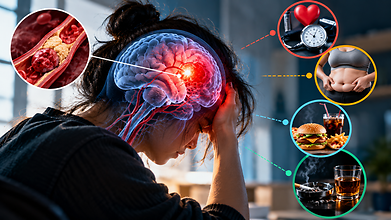
A new study has revealed an alarming trend in stroke cases in the past three decades. Strokes have often been associated as an age-related disease. But according to a study published in Neurology, the rate of stroke among adults aged 20 to 54 has nearly doubled between 1993-94 and 2020.
Researchers examined data from the Greater Cincinnati and Northern Kentucky Stroke Study and identified 2,076 first-time strokes among people in this age group.
The rate of stroke rose from 33.9 cases per 100,000 person-years in 1993-94 to 62.2 in 2020. The increase was largely driven by ischemic stroke, which happens when a blood vessel in the brain becomes blocked.
The study points towards an alarming pattern, especially among younger age groups. It raises the question of why are strokes are occurring earlier in life?
High Blood Pressure, Diabetes And Other Risks
The researchers found that several risk factors of stroke became more common among younger people. These included lifestyle disorders like high blood pressure, diabetes and atrial fibrillation, an irregular heart rhythm that can increase the risk of blood clots.
Apart from lifestyle diseases, researchers also saw an increase in substance use. Among younger adults who had suffered a stroke, substance use rose from 4.6% in 1993-94 to 40.2% in 2020. Much of this increase was linked to marijuana use.
However, the study does not prove that these factors caused the overall rise in stroke rates. Researchers did not have comparable information from people who had not suffered a stroke, making it impossible to determine whether the changing risk factors directly explain the surge in cases.
According to the study, the increase was concentrated mainly in ischemic strokes. The rate of ischemic stroke among 20- to 54-year-olds rose from 23.8 to 47.3 cases per 100,000 person-years during the study period.
Researchers did not observe a similar increase in intracerebral haemorrhage, which involves bleeding within the brain, or subarachnoid haemorrhage, which involves bleeding around the brain.
What Is An Ischemic Stroke?
An ischemic stroke occurs when a blood vessel supplying part of the brain becomes blocked, cutting off oxygen and nutrients. Brain cells can start dying within minutes, which is why stroke treatment is highly time-sensitive.
The warning signs of stroke can appear suddenly. They include:
- Facial drooping
- Weakness
- Numbness in an arm or leg
- Difficulty speaking
The commonly used FAST acronym stands for Face, Arm, Speech and Time. If these symptoms appear, emergency medical care should be sought immediately.
Also read: UK Student Nearly Dies After Accidental Paracetamol Overdose: Why It Can Cause Liver Failure
More Young People Are Surviving Stroke
This is another interesting finding. Although stroke became more common among younger adults, the study found that the 30-day death rate declined modestly, from 11.7% in 1993-94 to 9.4% in 2020 after adjusting for age, race and sex.
That means more younger people may be surviving strokes but potentially living with their long-term consequences.
The researchers say the findings highlight the importance of identifying and managing stroke risk factors earlier in adulthood. More research is still required to understand what is behind the changing pattern and how it can be prevented.
UK Student Nearly Dies After Accidental Paracetamol Overdose: Why It Can Cause Liver Failure
Credit: SWNS/Canva
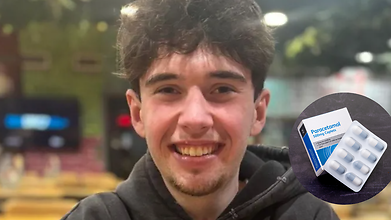
A 20-year-old UK student nearly died after accidentally taking two over-the-counter medicines that both contained paracetamol.
Riley Lubas, a first-year University of Bath student, developed a bad cold in March 2025. Days later, he developed severe stomach pain and was found to have serious liver damage.
What Happened?
Doctors initially suspected hepatitis, but Riley's condition rapidly worsened. He became delirious and hallucinated as his liver began to fail. His lungs and kidneys also stopped working, leaving him in multiple organ failure.
He was placed on life support and dialysis before being transferred to King's College Hospital in London, where doctors identified the cause after asking about his paracetamol use.
"It didn't necessarily help with a solution, but it was good to know the cause at last," his father, Chris, said.
Riley Had To Learn To Walk And Talk Again
Riley was assessed for a liver transplant after his parents were warned that some of the damage could be "irreversible". But his liver began to recover.
"We watched Riley's situation closely for a couple of days, and he continued to improve, until he was taken off dialysis and life support just a week later."
Riley spent six weeks at King's College Hospital and later moved to an ICU in Newport. After a tracheostomy and multiple organ failure, he had to relearn how to speak and walk.
"But just seeing him up and alive again was unbelievable," his father said.
Riley has since recovered and returned to work as a bartender.
"It was mad how quickly it all escalated," he said.
"Because I was already sick, when my stomach hurt I just assumed I'd caught a stomach bug, so I didn't notice the pain in my liver specifically."
"I'm just so grateful that I was able to come out the other end alright."
Why Combining Cold And Flu Medicines Can Be Risky
Read More: Are GLP-1 Drugs Safe for Children? Study Finds Nutritional Deficiency in Nearly 17% Within a Year
Riley's case highlights the risk of taking multiple medicines without realizing they contain the same active ingredient.
Dr Will Mackintosh, a GP and chairman of RCGP Cymru Wales, said accidental paracetamol overdose in young people was "a fairly rare occurrence", but warned that people can inadvertently take two products containing paracetamol, BBC reported.
The Medicines and Healthcare products Regulatory Agency (MHRA) has warned that "simple misunderstandings" about medicines can have serious consequences, highlighting the importance of checking the ingredients beforehand.
The Royal College of General Practitioners Cymru Wales also advised people to "read the label carefully" before taking medicines.
How Much Paracetamol Is Safe?
For most adults, the usual dose is 500 mg to 1,000 mg at a time, with at least four hours between doses.
The usual maximum is 4,000 mg in 24 hours, although some people may need a lower dose because of their weight, liver or kidney problems, alcohol use or other health conditions.
The important point is to count paracetamol from all medicines, including cold and flu products.
How Can An Overdose Damage The Liver?
The liver breaks down paracetamol. When too much is taken, a toxic substance can build up and damage liver cells. Severe overdose can lead to liver failure and death.
Early symptoms may include nausea, vomiting and stomach pain, but serious poisoning may not cause obvious symptoms immediately. Later signs can include jaundice, confusion and extreme sleepiness.
What To Do After Taking Too Much
If you think you have taken too much paracetamol — including by combining medicines that contain it — seek urgent medical advice immediately.
Do not wait for symptoms. Early treatment can reduce the risk of serious liver damage.
Always check the active ingredients on painkillers and cold and flu medicines before taking them together.
Elderly Diabetic With Rock-Hard Arteries Undergoes Advanced Calcium-Breaking Heart Procedure, Avoids High-Risk Surgery
Credit: AI
Doctors at a Mumbai hospital successfully performed a complex coronary angioplasty on an elderly diabetic patient with severely calcified coronary arteries using an advanced technique called Intravascular Lithotripsy (IVL), helping restore blood flow to the heart despite multiple procedural challenges.
The patient, who had been experiencing symptoms suggestive of coronary artery disease, was found to have extensive calcium deposits in the coronary arteries. Further evaluation also revealed poor blood flow in the leg arteries, making conventional vascular access for the procedure difficult.
What Is Coronary Artery Calcification?
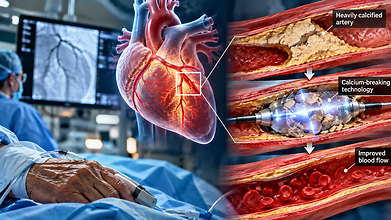
Coronary artery calcification is commonly seen in elderly individuals and people with long-standing diabetes. Excessive calcium makes the arteries rigid and narrow, often making routine angioplasty technically challenging and increasing the risk of incomplete stent expansion, which can affect long-term outcomes
Severely calcified coronary arteries remain one of the biggest challenges in interventional cardiology. The calcium makes the arteries extremely rigid, making it difficult to properly expand the stent. In such situations, conventional angioplasty alone may not be sufficient.
Despite the patient’s complex anatomy and poor peripheral vascular access, the team successfully performed the procedure through the radial artery in the wrist, avoiding access through the diseased leg vessels.
Also read: Stopping Ozempic, Wegovy, Mounjaro Linked To 22% Higher Heart Attack, Stroke Risk: Study
Breaking Deep Calcium Deposits In Artery Wall
To prepare the artery for stenting, doctors used Intravascular Lithotripsy (IVL), an advanced technology that delivers controlled sonic pressure waves to fracture deep calcium deposits within the artery wall. This allows the blood vessel to expand more effectively, enabling safe and optimal placement of the coronary stent.
IVL works on a principle similar to the technology used for breaking kidney stones, but it is specifically designed for heavily calcified coronary arteries. By modifying the calcium before placing the stent, we can achieve better stent expansion, reduce procedural complications and improve long-term outcomes in appropriately selected patients.
The procedure was completed successfully, with excellent blood flow restored to the affected coronary artery. The patient recovered well and was discharged in a stable condition.
Doctors say the case highlights how newer technologies are expanding treatment options for patients who were once considered extremely difficult to treat due to severe coronary calcification.
Advanced techniques such as IVL are transforming the management of complex coronary artery disease, particularly in elderly diabetic patients, allowing us to safely treat lesions that would have been significantly more challenging with conventional techniques alone.
The case underscores the growing role of advanced interventional cardiology in treating complex heart disease while minimising procedural risk and improving patient outcomes.
- Follow Us :


© $2026 Times Horizon Private Limited