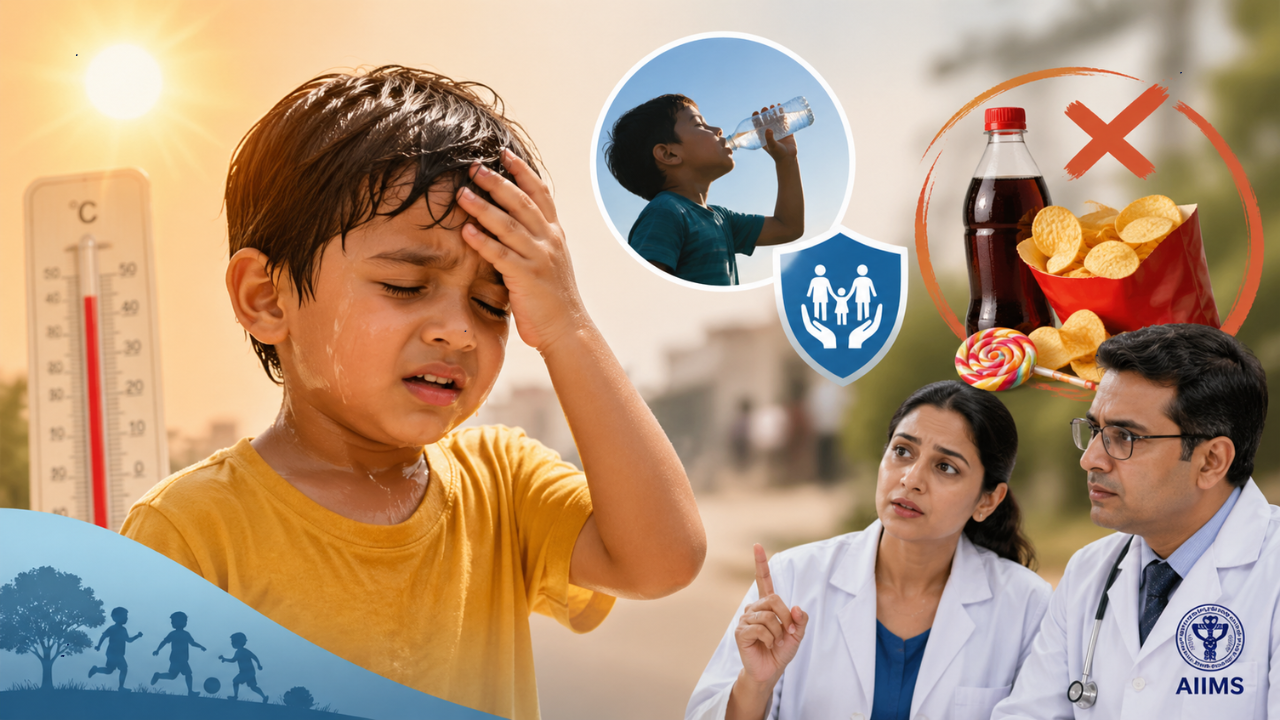
With temperatures rising sharply, experts at the All India Institute of Medical Sciences (AIIMS) have warned that young children are significantly more vulnerable to heat stress than adults, urging parents to take preventive measures and recognize early warning signs. Despite morning showers offering some relief, the national capital still recorded temperatures close to 40°C.How Extreme Heat Affects Young Kids Shefali Gulati, Professor, Department of Pediatric Neurology at AIIMS, highlighted that children are predisposed to both heat and cold stress and also tend to get dehydrated more quickly. She noted that global temperatures have been rising over the past few decades, and cited 2020 data from UNICEF, which showed that 76 per cent of children under 18 in South Asia—around 460 million—are exposed to extremely high temperatures, with 83 or more days in a year exceeding 35°C.Dr. Gulati explained that young children often exhibit early behavioral changes when affected by heat. These can include irritability,reluctance to engage in outdoor activities, restlessness, excessive sweating, uneasiness, weakness. She added that heat exposure, when combined with air pollution, can worsen health conditions, particularly in children with lung diseases and asthma. “Heat can affect all parts of the human body. It begins with irritability and can progress to exhaustion,” she said. In more severe cases, heat stress may lead to brain exhaustion, loss of consciousness, seizures, dehydration, and electrolyte imbalance.Dr. Gulati further explained that the human body maintains its core temperature through physiological mechanisms, but these are less efficient in young children. During dehydration, increased blood flow to the skin reduces supply to vital organs like the brain. In patients with pre-existing kidney issues, this can result in acute or chronic injury. Children with conditions such as cerebral palsy and other neurological disorders may also experience worsening symptoms due to heat exposure.Further, dehydration can additionally strain the cardiovascular system, thickening blood and leading to tachycardia, thereby affecting cardiac function. Beyond children, pregnant women exposed to extreme heat may face risks such as preterm birth, neurodevelopmental problems, and cognitive issues in newborns. Dr Gulati emphasized the importance of fluids, Oral Rehydration Solution (ORS), and small, frequent meals, along with reduced outdoor activity. Preventive measures include wearing loose clothing, avoiding direct sun exposure, and limiting outdoor activities during peak heat hours.The Importance of Diet: Avoiding Sugary DrinksAlso read: Heat Stroke or Heat Exhaustion? AIIMS Doctor Explains Key Symptoms, How To PreventParmeet Kaur, Chief Dietitian at AIIMS reiterated the importance of proper hydration, food safety, and dietary habits during extreme heat, warning that both children and adults face increased risk of dehydration and related complications. “One has to avoid consuming extra sugary and salty foods, drinks, and snacks, because if one is consuming highly processed drinks or snacks loaded with sodium and sugar, it may lead to dehydration,” Kaur said."Hydration is key, and one should not wait to feel thirsty," she added, stressing the need to consume home-made and simple food. For immediate management, homemade Oral Rehydration Solution (ORS) can be used, prepared with six teaspoons of sugar and half a teaspoon of salt in one liter of water. However, she cautioned "against sugary drinks and packaged snacks like chips, explaining that high sugar and sodium content can worsen dehydration while giving a false sense of energy. While these products may create the impression of quick rehydration or an instant energy boost, they can instead contribute to greater fluid loss and increase the risk of severe dehydration.” Instead, the expert recommended traditional cooling options such as bael sharbat, lassi, sattu, and gond katira. Ingredients like coriander, mint and onion were also suggested as part of summer dietary practices. The dietician advised small, frequent meals that are easy to digest, including roasted and unsalted chana or peanuts, while avoiding heavy meals. Food safety is another major concern during the summer. High temperatures increase the risk of microbial growth in stale or improperly stored food. Kaur warned to "not consume food left at room temperature for more than two hours", as it can lead to microbiological growth. Sprouts were also flagged as potentially risky in hot weather. Further, the expert also urged for "high heat cooking method with vegetarian food to be cooked at around 70°C, while non-vegetarian items require temperatures between 70°C and 80°C". The expert reiterated the need to maintain hydration levels of approximately 2.5 to 3 liters per day. ensure electrolyte balance, take preventive action before body temperature rises.