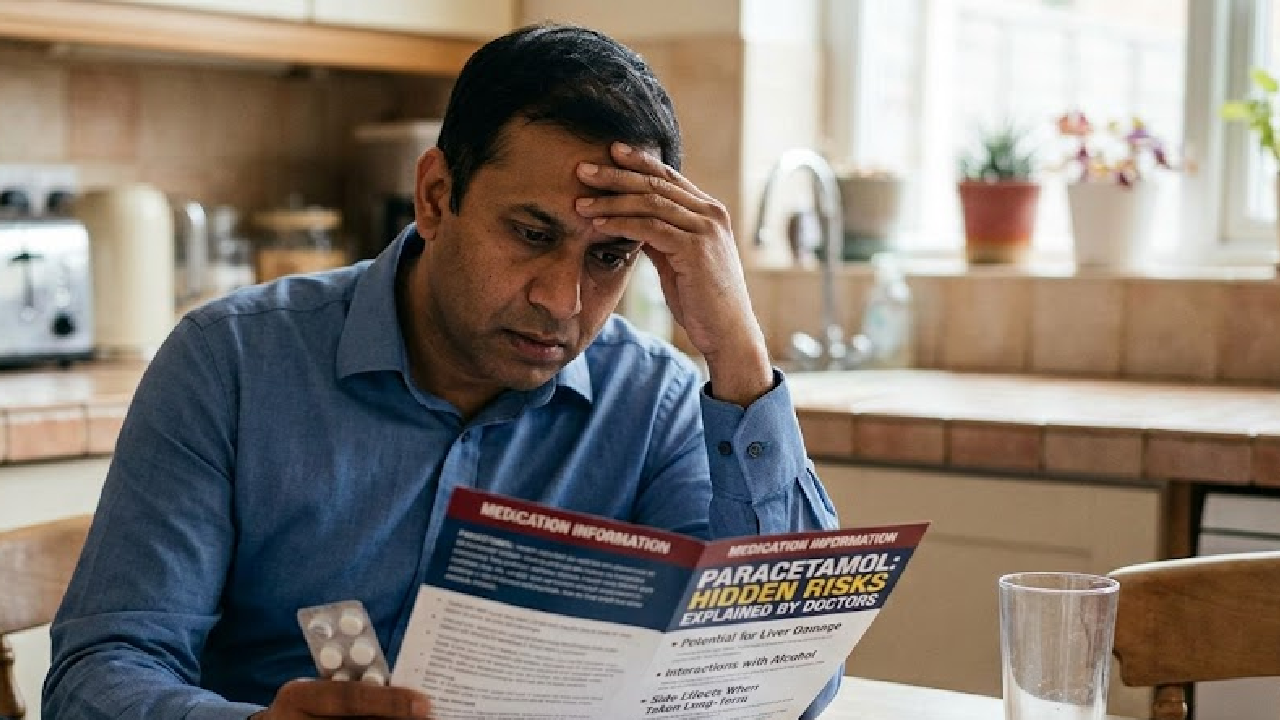
Paracetamol is a very common medicine that can be easily found in any household's medicine cabinet or first aid box. Notably, it is a medicine that people use and trust without thinking twice. Whether it's a fever, headache, body pain, or the flu, millions of people take it every single day. But doctors say the biggest mistake is not always taking a huge number of tablets at once. In fact, one of the most common problems can happen without people even realizing it.Why Is Paracetamol So Common?Paracetamol has earned its reputation for a particular reason. When taken at the recommended dose, it's considered one of the safest medicines for relieving fever and mild to moderate pain. Doctors also prescribe it a lot. There is a lot of trust, and parents give these tablets to their children without thinking about adverse effects. Even paracetamol is frequently used in hospitals all over the world.Paracetamol, unlike many painkillers, usually causes less stomach irritation and doesn't belong to the NSAID group. But you must remember that safe doesn't mean unlimited. Just like any other medicine, paracetamol has a maximum safe dose, and crossing that limit or accidentally combining multiple medicines containing paracetamol can significantly increase the risk of serious complications.Also Read: 7 Minutes Of Life: The Science Behind What Happens To Your Brain After You DieDr. Rakesh Gupta, Senior Consultant, Internal Medicine, Indraprastha Apollo Hospital, Delhi, told Health and me, "Paracetamol should never exceed more than 4 grams in 24 hours. Like any other drug, paracetamol also has side effects. Apart from the usuals, its commonest two side effects are liver disorders and acute kidney injury."Dr. Ashwin Patil, Consultant Nephrology, Jaslok Hospital & Research Centre added, "Paracetamol toxicity is usually notorious for causing liver damage, but sometimes in about 1 to 10% cases it can also cause acute kidney injury. It is a severe renal complication which requires prompt management. So, it usually presents with acute tubular necrosis where the toxic metabolites of paracetamol damage the filtering tubules of the nephron." Who Should Be Extra Careful?The important point here is that serious kidney injury is uncommon, but it can happen—especially after toxic doses. Certain people may need additional caution. That's why doctors advise against assuming that "more tablets mean faster relief."Dr. Pradipta Kumar Sethi, Director of Gastroenterology, Manipal Hospitals, Kolkata, told Health and me, "So how to stay safe? There are two points: first, read all the labels of your cold and flu medicines so that you avoid double dosing of paracetamol. Second, if you are chronically using this medicine, then try to keep 2 grams per day the safety dosing."Paracetamol remains one of the most important and widely used medicines in the world, and for the vast majority of people, it's safe when used exactly as directed. The purpose of this video is not to discourage anyone from taking it. It's to remind us that even common medicines deserve respect. Always follow the recommended dose, and avoid combining medicines without checking their active ingredients.