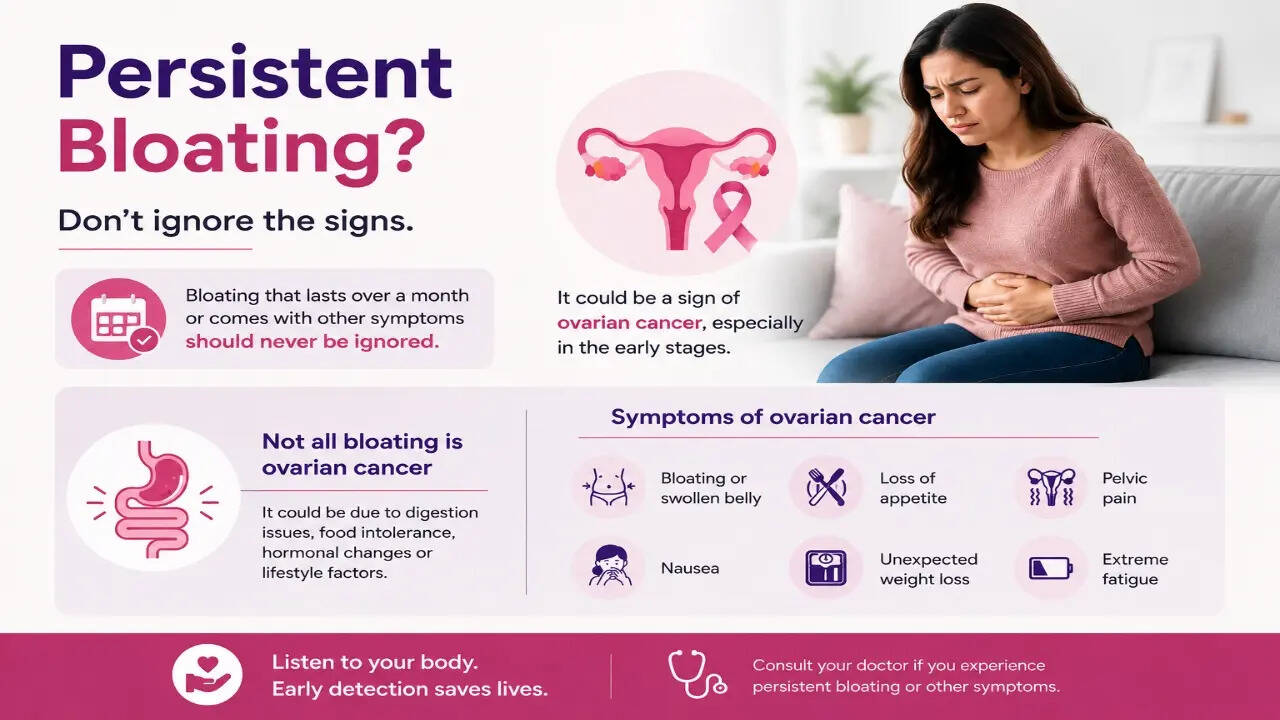
Many women do not consider persistent bloating to be a serious issue because they tend to correlate their symptoms with acidity, excessive gas, overeating, or other temporary issues caused by their digestive system. Many women tend to treat their symptoms on their own by changing their diet or taking over-the-counter medications without looking into what the underlying problem may be. Many women do this because their symptoms initially seem mild. However, it is important to pay attention to any persistent bloating, especially if the bloating occurs on a regular basis, has lasted for at least one month, or is associated with symptoms such as pelvic discomfort, loss of appetite, an increased feeling of fullness, or irregular bowel habits (diarrhoea, constipation, etc.).Is persistent bloating a sign of ovarian cancer?In an interaction with Health and Me, Dr Parnamita Bhattacharya, Gynaecologist at CK Birla Hospitals, CMRI, spoke about the concerns surrounding persistent bloating and whether it is associated with the risk of ovarian cancer.One of the most significant concerns surrounding persistent bloating is that women can develop ovarian cancer, especially in the early stages, without knowing or having any obvious signs that they have the disease. Because there are no routine screening tests to detect ovarian cancer in the general population, it is critical for women to be on the lookout for any symptoms of persistent bloating and report them immediately to their doctor. Unfortunately, because women often ignore their symptoms and fail to seek medical attention, by the time they do see a doctor, ovarian cancer has progressed to a later stage of development.How to know if it is digestion-related bloating?Not all bloating is related to ovarian cancer. Other common contributing factors to bloating include irritable bowel syndrome, food intolerance, hormonal changes, and lifestyle factors. The significant difference between "normal" bloating and "abnormal" bloating is how long each type of bloating lasts and how quickly the symptoms progress. If your bloating continues despite dietary changes, or if it increases in frequency, you should not ignore the symptoms. You should have them evaluated by a medical professional.It is important for women to understand the signals sent by their bodies. If you frequently experience bloating, this issue needs to be investigated and not just accepted as normal. If you seek timely evaluation, doctors can determine the source of your problem early on, which greatly increases your chances of a good outcome from a serious diagnosis such as ovarian cancer.What are the symptoms of ovarian cancer?Ovarian cancer symptoms can be vague and may develop as the disease progresses. Therefore, timely detection is a challenge. Some of the signs of ovarian cancer include:Pain in the pelvic regionSwollen bellyLoss of appetiteFeeling full after small mealsNauseaDiarrhoeaConstipationUnexpected weight lossPainful sexExtreme fatigueAbnormal vaginal bleeding between periods