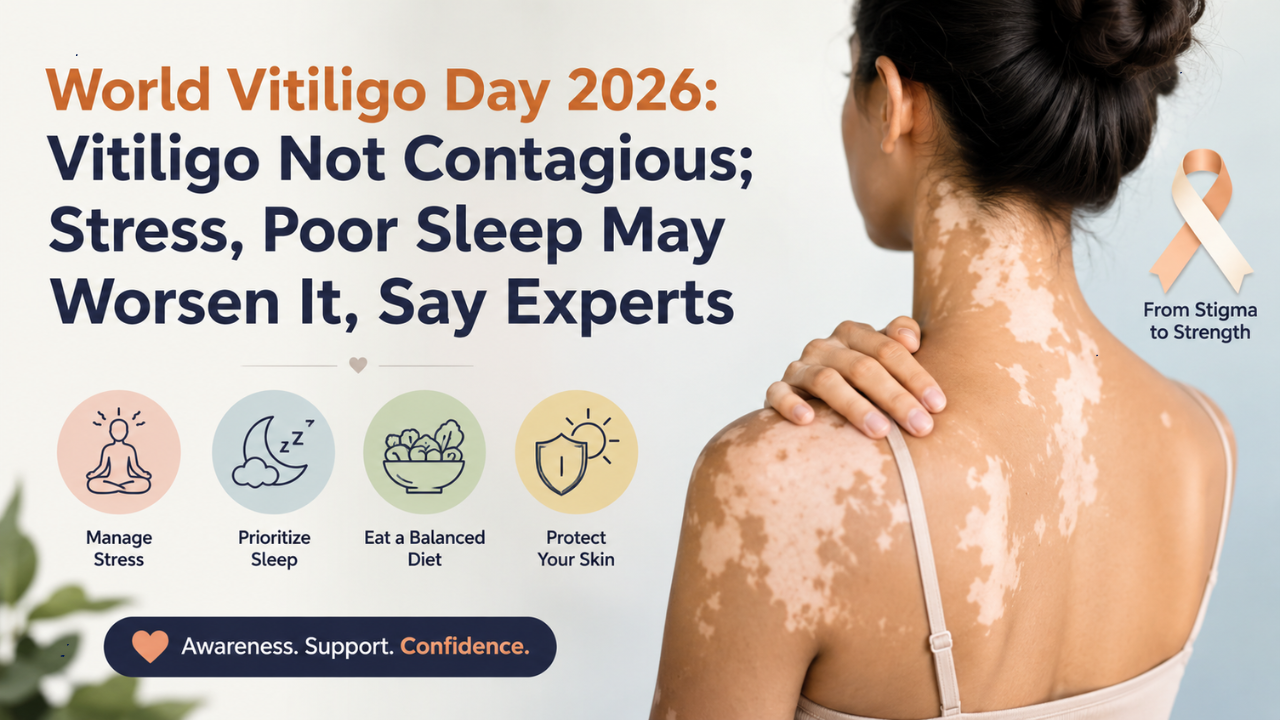
Vitiligo is an autoimmune condition that causes pigment loss in patches of skin. It is highly treatable and does not spread from person to person. However, stress, poor sleep, diet, and overall immune health may influence how active the condition becomes, experts said today on World Vitiligo Day.Awareness around vitiligo remains low and is often clouded by misconceptions. Observed annually on June 25, World Vitiligo Day aims to raise awareness and challenge the stigma associated with the condition.HealthandMe spoke to experts to understand the disease and the factors that may affect it.Dr. Rashmi Ranjan, Consultant – Dermatology, Yatharth Super Speciality Hospital, Noida, said the biggest misconception is that vitiligo is contagious."It cannot spread from one person to another through touch, sharing food, or close contact."Dr. Rashmi told HealthandMe that many people also incorrectly believe vitiligo is caused by poor hygiene or specific foods, claims that are not supported by scientific evidence.Also read: Sleeping Too Little or Too Much? Neurologist Explains Health RisksWhat Is Vitiligo?Vitiligo occurs when the body's immune system attacks melanocytes, the cells responsible for producing skin pigment. While the condition is not life-threatening, it can have a significant emotional and psychological impact.“As a chronic autoimmune disorder, vitiligo develops when the body's immune system mistakenly attacks melanocytes—the cells responsible for producing skin pigment. The result is the appearance of white patches that can develop anywhere on the body and may gradually increase in size or number over time,” Dr Hetanshu Parekh, Consultant Plastic Reconstructive & Cosmetic Surgeon, Bhailal Amin General Hospital, told HealthandMe.The Emotional Impact of VitiligoThe theme of World Vitiligo Day 2026 is "From Stigma to Strength".According to Dr. Rashmi, visible skin changes often attract unwanted attention, questions and social judgment. Some people may avoid social gatherings or experience challenges in relationships and employment because of persistent misconceptions.Children may face bullying, while adults can struggle with anxiety and low self-esteem. Emotional support from family, friends and healthcare professionals is therefore crucial.A recent study also highlighted a strong link between vitiligo and mental health in India. Nearly 89% of patients reported moderate to severe depression, while close to 60% said they covered their patches, underscoring the continuing impact of stigma.Read More: Did Donald Trump Take Eli Lilly's Weight Loss Drug? What Did White House Say Vitiligo and the Role of Lifestyle FactorsDr Hetanshu said vitiligo is often viewed as a skin condition alone, but the disease is far more complex. He explained that StressStress can disrupt immune balance and increase inflammation, potentially worsening vitiligo.New or expanding patches are often observed after major life events such as exams, work pressure, illness, financial difficulties or bereavement.SleepQuality sleep is essential for immune regulation and overall health.Chronic sleep deprivation, irregular sleep schedules or less than six hours of sleep may worsen autoimmune conditions, including vitiligo.DietThere is no specific "vitiligo diet" and no food can cure the condition.Deficiencies in Vitamin B12, Vitamin D, folate and copper may affect immune and skin health.Experts recommend an anti-inflammatory diet rich in fruits, vegetables, whole grains, nuts, seeds and omega-3 fatty acids.Smoking and excessive alcohol consumption should be avoided.Skin ProtectionRepeated friction, cuts, burns and excessive sun exposure may trigger vitiligo patches (Koebner phenomenon).Use sunscreen regularly, wear protective clothing and avoid unnecessary skin trauma from tight straps, jewellery or repetitive rubbing. Is Vitiligo Treatable?Advances in targeted topical medications, phototherapy and immune-modulating therapies have expanded treatment options and enabled more personalized care, said Dr. Rashmi told HealthandMe.Dr Hetanshu stressed that lifestyle measures should complement, not replace, medical treatment. Treatment measures include:For small, stable patches, doctors commonly prescribe corticosteroid creams and tacrolimus ointment.More extensive or rapidly spreading vitiligo may require narrowband UVB phototherapy, excimer laser therapy, oral corticosteroids or newer JAK inhibitors such as tofacitinib and ritlecitinib.Patients with stable disease for six to twelve months may be candidates for surgical procedures such as skin grafting and melanocyte transplantation.Medical tattooing and camouflage techniques can help in difficult-to-treat areas.