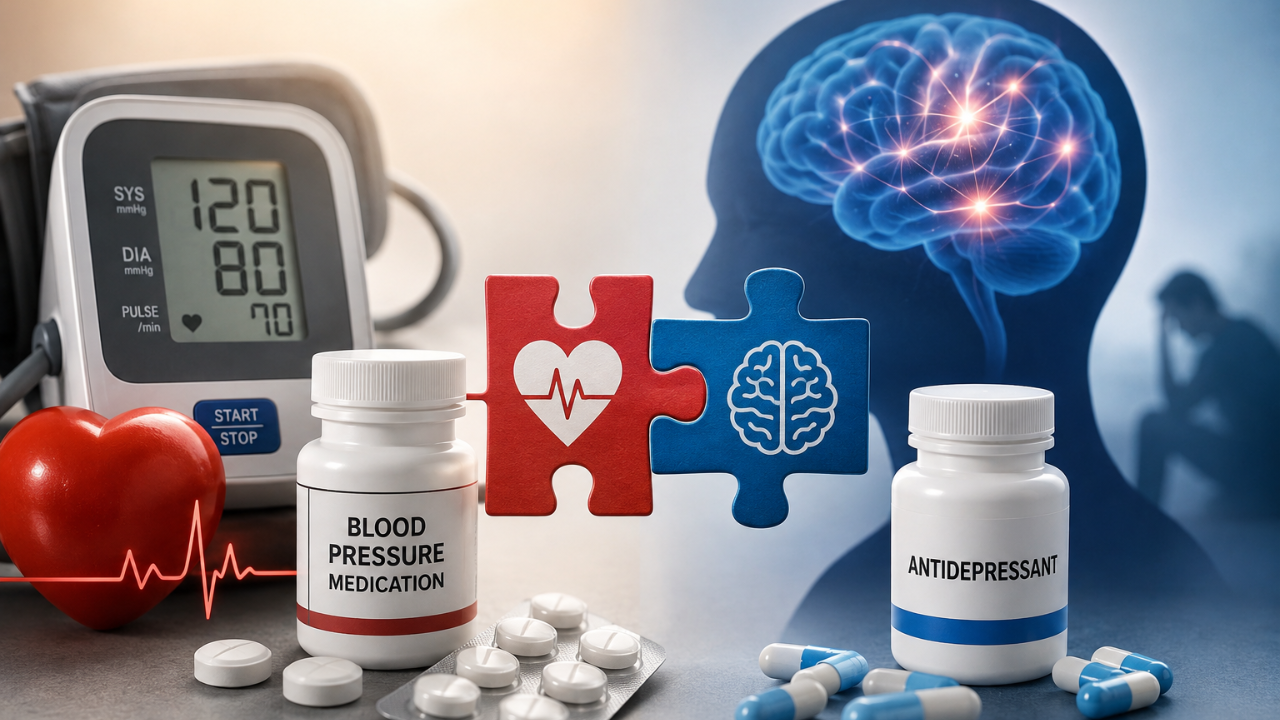
Commonly prescribed medicines for high blood pressure and heart disease could also help antidepressants work better, according to a new study by researchers at the All India Institute of Medical Sciences (AIIMS). The research offers hope for people with depression whose condition is not adequately managed with standard antidepressants. About The Study The study found that certain cardiovascular medications, when taken along with antidepressants, may improve the brain's response to treatment, potentially making clinical depression treatments more effective. The findings establish a foundation for repurposing common medicines to improve mental health treatment. The researchers stress that larger clinical trials are needed to validate the study before it can be included in standard depression treatments. "Our findings suggest that some drugs already being used to treat hypertension and heart disease may have the potential to act as adjuncts to antidepressant therapy," the AIIMS research team said. They also said that the strategy could particularly benefit patients who do not respond to antidepressants well. Also read: NBA Star Kevin Love Says Robin Williams Changed How He Sees Depression; Here's Why Symptoms Often Get MissedHow Can The Findings Help? Even though depression affects hundreds of millions of people worldwide, almost one-third of patients do not receive adequate relief from their first antidepressant. Even when medications work, they often take several weeks to show results. This has led researchers to explore more ways to improve treatment outcomes, especially for mental health issues. Repurposing existing medicines is considered an attractive strategy because their safety profiles are already well understood, potentially reducing the time and cost needed to bring new treatment options into clinical practice. Also read: Mental Health Crisis In Israel Military: Why Suicides Among Soldiers Are Increasing?How Could Heart Medicines Improve The Efficacy Of Antidepressants? Antidepressants, including selective serotonin reuptake inhibitors (SSRIs), are among the most commonly prescribed medicines for moderate to severe depression. They work by changing the levels of neurotransmitters like serotonin in the brain, helping regulate mood over time. However, individual responses may vary widely, and many patients end up needing multiple treatment approaches before achieving any relief. While the exact biological mechanisms are still under investigation, researchers believe that some cardiovascular drugs may have an effect on pathways associated with inflammation, blood flow to the brain, or nerve signaling, all of which are increasingly play a role in depression treatment. The researchers noted that these medicines are not intended to replace antidepressants. Instead, they could eventually be used alongside standard treatment to improve its effectiveness in some patients. Also read: IIT Delhi, AIIMS Develop First Hindi Music Therapy for Stroke Patients: How Survivors Find Their VoiceWord Of Caution Experts caution that patients should not start or stop blood pressure or heart medications in the hope of treating depression without clinical supervision. More clinical studies are required to identify which cardiovascular drugs offer the greatest benefit, which patients are most likely to respond, and whether the combination remains safe over long-term use. The AIIMS study could pave the way for a cost-effective strategy to improve depression treatment by giving a new role to medicines that are already widely available.