
- Health Conditions A-Z
- Health & Wellness
- Nutrition
- Fitness
- Health News
- Ayurveda
- Videos
- Medicine A-Z
- Parenting
Can Aloe Vera Cure Diseases? Everything You Need to Know About This Versatile Plant

Aloe vera (Credit: Canva)
Aloe vera, scientifically known as Aloe barbadensis, is a succulent plant popular worldwide for its antioxidant and antibacterial properties. Frequently found in skin and hair care products such as gels, creams, and shampoos, aloe vera has long been associated with medicinal benefits. But does it really cure diseases?
Benefits for Skin Conditions
Aloe vera is widely recognized for its ability to treat various skin ailments, particularly burns. It is because it has soothing and healing properties. A study titled The Effect of Aloe Vera Clinical Trials on Prevention and Healing of Skin Wound: A Systematic Review was 2019. These studies have concluded that aloe vera is more effective than petroleum jelly gauze dressing, silver sulfadiazine 1% ointment, and framycetin cream.list of Diseases Cured by Aloe Vera
Aid For Constipation
Aloe vera latex, a sticky yellow residue beneath the plant's skin, is known for its laxative effects. The compound aloin, or barbaloin, plays a key role in alleviating constipation. However, concerns about the safety of frequent use have led to restrictions; since 2002, aloe latex has not been available as an over-the-counter medication in the US.
Impact On Diabetes and Blood Pressure
For individuals with type 2 diabetes, consuming aloe vera may help lower blood sugar levels by enhancing insulin sensitivity. A 2021 review found moderate to high-quality evidence supporting aloe vera's benefits for those with prediabetes or type 2 diabetes. Despite this, there is no empirical evidence to support its effect on curing diabetes. Additionally, aloe vera may have some potential in managing high blood pressure, although its role in this area is less clear.
Relief For Mouth Ulcers
Mouth ulcers, or canker sores, are common and can cause significant discomfort. Aloe vera has been shown to accelerate the healing process and reduce pain associated with these ulcers. A 2022 review of nine randomized controlled trials supported the efficacy of aloe vera in promoting faster healing compared to other treatments. It stated that aloe vera was efficient in preventing skin ulcers and treating burn wounds, postoperative wounds, cracked nipples, genital herpes, psoriasis, and chronic wounds including pressure ulcers.
Limitations In Digestive Health
While aloe vera is effective against constipation, it does not appear to significantly benefit other digestive conditions such as irritable bowel syndrome or inflammatory bowel disease, contrary to popular belief. Aloe mainly uses its leaf parts and the gel juice extracted to treat constipation. In their study, published in Chinese Herbal Medicines, researchers observed the laxative effect of Aloe on constipated mice and its effect on intestinal peristalsis and intestinal wall reabsorption of water in mice.There are various skincare products like moisturizers, sunscreens, and soothing gels that often feature aloe vera for its hydrating and healing properties. There are haircare products like shampoos, conditioners, and hair masks that have aloe vera as a key ingredient as it promotes scalp health and reduce dandruff. Aloe vera-infused drinks and supplements are marketed for digestion and overall wellness. Moreover, it is also widely used in lip balms, facial cleansers, hand sanitisers, and even tissues for its antibacterial and soothing effects.
Why Many Older Men Struggle to Conceive Despite ‘Good Health’

Chronic stress can take a toll on sperm count. (Photo credit: iStock)
Many men believe that as long as they feel healthy, active, and free from major illness, their fertility remains intact. While men do not have a sudden fertility cut-off like women, age still plays an important role when it comes to male fertility. Currently, a large number of men wish to start families later in life, often thinking their good health guarantees easy conception and fatherhood. They often neglect the age factor, even though it is linked to hormonal imbalance, stress, and genetic issues. A large number of men are unaware of their fertility health and continue to suffer. However, even in the absence of visible health problems, older men may face unexpected fertility challenges. Dr Madhukar J Shinde, Fertility Specialist at Nova IVF Fertility, PCMC, Pune, answered this for Health and Me.
Read more: The Overlooked Role of Men in IVF: Why Their Silent Strength Is Key to Fertility Success
Why do older men struggle with infertility?
Decline in sperm quality: Various studies have confirmed that as men age, sperm count, movement, and shape can slowly decline. Even if the numbers appear normal, DNA damage in sperm increases with age, which can reduce the chances of successful fertilisation.
- Hormonal imbalance: It is important to note that testosterone levels naturally decrease over time. Lower testosterone can affect sperm production, sexual function, and overall reproductive performance, even when a man feels physically fit.
- Some medical conditions tend to take a toll on fertility: Conditions such as diabetes, high blood pressure, and thyroid disorders become more common with age. These may be well-managed and symptom-free, but can still affect sperm health and fertility.
- Stress and other lifestyle factors can impact fertility: Chronic stress, lack of sleep, smoking, alcohol consumption, or exposure to pollution can take a toll on sperm quality and lead to fertility issues that can be worrisome for men. Preservatives in a lot of frozen and junk food not only contribute to poor fertility health, but research suggests they may also affect DNA function. Therefore, men should stay vigilant.
- Genetic issues: Advanced paternal age is associated with a higher risk of genetic mutations in sperm. This can further affect embryo development and increase the risk of miscarriage or certain developmental conditions.
Men must stay in touch with a fertility consultant who can design an appropriate treatment plan. The expert will evaluate them thoroughly and suggest lifestyle modifications such as a well-balanced diet, exercise, stress management through meditation, and medication for conditions such as diabetes, hypertension, and cholesterol. Awareness helps men take informed steps towards parenthood, even later in life. Certain pre-medications, including antioxidants advised by a fertility consultant, may significantly help in reducing DNA fragmentation, which contributes to poor sperm function. Therefore, men should prioritise their reproductive health, stay informed, and not suffer in silence.
High BP? This Ancient Chinese Practice May Be As Good As Brisk Walking

Credit: iStock
High blood pressure (BP) has become a public health problem that is driving cardiovascular diseases like heart attacks and strokes globally. While medications are important to keep hypertension under control, lifestyle changes and healthy practices are also crucial.
Several global health guidelines recommend regular physical activity, but adhering to exercise programs daily becomes a challenge for many people. But in the overtly busy schedules, sparing 10 minutes for an exercise regimen can be easier than travelling to the gym.
A large randomized clinical trial, published in the Journal of the American College of Cardiology (JACC), has proved that a traditional Chinese mind-body practice — baduanjin — may help lower blood pressure, that too, without any equipment.
Baduanjin is a slow, structured movement, focused on deep breathing and meditation.
Importantly, the clinical trial proved that the ancient Chinese technique could lower BP as effectively as brisk walking.
In people practicing baduanjin, BP reductions were seen after three months and were sustained for one year.
"Given its simplicity, safety, and ease with which one can maintain long-term adherence, baduanjin can be implemented as an effective, accessible, and scalable lifestyle intervention for individuals trying to reduce their blood pressure," said Jing Li, Director, National Center for Cardiovascular Diseases in Beijing, China.
Baduanjin: The 10 Minute Routine
Baduanjin is a standardized eight-movement sequence that integrates aerobic, isometric, flexibility, and mind-body components.
It has been in practice for centuries and commonly performed in community settings across China. The routine typically takes 10–15 minutes and requires no equipment and only minimal initial instruction.
Because it is low- to moderate-intensity, it is considered safe and accessible for many adults.
Also read: Cardiovascular Diseases Lead As India’s Top Killer: US Cardiologist Points Out Risk Factors
The Clinical Trial
A team of Chinese researchers led the first large, multicenter randomized trial to look at the impact of baduanjin on blood pressure.
They followed 216 participants, aged 40 years or older, across seven communities to determine changes in 24-hour systolic BP from baseline to 12 and 52 weeks.
Compared to people indulging in self-directed exercise, practicing baduanjin five days a week reduced
- systolic blood pressure by approximately 3 mg Hg
- systolic blood pressure by 5 mg Hg.
Notably, the benefits were sustained even without ongoing monitoring, a key challenge for many lifestyle interventions that struggle to maintain long-term adherence outside structured programs.
"Baduanjin has been practiced in China for over 800 years, and this study demonstrates how ancient, accessible, low-cost
approaches can be validated through high-quality randomized research," said Harlan M. Krumholz, Editor-in-Chief of JACC and the Harold H. Hines, Jr Professor at the Yale School of Medicine.
"The blood pressure effect size is similar to that seen in landmark drug trials, but achieved without medication, cost, or side effects. This makes it highly scalable for community-based prevention, including in resource-limited settings," they added.
Also read: AHA Cholesterol Guidelines 2026: How Indians Can Improve Heart Health
How To Practice Baduanjin
- Stand upright with your feet shoulder-width apart and keep your movements slow and controlled.
- Coordinate each motion with steady, deep breathing, inhaling and exhaling smoothly as you move.
- Move through the traditional eight postures in sequence, focusing on posture, balance, and relaxation rather than speed or force.
- Practice for about 10 to 15 minutes a day in a quiet space, maintaining calm attention throughout.
Suffering From Mid-back Pain? Doctors Say It May Be Spinal TB
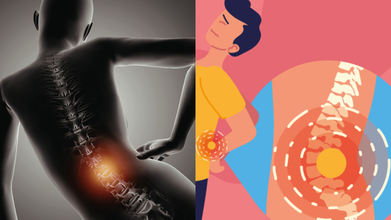
Credit: Canva/iStock
Back pain is a common problem seen among middle-aged men and women, especially those sitting for prolonged hours. The pain experienced is mainly due to poor posture, lack of physical activity, obesity, and stress.
However, for some, the pain occurs in the mid-back, indicating a far more serious problem. While it may appear like chronic back pain, it may actually signal the risk of spinal tuberculosis, which can creep in silently, according to doctors.
If left untreated, the dangerous infectious disease can lead to paralysis and spinal deformity.
“If your back pain persists for months, it is localized, or if it worsens with cough/breathing, don’t ignore it; seek expert evaluation,” said Dr. Sudhir Kumar, a neurologist from Apollo Hospitals Hyderabad, in a post on social media platform X.
Chronic Back Pain And Spinal TB
Dr. Kumar also shared the case of a 55-year-old man suffering from back pain for four months.
The man’s blood tests, nerve conduction studies, and MRI (neck and lower back) appeared normal. Yet his pain did not go away. He found no relief with painkillers, muscle relaxants, and rest.
Notably, his pain increased while coughing and taking deep breaths.
“That is not a random symptom. Pain that increases with coughing is suggestive of spinal nerve root irritation or compression. This immediately shifts thinking from “muscle pain” to spine pathology,” said Dr. Kumar. The expert advised an MRI of the dorsal (thoracic) spine, which suggested spinal TB.
The “MRI dorsal spine showed involvement of D8–D9 vertebrae, disc edema and paravertebral collection. These findings were suggestive of Spinal Tuberculosis,” said the neurologist, popularly known as the Hyderabad doctor.
Unlike lung TB, where prolonged fever or coughs are a key risk factor, Dr. Kumar just had persistent back pain and no fever, weight loss, or any such “typical TB symptoms”.
“This is why Spinal Tuberculosis is dangerous. It can be silent and slow, and the diagnosis can be easily missed, until it causes paralysis and spinal deformity,” Dr. Kumar said.
What Is Spinal TB?
Tuberculosis of the spine is also known as Pott’s disease, and is named after Sir Percival Pott, who described it in 1779.
Also called tuberculous spondylitis, it is a severe form of skeletal tuberculosis where the Mycobacterium tuberculosis bacteria infect the vertebrae — typically spreading from the lungs to the spine via the blood.
Unlike routine back pain, pain due to spinal TB is persistent, progressive, and does not respond to usual rest or medication.
Early identification is crucial to prevent complications such as spinal deformity or neurological damage, Dr. Manisha Mendiratta, Director & Head – Pulmonology, at Sarvodaya Hospital, Faridabad, told HealthandMe.
The common symptoms to watch out for include:
- Back pain lasting more than 4–6 weeks
- Pain that worsens at night or at rest
- Unexplained weight loss and fatigue
- Low-grade fever or night sweats
- Numbness, weakness, or difficulty walking.
How Can Spinal TB Be Diagnosed?
Early evaluation is key. If symptoms persist, a detailed clinical assessment should be done. Doctors may recommend:
- Imaging tests such as X-ray, MRI (more sensitive)
- Blood tests to check infection markers
- Biopsy or microbiological tests for confirmation
Is Spinal TB Preventable?
Dr. Mendiratta urged the need for ensuring early diagnosis and complete treatment of any TB infection. Further, maintaining good immunity through balanced nutrition and rest, as well as avoiding ignoring persistent or unusual back pain, is crucial to preventing spinal TB.
The doctor also stressed the need for regular follow-ups in people with a history of TB exposure, and to never stop TB treatment midway.
How To Manage Chronic Back Pain
- Seek medical advice if pain persists beyond a few weeks
- Follow the prescribed treatment completely if diagnosed
- Maintain good posture and ergonomic habits
- Do guided physiotherapy for spine strength
- Avoid self-medication or long-term painkiller use
- Don’t ignore systemic symptoms like fever or weight loss
- Don’t delay consultation if the pain is worsening.
- Follow Us :


© 2024 Bennett, Coleman & Company Limited