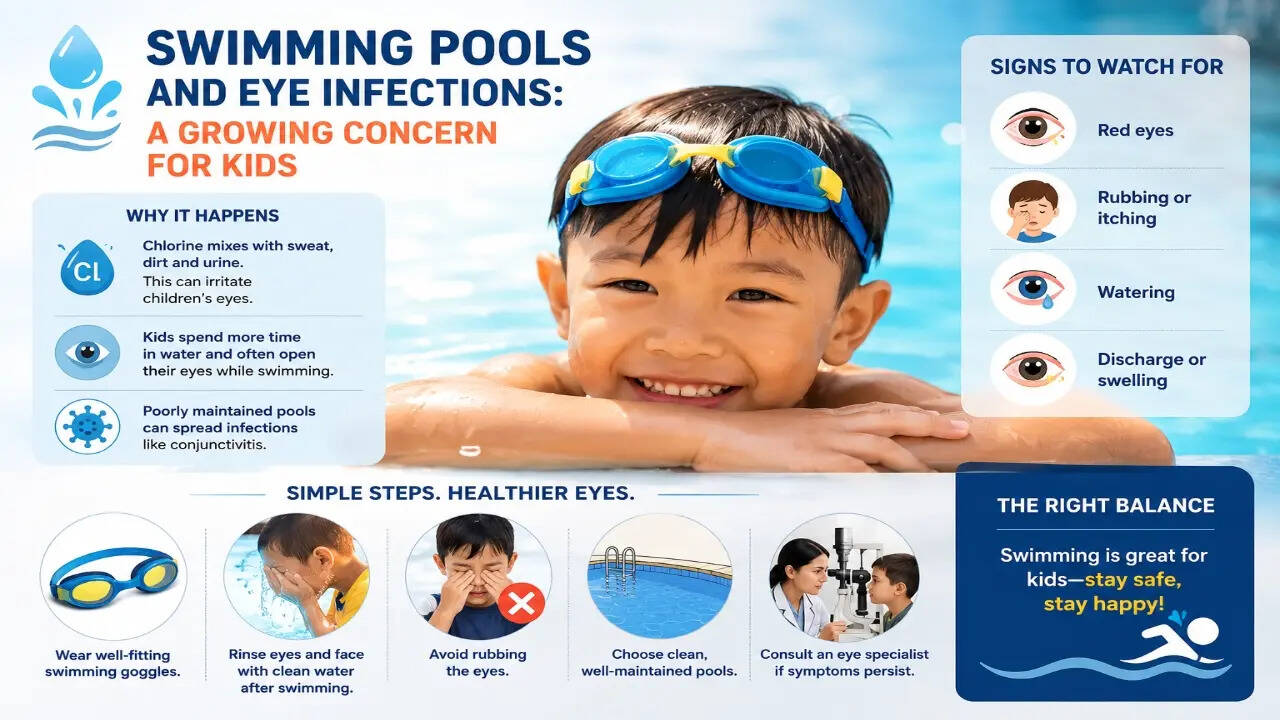
For most children, a swimming pool is all about fun: summer afternoons, splashing around, and playing with friends. It feels harmless, even healthy, and in many ways, it is. But over time, a small pattern has started to show up. Parents notice it after a swimming session: red eyes, constant rubbing, and sometimes complaints of burning or discomfort that were not there before. It does not always seem serious in the beginning, which is probably why it gets ignored. Still, it keeps happening often enough to be worth paying attention to.In an interview with Health and Me, Dr Neeraj Sanduja, Director, Viaan Eye & Retina Centre, Gurugram, explained how swimming pool time could be giving your children eye infections. What’s Really Causing the ProblemIt is easy to assume the water is the issue, but that is only part of it. Most pools are treated with chlorine, which is necessary to keep them clean. The problem starts when chlorine mixes with other things that end up in the water: sweat, dirt, and even small amounts of urine. That mix creates compounds that can irritate the eyes.Children are more likely to be affected because they spend more time in the water and often open their eyes while swimming. The natural layer that protects the eyes gets disturbed, and that is when the redness or burning starts. In some cases, it is not just irritation. If the pool is not maintained properly, there is also a risk of infections. Conjunctivitis, for example, can spread quite easily in shared water.What Parents Usually Notice FirstThe signs are not always dramatic. In fact, they are easy to miss at first. A child may come back with slightly red eyes and say they sting a bit or keep rubbing them without thinking much of it. Sometimes there is watering that does not settle quickly.If it is just mild irritation, it usually improves within a few hours. But if the redness stays, or there is itching, swelling, or discharge, it is likely to be something more than just chlorine exposure. That is usually the point at which it needs attention.Small Things That Actually HelpThe good part is that this is mostly preventable. Swimming goggles make a difference. Not everyone likes wearing them, especially younger children, but they do help keep the eyes protected. A proper fit matters; otherwise, water still gets in.Rinsing the face and eyes with clean water after getting out of the pool is another simple step. It helps wash away whatever is left behind. Also, children tend to rub their eyes when they feel discomfort. That only makes things worse. It is a small habit, but one that needs to be corrected gently. And then there is the pool itself. A clean-looking pool is not always a safe one. Maintenance matters more than appearance.When It Shouldn’t Be IgnoredMost of the time, these issues settle quickly, but not always. If the same problem keeps coming back after every swim, or if the symptoms last beyond a day, it is better to get it checked. Waiting it out does not always help. Children may not always explain clearly what they are feeling. So, small changes, like avoiding light or blinking more than usual, can be signs that something is not right.Finding the Right BalanceSwimming is still one of the best activities for children. It keeps them active, helps them relax, and is something they genuinely enjoy. The idea is not to stop it, just to be a little more careful. A few small steps can go a long way in preventing discomfort later. And once that becomes part of the routine, the experience stays what it is meant to be: fun, safe, and worry-free.