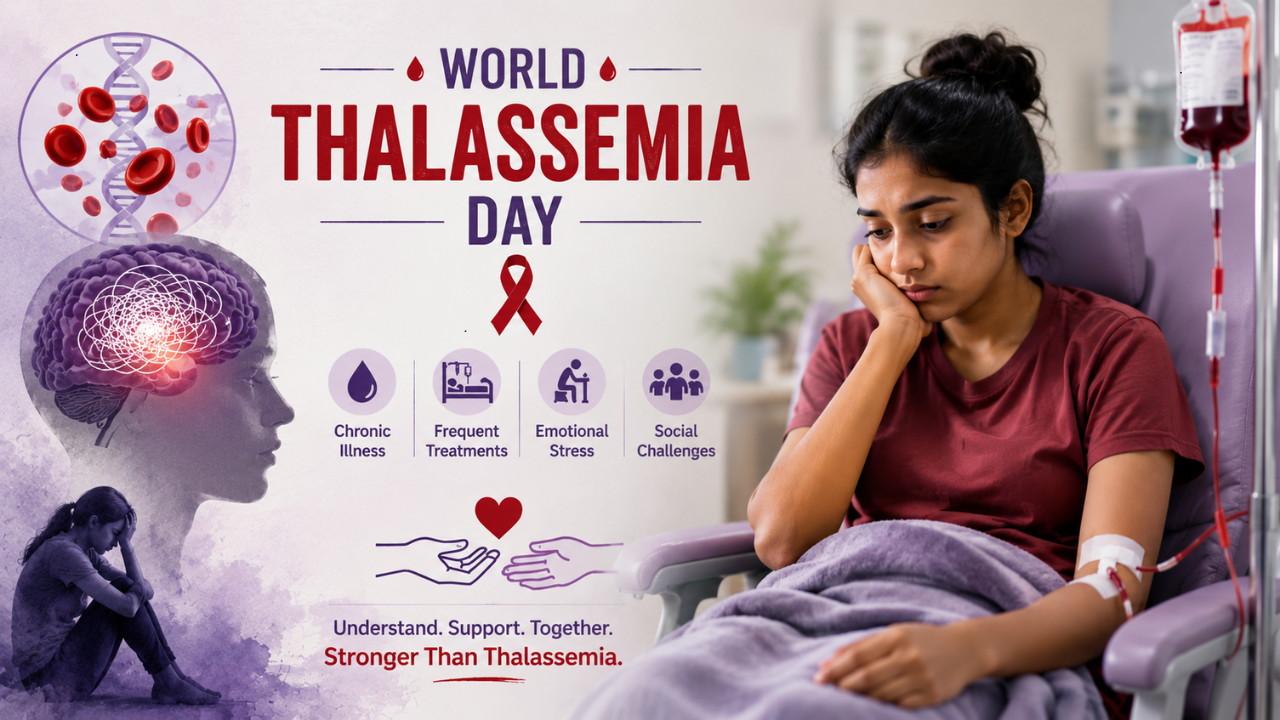
While thalassemia is known widely as a blood disorder, its impact can extend far beyond anemia and transfusions, said experts on World Thalassemia Day today. World Thalassemia Day is observed every year on May 8 to raise awareness about the inherited blood disorder caused by faulty genes.The disorder, which often requires blood transfusions every fortnight, affects approximately 1.3 million people living with severe forms of thalassemia worldwide. About 1.5 percent of the global population is carriers, and the disease claims nearly 11,000 lives annually.Speaking to HealthandMe, health experts raised concerns about the growing mental health and neurological challenges faced by patients, especially children and young adults living with the condition.Dr. Praveen Gupta, Chairman – Marengo Asia International Institute of Neuro & Spine (MAIINS), Gurugram, shared that repeated blood transfusions are important and save the lives of thalassemia patients, but long-term transfusion therapy can potentially lead to neurological complications if not properly monitored.“Chronic transfusions can cause iron overload, which is the accumulation of iron in critical organs such as the brain, and may impact cognitive and psychological function, as well as mood,” Dr. Gupta explained.He added that "changes in oxygen supply and related complications may make patients more vulnerable to headaches, lethargy, or even undetected brain injury".However, experts stress that most neurological complications can be prevented through multidisciplinary care, iron chelation therapy, and regular monitoring.Can Thalassemia Affect Brain Development in Children?The expert stated that thalassemia may also indirectly affect brain development in children, particularly when severe anemia continues for long periods and limits oxygen supply to the growing brain.Dr. Gupta noted that poor oxygenation, nutritional deficiencies, iron overload from repeated transfusions, and metabolic complications may affect:Cognitive functionLearning abilityAttention spanOverall neurodevelopmentEarly warning signs may include:Delayed speechDifficulty concentratingPoor school performanceFrequent headachesIrritabilityDevelopmental delays“The good news is that with timely diagnosis, frequent transfusion support, iron chelation therapy, nutrition, and neurological monitoring, most children with thalassemia can grow into healthy, productive adults,” he told HealthandMe.Also read: World Thalassemia Day 2026: Why Screening Before Marriage Or Pregnancy Is ImportantEarly Signs Parents Should Not IgnoreDr. Vipin Khandelwal, Sr. Consultant Paediatric Haemato Oncology & BMT at Apollo Hospitals Navi Mumbai, told HealthandMe that thalassemia affects the blood’s ability to carry oxygen, and prolonged disruption can impact growth, immunity, bone health, and learning abilities.“The early signs of thalassemia are often subtle, which is why many families miss them until anemia becomes severe,” he said.Parents should watch for persistent symptoms such as:Unusual tirednessPale appearancePoor appetiteDifficulty gaining weightDelayed growthDelayed walking or speechReduced staminaBone painRecurrent weakness“In older children and adolescents, delayed puberty, bone pain, reduced stamina, or recurrent weakness should not be ignored,” Dr. Khandelwal added.He stressed that while thalassemia is inherited, many serious complications can be prevented with early diagnosis, regular check-ups, timely transfusions, and proper iron monitoring.Why Depression and Anxiety Are Common Among Thalassemics?Read More: Hantavirus Updates Of The Day: 8 May 2026 - US CDC Classifies Outbreak As 'Level 3' EmergencyFurther, the experts also highlighted risk of anxiety, stress, low self-esteem, and depression among people with thalassemia who face lifelong blood transfusions, frequent hospital visits, leading to physical fatigue, and fear of complications. Over time, these challenges may increase, many often go unnoticed or untreated.Dr. Roshan Dikshit, Senior Consultant, Haematology & Bone Marrow Transplant at Aakash Healthcare, told HealthandMe that thalassemia is not only a physical health condition, but also an emotional and psychological challenge. He stressed the need to provide mental support to thalassemic patients. “Frequent hospital visits, lifelong blood transfusions, fear of complications, and social limitations can increase the risk of anxiety, stress, and depression, especially among teenagers and young adults,” said Dr. Roshan Dikshit, Senior Consultant, Haematology & Bone Marrow Transplant at Aakash Healthcare.According to Dr. Dikshit, many patients struggle with:Low self-esteemIsolationEmotional fatigue.Importantly, these emotional challenges often go unnoticed.“Mental health support should be considered an essential part of thalassemia care. Counseling, family support, social acceptance, and open communication can significantly improve a patient’s emotional well-being and quality of life,” he said.He also emphasized that early psychological intervention can help patients cope better with the disease and reduce the long-term mental health burden associated with chronic illness.