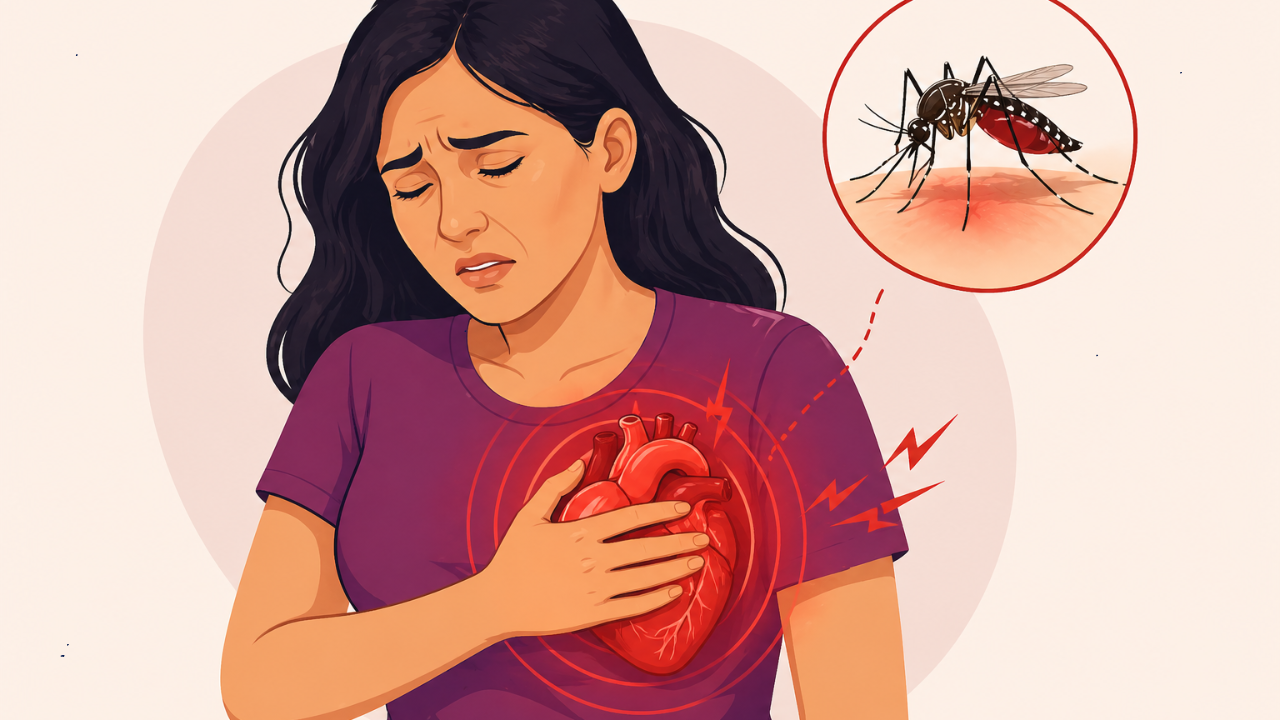
Malaria is widely known as a mosquito-borne disease that causes fever, chills, and body aches. But what many people don’t realize is that in severe cases, it can also affect the heart.Malaria is caused by parasites belonging to the Plasmodium genus. It may cause complications beyond the bloodstream. In some cases, this may happen in severe malaria, where either the diagnosis or treatment is late.How Malaria Infection Affects The Heart Speaking to HealthandMe, Dr. Ravi Prakash, Senior Consultant Cardiology, PSRI Hospital, Delhi, noted that malaria affects different parts of the body, depending on the severity and the patient's immunity."In severe malaria cases, the parasite that causes malaria infects the red blood cells, making them sticky. When these stick together, the cells block the flow of blood in smaller blood vessels, limiting oxygenation of important organs, including the heart," Dr Prakash explained.The condition may then result in myocarditis, arrhythmias, or heart failure. Although these complications rarely affect the heart, they require prompt medical intervention.Further, Dr. Rakesh Pandit, Senior Consultant & HOD, Internal Medicine, Aakash Healthcare, highlighted that malaria can put stress on the heart either directly or indirectly.It can lead to inflammation of the heart and result in chest pains, fatigue, or arrhythmia."Patients suffering from severe malaria may develop tachycardia or, in worst-case scenarios, experience heart blockage," Dr. Pandit told HealthandMe.The Role of AnemiaFurthermore, malaria infection may limit the blood flow to the heart by increasing the stickiness of the blood, thus blocking small blood vessels."Anemia associated with malaria can increase the load on the patient's heart," Dr Pandit said.Fever, dehydration, and hypoxia further increase cardiac stress in malaria patients, who may end up having their pre-existing heart conditions unmasked. Malaria: Early Signs Of Heart Damage? Early detection is important. Besides classic malaria symptoms such as fever, sweats, shivers, headaches, and tiredness, any unusual symptoms such as chest pains, difficulty breathing, rapid heartbeats, or excessive weakness must be considered carefully. "These could be signs of organ damage caused by the disease, which means early diagnosis and treatment are vital. Blood tests will be conducted to identify malaria parasites in your body," Dr. Prakash said. Malaria And Heart: Who Is At More Risk Some individuals are more susceptible to contracting malaria, which increases their chances of developing complications from the disease. These include children, pregnant women, the elderly, immunocompromised patients. "People who have underlying diseases may develop heart-related problems due to the malaria infection," Dr Prakash said. Moreover, travelers to malaria-endemic areas without adequate protection from the disease are also likely to be affected. How To Prevent?The best method to avoid contracting malaria is to take preventive measures.Individuals must protect themselves from mosquito bites.Applying insect repellents, sleeping under mosquito nets, and covering your arms and legs when you go out are effective ways to shield yourself from being bitten.Proper hygiene and sanitation practices are necessary to prevent mosquitoes from reproducing.Having a good general health status is another preventive measure. Your immune system must be able to combat invading agents.