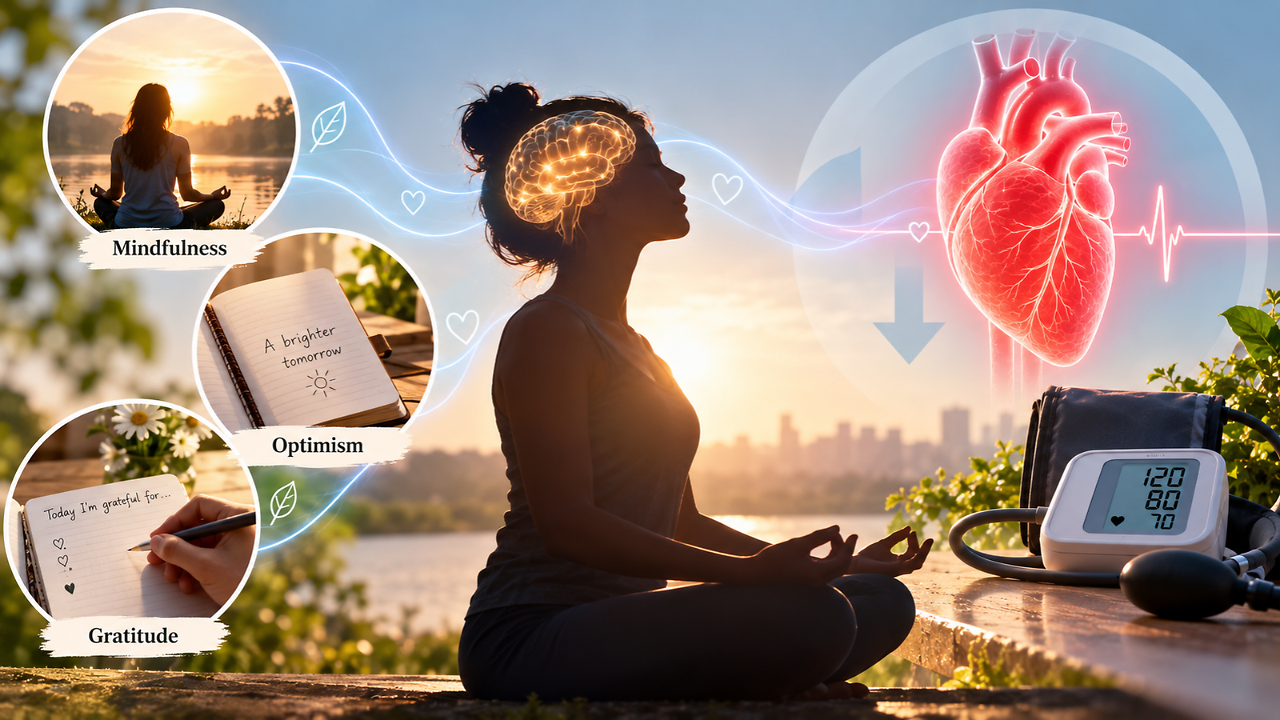
High blood pressure can be managed with medication and dietary changes. But recent research suggests that certain mental health habits can also help fight hypertension. Mental health practices like mindfulness, optimism and gratitude may also support cardiovascular health, partly by helping people manage stress better and maintain healthier habits.Hypertension affects nearly half of adults in the United States. While lifestyle changes like reducing salt intake, exercising regularly, maintaining a healthy weight and limiting alcohol remain crucial, the emerging study says that psychological wellbeing can also have a beneficial effect on blood pressure.“Stress contributes to hypertension,” said Willie E. Lawrence Jr., a cardiologist and spokesperson for the American Heart Association. “It’s hard to get all the stress out of your life, but there are things that you can do to lower blood pressure, like mindfulness.”According to the researchers, here are three mental health habits that may help: MindfulnessAlso read: Long Term Air Pollution Exposure Linked With 14% Higher Dementia Risk: UK Study Based On 488,000 PeopleMindfulness refers to paying attention to thoughts, emotions and physical sensations in the present moment without judging them. It may help alleviate stress and improve behaviours that affect blood pressure like dietary choices and physical activity.Eric Loucks, professor of epidemiology and director of the Mindfulness Center at Brown University, developed a mindfulness-based blood pressure reduction programme that teaches participants all about self-awareness, attention control and emotional regulation. The programme teaches people to apply these skills to everyday decisions like choosing healthier foods.“There can be energy that comes up to act on those insights,” Loucks said. “So if we decide we want to eat more healthily, can we be there with that energy in the grocery store, selecting the food for the week?”OptimismAlso read: Eating A Handful Of Nuts Daily May Lower High Blood Pressure Risk, Study FindsOptimism means expecting positive outcomes while recognising that challenges exist. Research has linked an optimistic outlook with better cardiovascular health, but evidence that it lowers blood pressure in people who already have hypertension is limited.A study based on more than 100,000 active-duty US Army personnel without hypertension found that the most optimistic participants were less likely to develop high blood pressure during an average follow-up of three and a half years.Julia Boehm, professor and chair of psychology at Chapman University said that practising optimism does not mean ignoring difficulties. Instead, people can identify realistic, achievable actions that support their health, such as choosing nutritious meals or becoming more physically active.“This might mean something concrete like, ‘Am I going to choose to eat the salad or the french fries at lunch?’ and thinking optimistically that my choices in any given moment are going to translate into measurable effects in the long run,” Boehm said.GratitudeGratitude involves acknowledging the people, experiences and acts one appreciates. Some research suggests it may affect cardiovascular responses to stress.One study found that writing a gratitude letter changed how systolic blood pressure responded during a stress test. Systolic pressure, the upper number in a blood pressure reading, measures pressure when the heart contracts.Mindfulness, optimism and gratitude should complement established hypertension treatment, not replace it. Medication, regular physical activity, a balanced diet and screening remain essential.As Boehm cautioned, “You can’t ignore the doctor’s advice to either take your medications or engage in physical activity or eat fruits and vegetables. It’s just one piece of a larger strategy to bolster health.”