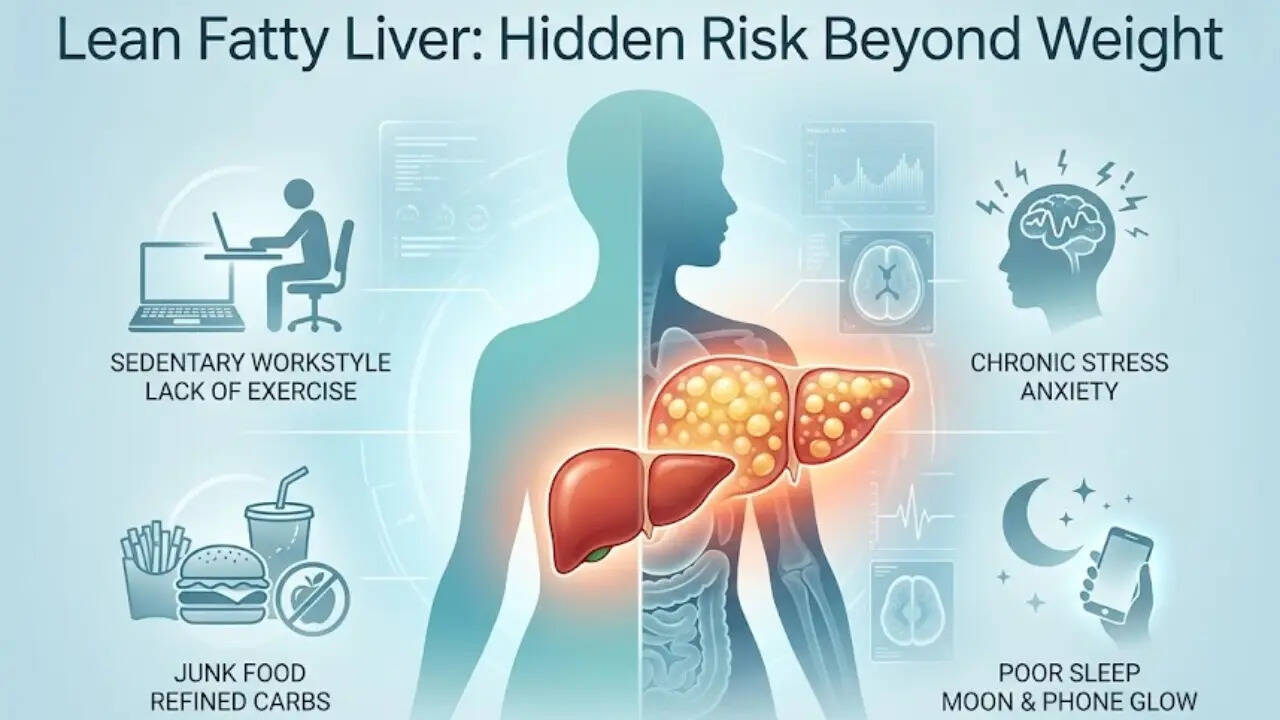
For many people, a normal weight brings a sense of reassurance. If the weighing scale looks fine, health is assumed to be in check. However, in clinical practice, we are increasingly seeing individuals who are not overweight yet show clear signs of fatty liver. This condition, often called lean fatty liver, is quietly becoming more common in India and is a major public health concern.Dr Harshavardhan Rao B, HOD & Consultant, Department of Gastroenterology, Ramaiah Memorial Hospital, while talking about the possibility of people suffering from a lean fatty liver, despite normal body weight, answered all FAQs regarding the condition. What is Lean Fatty Liver?When fat accumulates in the liver of individuals who have a normal body mass index (BMI), it is referred to as "lean fatty liver." It falls under the broader category of metabolic dysfunction-associated steatotic liver disease (MASLD), but it occurs in people who do not fit the prototypical profile of being overweight with high sugar levels and uncontrolled blood pressure. It is also more common in younger age groups compared to the typical MASLD patient. This contradicts the general belief that a normal body weight and BMI are indicators of good metabolic health and, by extension, optimal liver function.Why Are We Seeing More of It in India?Metabolic diseases are presenting differently in the Indian population. Even individuals who appear lean may carry underlying metabolic risk. Several patterns are worth noting:Diets high in refined carbohydrates—polished white rice, bakery products, packaged snacksLow physical activity, particularly in urban, desk-bound settings (exacerbated in the post-COVID era)Visceral abdominal fat accumulation (fat deposited around the internal organs) despite a normal overall weightDiet quality and meal patterns tend to matter more than total intakeAbnormal sleep patterns (night shifts, doom-scrolling at night, Netflix marathon trends)Chronic high-stress environmentsLean fatty liver produces no obvious symptoms in the early stages. Most individuals feel entirely well. The diagnosis is typically incidental—picked up during routine health check-ups when liver enzymes are mildly elevated or when an ultrasound shows fatty changes.The absence of warning signs has two potentially serious downstream effects. Firstly, most cases are diagnosed at a later stage when liver damage has already set in, and secondly, it makes it easy to defer action since the patient perceives no discomfort and does not feel the need to prioritise this over routine work and personal stresses.Why Normal Weight Can Be MisleadingBody weight does not give the full picture of metabolic health. A normal BMI can coexist with:High visceral fat around internal organsReduced skeletal muscle massBorderline or elevated fasting blood glucoseDyslipidaemia or abnormal cholesterol metricsThis forms the basis for the clinical category of “metabolically unhealthy, normal weight."Less Talked About ContributorsBeyond the standard risk factors, several contributors tend to be underappreciated:Irregular meal timing, including skipped meals and late-night eatingPoor sleep and sustained stress, both of which affect hormonal and metabolic regulationLong-term use of certain medicationsLow dietary protein, which can reduce muscle mass and impair metabolismVitamin D and B12 deficiencies, which are common in this populationTogether, these factors can have profound effects on metabolic health and eventually lead to fatty liver and even long-term liver damage.What Should Be Done?The management of lean fatty liver focuses on metabolic improvement rather than weight reduction.Balanced meals over calorie restrictionReduced intake of refined carbohydrates and added sugarsAdequate dietary protein to preserve muscle massRegular physical activity — both aerobic and resistance-based (40%–60%)Consistent meal timings; avoiding heavy meals late at nightRoutine monitoring of blood glucose, lipid profile, and liver enzymes, not just body weightFor many Indians — including those who do not see themselves as being at risk — this distinction matters. Identifying and acting on relevant lifestyle factors early is worthwhile. At this stage, fatty liver is often reversible with sustained dietary and behavioural changes.