
- Health Conditions A-Z
- Health & Wellness
- Nutrition
- Fitness
- Health News
- Ayurveda
- Videos
- Medicine A-Z
- Parenting
Can Polio Make a Comeback in India? It Is Highly Unlikely, Says Expert

Polio (Credit: Canva)
After being declared polio-free in 2014, India’s robust vaccination programs have kept the disease at bay for nearly a decade. Yet, recent reports of poliovirus detection in Meghalaya have reignited concerns over a potential resurgence. Dr Sanjay Siddharth sheds light on the current scenario and whether India truly faces a renewed threat from this crippling disease.
Understanding Polio and Vaccine-Induced Risks
The primary strategy behind India’s polio eradication was the widespread administration of the Oral Polio Vaccine (OPV). The OPV contains a weakened version of the live virus or only its antigenic part. While this vaccine has proven highly effective, Dr Siddharth explains that there is always a small risk of the virus mutating and causing what is known as vaccine-derived poliovirus (VDPV). In fact, 4-5% of VDPV cases occur in approximately one million children vaccinated with OPV, highlighting this inherent risk.
Although India eradicated wild poliovirus, cases of vaccine-derived poliovirus have been consistently detected, with around 100-150 cases reported annually. Dr Siddharth emphasizes that while these cases exist, they typically only become dangerous in individuals with compromised immunity. "The risk of serious mutation and spread mainly affects people whose immune systems are weakened by conditions like HIV (Human Immunodeficiency Virus), which severely impairs immunity," he notes.
Role of Injectable Vaccines
Dr Siddharth suggests that a key solution lies in supplementing the OPV with injectable vaccines (IPV), which contain a killed virus, offering a safer alternative. Western countries widely use injectable vaccines to mitigate the risk of vaccine-derived poliovirus, but resource constraints make it challenging to implement this on a large scale in India, Africa, and other parts of Southeast Asia. This limitation leaves vulnerable populations exposed to potential outbreaks.
Is India Really at Risk?
Despite these concerns, the likelihood of a significant polio resurgence in India remains low, thanks to the country’s strong herd immunity built through years of sustained vaccination drives under the Pulse Polio Programme. "India’s vaccination coverage stands at an impressive 90-95%, and the mandatory surveillance measures further reduce the risk," Dr. Siddharth explains.However, he warns that regions like Pakistan and parts of Africa face higher risks due to lower vaccination rates and less stringent surveillance. In India, continued vigilance is crucial, especially as the virus can target those with pre-existing neurological diseases or compromised immune systems.
Poliovirus primarily affects the nervous system, leading to muscle degeneration and, in severe cases, paralysis. It is a static disease, meaning its symptoms are stable once manifested, but the long-term effects are devastating.
Path Forward
India’s battle against polio is far from over. While the country enjoys a relatively safe status due to high vaccination rates and a robust monitoring system, there is no room for complacency. Dr Siddharth underscores the importance of integrating injectable vaccines with ongoing oral vaccination programs to ensure that no one, especially the immunocompromised, is left vulnerable to this preventable yet debilitating disease.
Lung Cancer Symptoms Can Show Up On Your Fingers: Here’s What To Look For
Credits: Canva
Lung cancer is especially dangerous because its symptoms often do not appear until the harmful cells have already spread through the body. However, there are some early warning signs you might be able to spot. Common indicators include breathlessness, wheezing, and a persistent cough that may bring up blood or mucus. While lung cancer is typically linked to respiratory problems like a chronic cough, shortness of breath, or chest discomfort, experts note that noticeable changes in your fingertips and nails can sometimes serve as early alerts for this potentially serious disease.
What Is Lung Cancer?
Lung cancer is a malignant growth that begins in the tissues of the lungs, usually from DNA damage in the cells lining the airways, which then grow uncontrollably to form tumors. Smoking is a major contributor, but other factors such as exposure to radon, asbestos, or inherited genetic conditions can also play a role.
Symptoms often include a persistent cough, chest pain, and difficulty breathing. Lung cancer is mainly classified into two types: Non-Small Cell Lung Cancer (NSCLC) and Small Cell Lung Cancer (SCLC), according to the Cleveland Clinic.
Types Of Lung Cancer
Although many cancers can develop in the lungs, the term “lung cancer” usually refers to two main types: non-small cell and small cell lung cancer.
Non-Small Cell Lung Cancer (NSCLC)
NSCLC is the most common form, accounting for more than 80% of lung cancer cases. Common subtypes include adenocarcinoma and squamous cell carcinoma, while adenosquamous carcinoma and sarcomatoid carcinoma are less frequent forms of NSCLC.
Small Cell Lung Cancer (SCLC)
SCLC tends to grow more quickly and is more challenging to treat than NSCLC. It is often detected as a small tumor that has already spread to other areas of the body. Types of SCLC include small cell carcinoma (also known as oat cell carcinoma) and combined small cell carcinoma.
Lung Cancer Symptom On Fingers
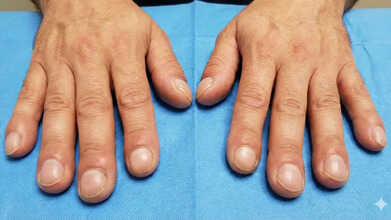
Have you ever pressed your fingernails together and noticed a small diamond-shaped space of light? If that gap is missing, it could be a sign of finger clubbing, a condition where the ends of the fingers swell, which may indicate lung cancer.
This change occurs gradually, starting with the base of the nail becoming soft. Next, the skin around the nail bed may appear shiny, followed by the nails curving more than usual when viewed from the side.
Eventually, the tips of the fingers can enlarge and swell as fluid builds up in the soft tissue. While a missing diamond-shaped gap between your nails doesn’t automatically mean you have lung cancer, it can be a warning sign. If you notice this, it’s wise to consult your doctor.
What Are The Warning Signs Of Lung Cancer?
Lung cancer can present differently in every individual. Some people show multiple symptoms, while others may have none.
Key signs to watch for include:
- Swelling in the face or neck
- A cough that changes or worsens
- Frequent chest infections
- Shortness of breath
- Chest or shoulder pain
- Wheezing
- Coughing up blood or blood-stained phlegm
- Hoarseness
- A persistent cough lasting three weeks or longer
- Unexplained fatigue or low energy
Doctor Debunks Five Myths Around Nipah Virus
Credits: Canva
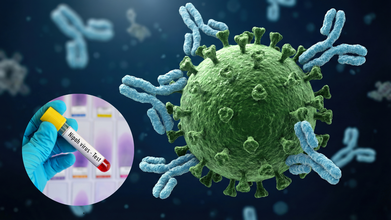
West Bengal is witnessing a Nipah virus outbreak, with five cases of the disease detected in just one week. In an age where information travels faster than verification, fear often fills the gaps left by facts. Each time the Nipah virus makes headlines, anxiety spikes, driven by rumors and alarming social media claims. Doctors say this reaction is understandable but unnecessary. Nipah is a serious illness, but it is not an uncontrollable mystery. Understanding what is true and what is not can help people stay cautious without slipping into panic.
Dr Satya Ranjan Sahu, Senior Consultant in Pulmonology at Narayana Hospital, Gurugram, explains that misinformation can sometimes be more dangerous than the virus itself. Here are some of the most common myths around Nipah virus, and what medical science actually says.
Myth 1: Nipah virus spreads easily through the air
Many people assume Nipah spreads like COVID-19 or seasonal flu. That is not accurate. Nipah does not spread through the air over long distances. Most infections occur after close contact with infected animals or through exposure to bodily fluids of an infected person, such as saliva or respiratory secretions, usually during caregiving. Human-to-human transmission is possible, but it typically requires prolonged and unprotected close contact.
Also Read: Nipah Virus Case Detected In Two Nurses From West Bengal
Myth 2: Getting infected always leads to death
The severity of Nipah has led to the belief that infection equals death. Doctors strongly refute this. While Nipah can be life-threatening, not every case is fatal. Many patients recover, especially when the infection is identified early and medical care begins promptly. Early diagnosis, hospital monitoring, and supportive treatment can significantly improve outcomes.
Myth 3: There is no treatment, so nothing can help
It is true that there is no specific antiviral drug approved to cure Nipah virus. However, this does not mean patients cannot be treated. Medical care focuses on managing symptoms, supporting breathing, maintaining hydration, and preventing complications. With proper hospital care, patients can be stabilised and supported through the illness. Calling Nipah untreatable often discourages people from seeking timely medical help, which can be dangerous.
Myth 4: Without a vaccine, prevention is impossible
The absence of a vaccine can make people feel helpless, but prevention does not depend on vaccines alone. Simple steps are highly effective. Maintaining good hygiene, avoiding contact with sick animals, using protective gear while caring for infected individuals, and following public health advisories all reduce risk. Doctors stress that informed and cautious behavior remains one of the strongest tools against Nipah.
Read: Unique Symptoms Of Nipah Virus Found In West Bengal And How Long Infection Now Last
Myth 5: All fruits are unsafe to eat
Fruit bats are natural carriers of the Nipah virus, which has led to widespread fear around fruit consumption. Doctors clarify that fruits are not automatically dangerous. Properly washed, peeled, and hygienically handled fruits are generally safe to eat. Most human infections have been linked to close contact with infected animals or people, not routine fruit consumption.
What doctors want people to remember
Nipah virus is serious, but it is not as easily spread or as hopeless as many believe. Early symptoms may include fever, headache, muscle pain, or vomiting, and in some cases progress to breathing or neurological problems. Seeking medical care at the first sign of symptoms can save lives. Health experts urge the public to rely on verified information from trusted medical sources and avoid spreading unconfirmed claims.
During outbreaks, calm awareness matters. Separating myths from medical facts allows communities to respond with care, responsibility, and confidence rather than fear.
Measles Symptoms Explained: Can The Infection Be Deadly?
Credits: Canva
As measles continues to spread across the United States, with recent case numbers climbing to their highest level in 33 years, growing numbers of Americans are becoming concerned about how at risk they may be.
Health officials in Philadelphia confirmed a potential measles exposure at Philadelphia International Airport and several public transport locations across the city in early January. The Centers for Disease Control and Prevention has also flagged earlier measles outbreaks across Pennsylvania, New Jersey, and New York City.
Adding to the concern, infectious disease tracker BMJGroup reported that measles cases recorded in 2025 are the highest seen since at least 1992.
Against this backdrop, it is important to understand whether measles can be fatal and to recognise the symptoms that should not be ignored.
Is Measles Deadly?
Yes, measles can be deadly and carries a significant risk of death, according to the Centers for Disease Control and Prevention.
“Measles can lead to serious health complications, including pneumonia, inflammation of the brain known as encephalitis, and death,” the CDC states. “Between one and three out of every 1,000 people infected with measles will die. Around one in five people with measles will require hospital care, and one in every 20 children with measles develops pneumonia, which is the leading cause of measles-related deaths in young children.
“One in every 1,000 people with measles will experience brain swelling, which can result in permanent brain damage.”
Measles Symptoms Develop In Three Stages
According to the Mayo Clinic, measles symptoms usually appear in three distinct stages.
Stage 1: Incubation period (10 to 14 days)
During this phase, there are typically no noticeable or warning symptoms.
Stage 2: Early symptoms begin
Symptoms at this stage may include a dry cough, fever, red and inflamed eyes known as conjunctivitis, a runny nose, and a sore throat.
Stage 3: Acute illness and rash
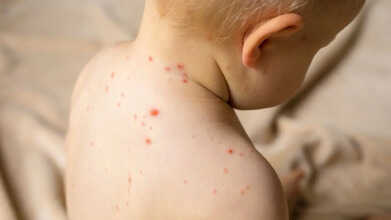
“In the third stage, a rash begins to develop, usually starting on the face. Small white spots called Koplik spots may appear inside the mouth two to three days after symptoms first appear,” the Mayo Clinic explains. “The measles rash typically shows up three to five days after the initial symptoms.
“Over the following days, the rash spreads to the arms, torso, and legs. Alongside the rash, fever often rises rapidly and can exceed 105 degrees Fahrenheit,” the guidance continues. “Eventually, the fever subsides, and the rash fades from the body starting at the head and moving downward.”
How Do You Treat Measles?
There is no specific antiviral medication that cures measles. However, people who have not previously been vaccinated may still be able to reduce the severity of illness if action is taken quickly after exposure.“If individuals aged six months or older are exposed to measles and do not have immunity from prior infection or vaccination, they can receive the measles vaccine within three days of contact with the virus,” the Mayo Clinic advises. “After vaccination, quarantine at home is not required.
“For children up to 11 months old who are exposed and are not immune, a dose of antibodies known as immune globulin can be given within six days of exposure to help the body fight the infection.”
Receiving this antibody treatment requires a 21-day quarantine period.
- Follow Us :


© 2024 Bennett, Coleman & Company Limited