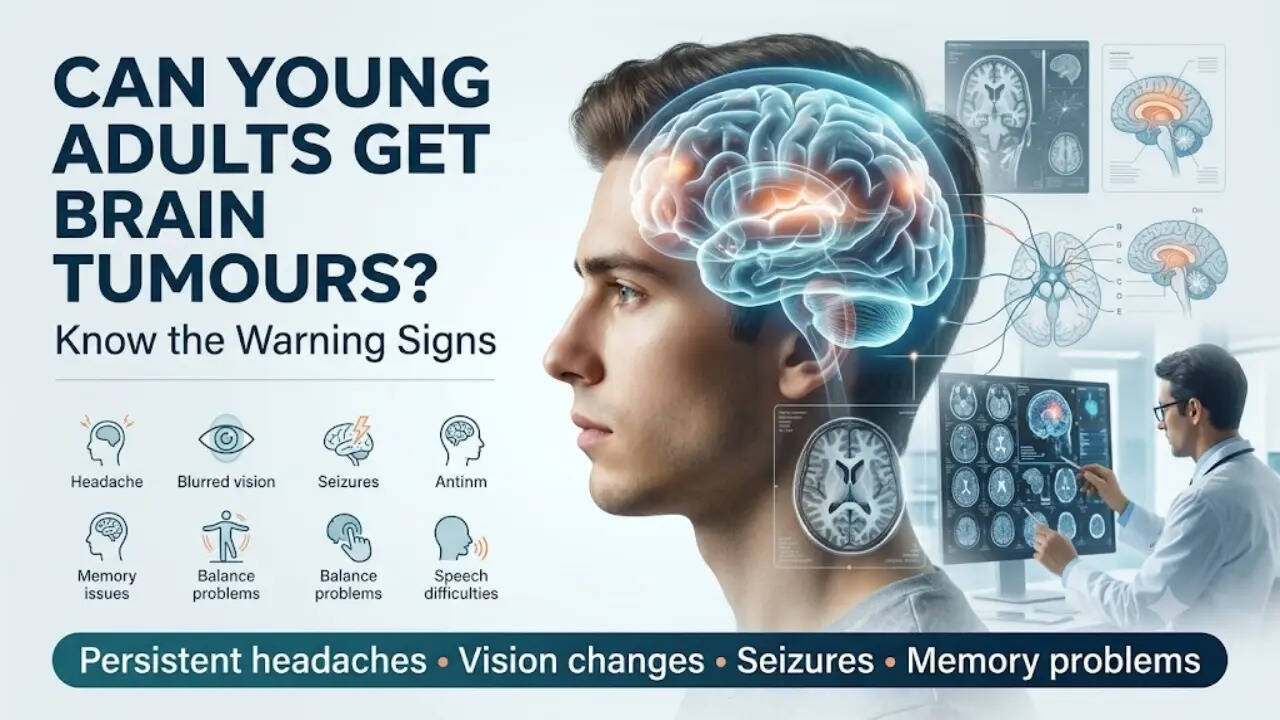
Although brain tumours are more commonly associated with older adults, they can occur at any age, including during adolescence and young adulthood. Recognising the warning signs early can help ensure timely diagnosis and treatment. Here, an expert explains the symptoms and highlights when medical attention should be sought.What is a brain tumour?In an interview with Health and Me, Dr Rakesh Patil, Consultant Medical Oncologist, AIMS Hospital, Dombivli, spoke about brain tumours and their rising incidence among younger Indians. Brain tumours occur when abnormal cells grow uncontrollably within the brain or surrounding tissues. These tumours may be benign (non-cancerous) or malignant (cancerous). While brain tumours are not among the most common cancers affecting young adults, cases do occur in this age group. The exact cause of most brain tumours remains unknown. However, certain genetic conditions, a family history of brain tumours, previous exposure to radiation therapy, and rare inherited disorders may increase the risk. In many cases, affected individuals have no identifiable risk factors. Early diagnosis and appropriate treatment remain crucial for achieving the best possible outcomes.Why are brain tumour symptoms missed? One of the major challenges is that the early symptoms of a brain tumour can be mistaken for stress, migraines, sleep deprivation, or eye strain. Persistent headaches, especially those that worsen over time; nausea; vomiting; blurred or double vision; balance problems; unexplained seizures; weakness in an arm or leg; personality changes; memory difficulties; and problems with speech or concentration should not be ignored and warrant prompt medical evaluation.Why are brain tumour cases rising among young Indians?Many young adults are occupied with studies, careers, and social commitments, which may lead them to overlook symptoms or delay seeking medical attention. If left untreated, a brain tumour can affect important brain functions, including movement, speech, vision, memory, and behaviour. In some cases, it can become life-threatening.What are the best treatment options for brain tumour?Advances in imaging technology, neurosurgery, radiation therapy, and targeted treatments have significantly improved outcomes for many patients. Following a thorough evaluation and diagnosis, the treating physician will determine the most appropriate treatment plan based on the type, size, and location of the tumour. Some patients may also benefit from neurorehabilitation as part of their recovery.Young adults should seek medical evaluation if they experience persistent headaches, develop neurological symptoms, or have seizures without an obvious cause. Greater awareness and timely medical attention can help improve outcomes and, in some cases, save lives.