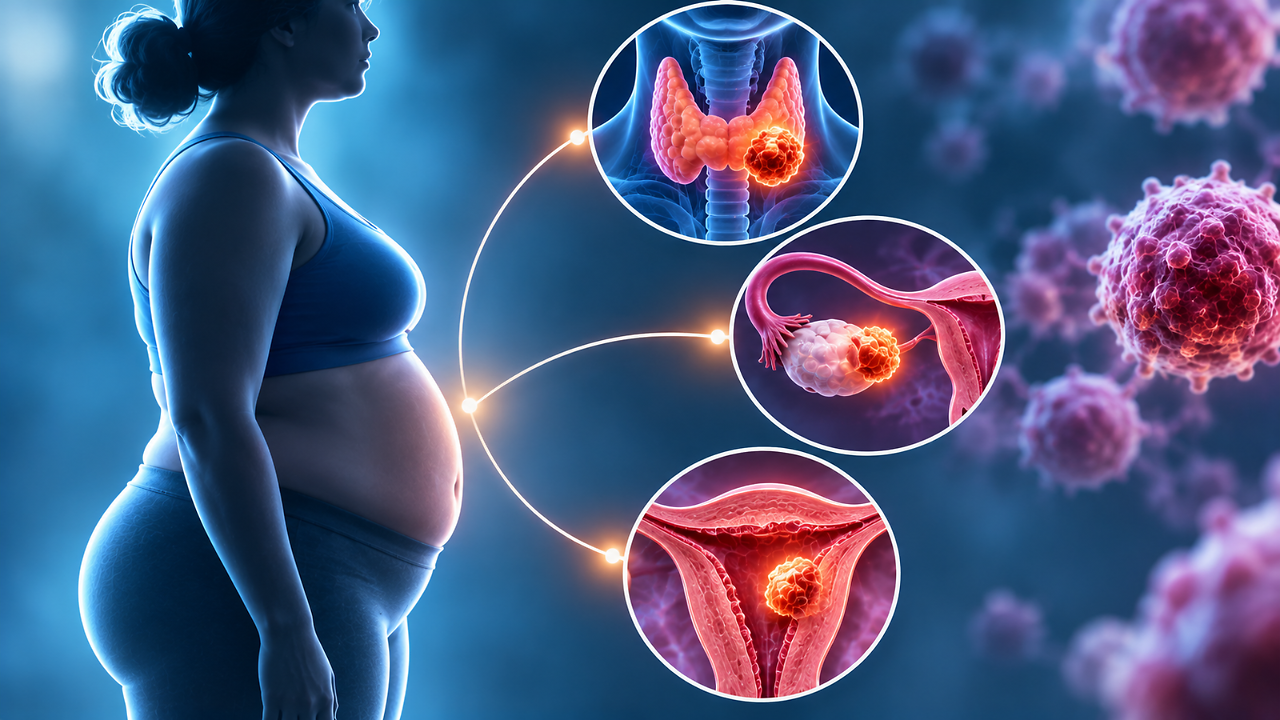
Obesity during the 20s and 30s can fuel the risk of many lifestyle disorders like type 2 diabetes, cardiovascular diseases, metabolic syndrome, non-alcoholic fatty liver disease, sleep apnea and many others.But according to a large study published in Annals of Internal Medicine, obesity could also increase the risk of developing cancer before midlife. The study identified higher chances of thyroid, endometrial and ovarian cancers.How Was The Study Conducted?Researchers examined health records of 6,313,338 adults in South Korea, aged between 20 to 39 years, who had no previous history of cancer. Participants were followed for an average of 11.2 years to study the relationship between body weight and cancer risk.During the follow-up period, 151,893 cancer cases were recorded. The findings showed that cancer risk increased in people with higher body mass index (BMI).The researchers found that the 10-year total incidence of cancer was 1.84% among people with normal body weight. This increased to 2.24% among those with class I obesity and 2.62% among those with class II obesity.In other words, the 10-year cancer incidence was approximately 0.78 percentage points higher among people with class II obesity than among those with normal weight.The researchers also found that people with abdominal obesity were at higher cancer risk than those who didn’t have.Among people with class I obesity, the 10-year cancer incidence was 2.45% in those with abdominal obesity, compared with 2.13% in those without it.“Because abdominal obesity may be an important indicator for distinguishing cancer risk, it is important to manage waist circumference along with weight from a young age,” the authors wrote.Also read: High-Fibre Diet Outperforms Metformin In Blood Sugar Control And Weight Loss, Study Finds Three Cancers Linked To Early Adulthood ObesityThe study identified particularly strong associations between obesity and cancers involving the thyroid and female reproductive system.Thyroid cancer: Excess body weight has previously been linked with changes in metabolic and hormonal changes that may affect thyroid cancer development.Endometrial cancer: Obesity can increase oestrogen levels because fat tissue produces this hormone. Prolonged exposure to excess oestrogen can stimulate the growth of the uterine lining and increase the risk of endometrial cancer.Ovarian cancer: The relationship between obesity and ovarian cancer is complex and may involve inflammation, insulin resistance and hormonal changes.Also read: Warren Buffett Says He Hasn't Drunk Water In 48 Years: What Happens If You Replace It With Coke? Obesity & Cancer RiskObesity causes several biological changes that may contribute to cancer development. One of them is chronic inflammation. Excess fat tissue can fuel inflammation that may create an favourable environment for abnormal cell growth.Obesity can also lead to insulin resistance, in which the body’s cells respond less effectively to insulin. This can cause higher insulin levels, which may fuel cell growth and proliferation.Hormonal changes are also a factor. Fat tissue produces oestrogen, and higher levels of this hormone have been linked with cancers like endometrial and ovarian.The study authors wrote, "Some cancers have recently become more common even among younger people, and this study confirmed that obesity in young adults is significantly associated with the development of these cancers."