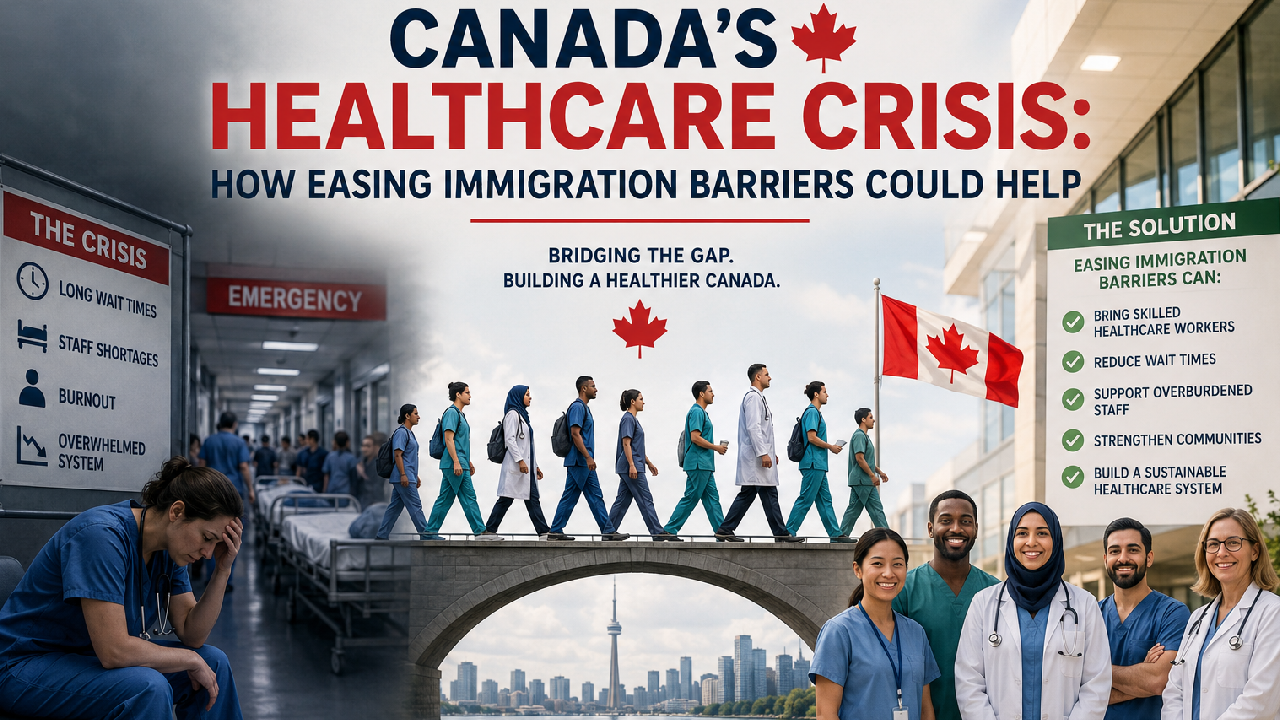
Canada has had a shortage of doctors, nurses, and other medical staff for many years, whereas just south of it, the United States does not have this kind of problem. It is not that no one wants to go and work in the Maple Leaf Country, but its strict regulations put a barrier between foreign professionals.This complex issue has been addressed by the new report by the Institute for Canadian Citizenship (ICC), authored by Kareem El-Assal. This report, named Ready to Contribute, finds that the Canadian foreign qualification recognition (FQR) challenges are leaving nearly 640,000 immigrant degree-holders outside.The report also said that these restrictions are causing harm to the medical industry in Canada, and it's not getting labour market success as their counterparts in the United States. The study also mentions that if the restrictions are lifted, then thousands of medical professionals will be able to contribute.The study also states, “This translates into a disproportionate number of immigrant physicians working as security guards, engineers driving for ride-share apps, and nurses sorting packages in warehouses. This waste of talent hurts all Canadians, not just immigrants.”The ICC report highlights that this strict policy has impacted Canada adversely. They reported that only 41 per cent of internationally trained physicians and 37 per cent of internationally trained nurses are working in their professions.They said, “Lowering the immigrant overqualification rate to match the national rate has the potential to add 27,000 nurses and related professionals and nearly 16,000 medical doctors to Canada’s workforce. This illustrative example underscores the way in which immigrant underemployment impacts all Canadians, considering that 6.5 million Canadians do not have access to a family doctor.”Also Read: The Mystery Behind Trump’s Hair-Loss Drug And The Bigger Health Questions It RaisesHow Patients Are Suffering Due To Different Diseases?Canadian healthcare facilities' shortcomings have also become a problem for citizens, as the nation has approximately 4 million people with diabetes, or 9.7 percent of its population. Cancer and cardiovascular diseases are also issues, among others. There are also issues of having infectious and vector-borne diseases like Lyme disease and West Nile virus.Also Read: New Study Warns Smog Is Rising Across the US: The Hidden Health RisksWhat Is Diabetes?Diabetes is a condition characterized by high blood sugar (glucose) levels. It develops when the pancreas either doesn't produce enough insulin, doesn't produce any insulin at all, or when the body doesn't respond properly to insulin, a condition known as insulin resistance. Diabetes Occurs Under The Following circumstances:The pancreas does not produce any insulin.The pancreas produces very little insulin.The body does not respond appropriately to insulin (insulin resistance)What Is Lyme Disease?Lyme disease is caused by a bacterium called Borrelia burgdorferi. The most common cause of these diseases in humans is blacklegged ticks, though other variants can also be carriers. The Harvard Health says that most patients do not remember being bitten by a tick.