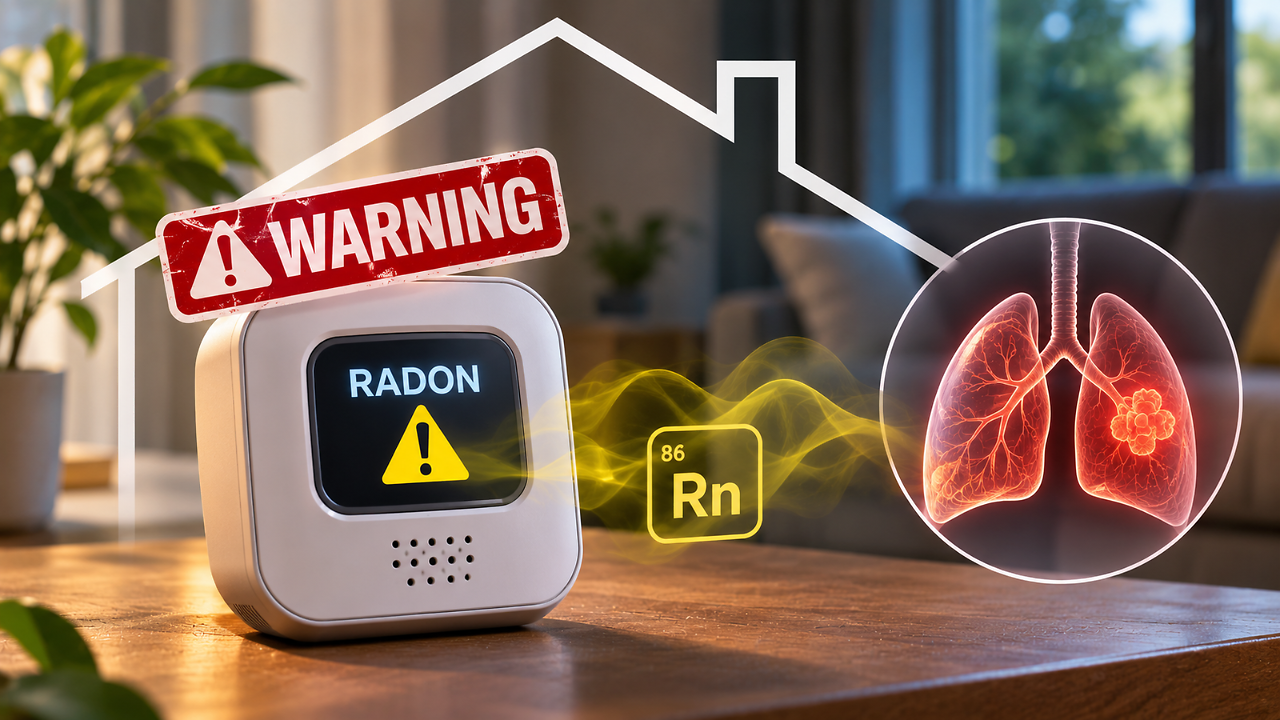
Faulty radon detectors have sparked concern after Health Canada issued a warning about how inaccurate readings on devices sold online could mislead consumers. The advisory issued recently says that faulty detectors could underestimate radon levels, giving consumers a false sense of security about their exposure to the cancer-causing gas.It talks about electronic radon monitors and home-testing kits that have previously recalled after it was found that they gave inaccurate readings.Among the products Health Canada has previously warned against are the InkBird WiFi Radon Detector (model RD-2), Life Basis radon detectors, Hanchen Home Radon Detector and Spolehli radon detectors. The agency has also issued warnings about other radon-monitoring devices sold online.Inaccurate readings can be problematic in both ways. A detector may report radon levels lower than they actually are, leaving people exposed to dangerous concentrations without their knowledge. On the other hand, it may report higher levels than those present, causing unnecessary panic.Health Canada recommends that consumers choose electronic radon monitors that have passed performance testing by the Canadian National Radon Proficiency Program (C-NRPP).What Is Radon And How Does It Enter Your Home?Also read: Trials For Deadly Childhood Brain Cancer Stalled After Trump Administration Shuts Down 27-Year Research ConsortiumRadon is a naturally occurring radioactive gas released when uranium in soil and rocks breaks down. It is invisible, odourless and tasteless, making it impossible to detect without specialised equipment.The gas can enter buildings through cracks in foundations, gaps around pipes, floor drains and other openings.While radon disperses quickly in outdoor air, it can accumulate to high concentrations indoors, especially basements and poorly-ventilated areas.Long-term exposure to highradon levels increases the risk of lung cancer. According to Health Canada, radon is the second-leading cause of lung cancer in Canada after smoking and the leading cause among people who have never smoked.The risk depends on both the concentration of radon in the air and how long a person is exposed. People who smoke and are exposed to radon face an even greater risk of lung cancer.Radon Exposure & Lung CancerAlso read: Daraxonrasib: Europe Approves First RAS-Targeted Drug For Metastatic Pancreatic CancerRadon decays into radioactive particles that can be inhaled through breathing. These particles release radiation that can damage the DNA of lung cells. Long-time exposure can lead to genetic changes that contribute to cancer.The International Agency for Research on Cancer (IARC) classifies radon as a Group 1 carcinogen, meaning there is sufficient evidence that it causes cancer in humans.How To Check Radon Levels In Your Home? Health Canada recommends long-term testing to determine the average radon concentration in your home. A test lasting at least three months provides a more reliable assessment than short-term measurements because radon levels can fluctuate with weather, ventilation and seasonal changes.Consumers should:Choose a long-term radon testing kit that has passed C-NRPP performance testing.Place the detector on the lowest level of the home that is regularly occupied like the basement.Keep the device away from windows, doors, heating sources and ventilation outlets.Continue testing for at least three months before interpreting the average result.Health Canada's guideline for indoor radon is 200 becquerels per cubic metre (Bq/m³). If the average level is above this threshold, homeowners should take action within one year and consult a certified professional.