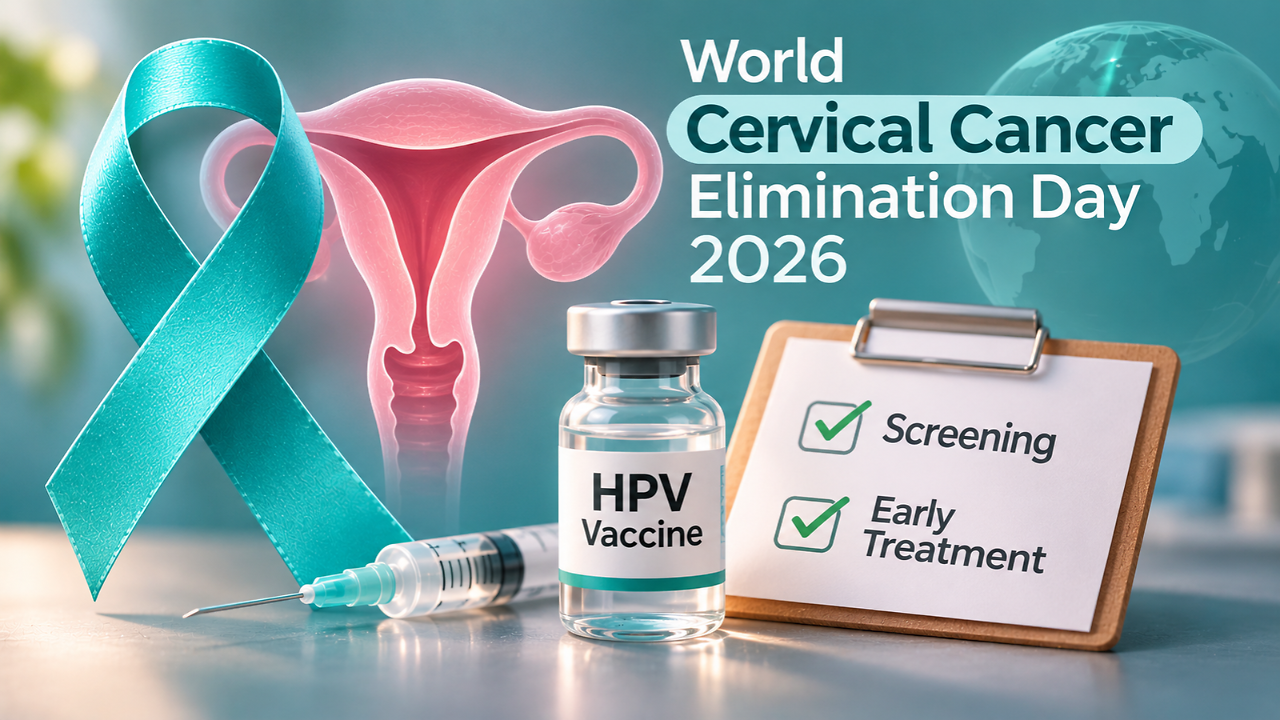
Observed on November 17, World Cervical Cancer Elimination Day is held annually to raise awareness about one of the most preventable cancers affecting women and elevate global efforts to eliminate it as a public health problem.This year's campaign themed, “Together We Can Eliminate Cervical Cancer”, highlights the urgent need for governments, healthcare professionals, communities and individuals to work together towards expanding human papillomavirus (HPV) vaccination, cervical cancer screening and access to treatment.The World Health Organization (WHO) is calling for active efforts to ensure that more girls receive HPV vaccines, more women undergo regular screening and those diagnosed with precancerous changes or cervical cancer receive timely treatment.The global elimination initiative is marked by three targets, known as the 90–70–90 targets. Countries are expected to hit that goal by 2030.What Are WHO's 90–70–90 Targets?Also read: Menstrual Blood-Based Self-Sampling Cervical Cancer Test Gets Patent-Know Everything About ItIn 2020, 194 countries committed to the WHO's global strategy to eliminate cervical cancer as a public health problem. The strategy set three targets to help countries achieve cervical cancer elimination by 2030:90% vaccination: 90% of girls should be fully vaccinated against HPV by the age of 15.70% screening: 70% of women should undergo screening using a high-performance test by the ages of 35 and 45.90% treatment: 90% of women identified with cervical precancer or invasive cervical cancer should receive appropriate treatment and care.WHO defines elimination as reducing cervical cancer incidence to fewer than four new cases per 100,000 women annually. Achieving this target could prevent an estimated 74 million new cases and 62 million deaths by 2120, according to WHO.Cervical Cancer Is Still A Major Health ConcernAlso read: About 7.9% Of Women In Kerala Are Affected By Cervical Cancer; Why Early Detection Is Important Despite being preventable, cervical cancer remains the fifth most commonly diagnosed cancer among women globally. According to WHO, approximately 604,000 women were diagnosed with cervical cancer and 280,000 died from the disease in 2024. The burden is high in low and middle-income countries where access to HPV vaccination, screening, diagnosis and treatment remains challenging.On November 17, WHO highlighted another major gap in prevention: three in five women aged 30–49 have never been screened for cervical cancer. Access to HPV-based screening is significantly uneven. Only 2% of women in low and middle-income countries had undergone HPV testing in the preceding five years compared to 32% in high-income countries.By Dr Mainak Maiti, Consultant - Gynaecologic Oncologist & Robotic Surgeon, Narayana Hospital, Howrah told HealthandMe, "The biggest gaps in cervical cancer management are low awareness, low HPV vaccination and inadequate screening. Many women do not know that there is a link between HPV and cervical cancer, or that they should be screened regularly. Social stigma, fear, cost and limited access to health-care facilities further delay preventive care and diagnosis."Talking about cervical cancer prevention in India, Dr. Tejinder Singh, Professor and Lead Consultant – Medical and Precision Oncology, Apollo Hospitals, Navi Mumbai told HealthandMe that one of the major causes of delayed diagnosis is lack of regular screening. Dr Singh said, “Cervical cancer is largely preventable, yet many women in India continue to be diagnosed at an advanced stage. One of the reasons is that early changes in the cervix often do not cause noticeable symptoms. Women may feel perfectly well and assume that there is no reason to visit a gynaecologist. This is why regular screening matters, even when there are no apparent health concerns.”How Cervical Cancer Develops? Also read: At-Home HPV Testing Improves Cancer Screenings: StudyAlmost all cervical cancer cases are caused by persistent infection with high-risk types of human papillomavirus, a common virus transmitted through sexual contact. Most HPV infections clear naturally without causing health problems. The progression from persistent HPV infection to cervical cancer generally takes 15–20 years, but it can happen faster in women with weakened immune systems.Dr Singh explained, “Smoking, a weakened immune system, HIV infection and a history of other sexually transmitted infections can further increase the risk. Having multiple pregnancies is also associated with a higher risk.”Talking about early signs of cervical cancer, Dr Maiti said, "Unusual vaginal bleeding especially after sexual intercourse, between periods or after the menopause, persistent watery or bloodstained vaginal discharge, pelvic pain and discomfort during intercourse should not be ignored. These symptoms are not necessarily cancer but they do require medical attention."Cervical Cancer Prevention Cervical cancer prevention involves vaccination, regular screening and timely treatment of precancerous changes. HPV vaccinationThe vaccine protects against the high-risk HPV types responsible for most cervical cancers. WHO recommends that girls aged 9–14 years receive the HPV vaccine, with one or two doses depending on age and immune status. Dr Singh said, “HPV vaccination is recommended, ideally before exposure to the virus, and is most effective when given during adolescence.”There is another vaccine option for older adolescents and young women. Dr. Maiti said, "Ideally, vaccination is recommended for girls 9 to 14 years of age, before possible exposure to the virus. Depending on age and medical advice, catch-up vaccination may also be considered for older adolescents and young women." Regular screeningScreening helps identify high-risk HPV infections and precancerous changes before they develop into cancer. WHO recommends HPV DNA testing as the preferred primary screening method where available.Dr Maiti said, "Women should generally start screening at age 25. The type of test and frequency depends on national guidelines and age and individual risk factors."Screening options should also be discussed with healthcare professionals. Dr Singh recommended, “Women should also discuss appropriate screening with their gynaecologist. Options include a Pap smear, which checks for abnormal cervical cells, an HPV DNA test, which detects high-risk HPV infection, and Visual Inspection with Acetic Acid (VIA), offered through public healthcare facilities.”Early treatmentPrecancerous cervical lesions can be treated before they progress to cancer. Women diagnosed with invasive cervical cancer require appropriate treatment depending on the stage of the disease, which may include surgery, radiotherapy and chemotherapy.