
- Health Conditions A-Z
- Health & Wellness
- Nutrition
- Fitness
- Health News
- Ayurveda
- Videos
- Medicine A-Z
- Parenting
Cervical Cancer Screening: Clinic vs Home Testing, What Women Prefer | Women's Day
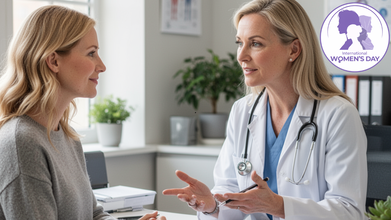
As cervical cancer screenings ramp up across the world, a new JAMA study shows that a majority of women prefer clinic-based testing over at-home self-sampling tests in the US.
Researchers from the University of Texas MD Anderson Cancer Center, Houston studied 2,300 women with an average age of 45.5 years. Most were married or living with a partner (58.2 percent), had health insurance (91.9 percent), and had at least some college education (61.6 percent).
Out of those analyzed, over 60 percent preferred clinic-based testing, 20 percent preferred at-home self-sampling tests and over 18 percent were unsure. However, women who had experienced prejudice or discrimination in healthcare were nearly twice as likely to prefer at-home testing.
The study noted that out of the women who preferred at-home testing, nearly 55 percent said it was due to greater privacy, over 35 percent said it was because of a lack of time and over 33 percent noted it was due to fear of embarrassment.
Marginalized women, individuals with low income and individuals who do not trust the health care system were also more likely to prefer at-home self-sampling for cervical cancer screening or not know which option to choose.
To increase screening uptake, the researchers suggested that US officials should incorporate home-based self-sampling as an alternative to clinic-based testing, women’s education and empowerment should be enhanced and tailored interventions focusing on high-risk groups are needed to increase awareness and self-confidence in performing home-based self-sampling.
What Is Cervical Cancer?
Cervical cancer develops in a women's cervix (uterus opening) due to abnormal cell growth, primarily caused by persistent HPV infection, a common infection that's passed through sexual contact.
When exposed to HPV, the body's immune system typically prevents the virus from causing damage however, in a small percentage of people, the virus can survive for years and pave the way for some cervical cells to become cancerous.
Treatment involves surgery, radiation, and chemotherapy, with early detection significantly improving outcomes, though it remains a major cancer in low-income countries Cervical cancer can also be prevented through vaccination and regular screening (Pap/HPV tests).
Symptoms Of Cervical Cancer
Cervical cancer has no symptoms in the early days and therefore, is hard to detect until it has spread. However, the early-stage symptoms include:
- Vaginal bleeding after sex
- Vaginal bleeding post-menopause
- Vaginal bleeding between periods or unusually heavy/long periods
- Watery vaginal discharge with a strong odour or containing blood
- Pelvic pain or pain during intercourse
- Advanced Cervical Cancer Symptoms (when cancer has spread beyond the cervix)
- Painful or difficult bowel movements or rectal bleeding
- Painful or difficult urination or blood in the urine
- Persistent dull backache
- Swelling of the legs
- Pain in the pelvis or lower abdomen
Cervical Cancer: A Growing Crisis In India
Despite being highly preventable as well as treatable, cervical cancer is a public health concern in India.As per the World Health Organization (WHO) Director-General Tedros Adhanom Ghebreyesus, about 42,000 new cases of cervical cancer is reported annually in India. This underscores the need for preventive measures such as vaccination and early screening. The country loses one women every eight minutes to cervical cancer.
The WHO Global Strategy to eliminate cervical cancer includes the 90-70-90 targets by 2030 -- vaccinating 90 per cent of girls against HPV, screening 70 percent of women, and ensuring treatment for 90 percent of those diagnosed with cervical disease.
In line with the global strategy to fight cervical cancer, Prime Minister Narendra Modi recently also launched a free HPV vaccination drive that will target health and well-being of adolescent girls in the country.
Union Health Minister JP Nadda has also announced that cervical cancer screenings using Visual Inspection with Acetic Acid (VIA) will now be available at Ayushman Arogya Mandirs and other health facilities for women between 30 and 65 years of age.
"Screening for cervical cancer is now available at 1,81,000 Ayushman Arogya Mandirs, also known as Health and Wellness Centers, across the country as a part of population based screening for early detection and treatment," said Nadda, while addressing a press briefing at the World Health Organization virtually.
Using VIA, a low-cost, point-of-care method, trained health workers will screen women for cervical cancer. Those who test positive will then be referred to higher centers for diagnostic confirmation and further evaluation.
Scrolling Your Phone While In Toilet Can Spike Your Risk Of Hemorrhoids By 46%: Study

Credit: Canva
Are you in the habit of catching up on social media or news updates while sitting on the pot? A new study shows you may be "unintentionally" spending extra time and increasing your risk of developing painful hemorrhoids by 46 percent.
The study, published in the open-access journal PLOS One, explained that getting distracted by news or social media can increase pressure on sensitive anal tissues, which leads to hemorrhoids.
Hemorrhoids, also called piles, are swollen and inflamed veins around your anus or in your lower rectum.
"Using a smartphone while on the toilet was linked to a 46 percent increased chance of having hemorrhoids. We're still uncovering the many ways smartphones and our modern way of life impact our health,” Trisha Pasricha, from the Beth Israel Deaconess Medical Center in the US.
“It's possible that how and where we use them -- such as while in the bathroom -- can have unintended consequences," she added.
For the study, the researchers examined data from colonoscopies of 125 adults in America, and conducted an online survey to understand their lifestyle habits and behavior while using the toilet.
Two-thirds of the participants reported using their smartphones while on
the toilet. Compared with those who did not, endoscopists found that they had a 46 percent higher risk of hemorrhoids.
Longer Toilet Time And Mobile Scrolling
More than a third of bathroom smartphone users reported spending more than five minutes there during a single visit -- reading news (54.3 percent), or browsing social media (44.4 percent).
In comparison, just 7.1 percent of non-users reported staying that long.
"Smartphone use may unintentionally extend the time people spend sitting on the toilet. Sitting for longer periods could increase pressure on tissues in the anal region, which may contribute to the development of hemorrhoids,” the researchers said.
Pasricha suggested individuals leave smartphones outside the bathroom to understand the actual time it takes for a bowel movement.
"If it's taking longer, ask yourself why. Was it because having a bowel movement was really so difficult, or was it because my focus was elsewhere?" she said, calling for more studies.
Hemorrhoids: The Symptoms, Risk Factors
Studies estimate that hemorrhoidal disease affects 40% of people all over the world, and it is one of the most common diseases in the anorectal region.
The two types of hemorrhoids are:
- external hemorrhoids -- under the skin around the anus
- internal hemorrhoids -- in the lining of the anus and lower rectum
- bright red rectal bleeding during bowel movements,
- anal itching or irritation, pain or discomfort (especially while sitting),
- swelling or hard, tender lumps around the anus
- straining during bowel movements
- sitting on the toilet for too long
- chronic constipation or diarrhea
- eating low fiber foods
- older age >50
- pregnancy
- lifting heavy objects
- consume 25-35g of fiber daily,
- drink 6-8 glasses of water,
- avoid straining,
- limit toilet time to under five minutes
- do not delay bowel movements,
- maintain hygiene.
Black Rain Over Iran's Capital Tehran Sparks Health Fears

Credits: X/Twitter
Iran's capital Tehran was engulfed in a black cloud of toxic smoke. This also unleashed a black rainfall on Sunday after overnight Israeli strikes on several fuel depots caused fires to burn for hours. Images have come from across the city of Tehran. These images show thick black smoke from the fires hanging over it. Residents have also reported difficulty breathing and oil-tainted rainfall staining everything around them.
As per a TIME report, Iran's Red Crescent Society warned the residents of Tehran and the surrounding region that the rainfall after the strikes could be "highly dangerous and acidic", and could cause "chemical burns of the skin and serious damage to the lungs".
Many have complained about breathing problems, along with headache, feeling dry and sore lips, and feeling like burn in the eyes and constant itch in the throat.
What Does The Toxic Rain Fall Contain?
Iran's Red Crescent Society issued statements on Telegram that the rain could be contaminated with "toxic hydrocarbon compounds" as well as "sulfur and nitrogen oxides".
What Are The Health Risks?
As per a report by The Conversation, people exposed to the black smoke in Iran could experience headaches or difficulty in breathing, especially if they have asthma or a lung disease.
People who are more prone to health issues are older people, young children, anyone with disabilities and pregnant women. This could also lead to lower birth weights.
Since the thick black cloud from all the burning could increase the PM2.5 or the ultrafine particles, known as particulate matter, it could also increase cancer risks, along with neurological conditions and cardiovascular conditions.

The toxic rain could further pollute the natural waterways and drinking water sources. A photo shared by Iran's Red Crescent shows a healthcare worker's uniform covered in black droplets from the rain.
The "rain drops" are tainted with oily residue and could lead to skin problems, and if inhaled, it could also lead to serious medical crisis, noted Jim NR Dale, a senior meteorologist at British Weather Services.
It may also carry carcinogenic polycyclic aromatic hydrocarbons (PAHs) along with heavy metals that are released when construction materials burn and then remain suspended in the air.
As acidity increases, natural water bodies such as rivers and lakes can become too hostile to support life. When the pH of water drops below 5, most fish cannot survive, and at pH 4, a lake is often described as a “dead water body” because almost no living organisms remain.
Acid rain also harms the soil. It reduces calcium levels, an important nutrient for plants, and makes it easier for toxic aluminium to leach into water sources, further threatening ecosystems.
GLP-1 Weight Loss Drugs Could Now Treat Addiction, Says Study

GLP-1 drugs have already made enough news and a new study shows that it could actually help you treat your addiction. GLP-1 drugs, medically used to treat diabetes and obesity could come in handy to drive away cravings for drugs too. Researchers at Washington University School of Medicine in St Louis reported that it could prevent substance use disorder and could also treat it.
How Do GLP-1 Medicines Fight Against Addiction?
Not just the lack of will to eat food, but some people have actually reported a lack of interest in alcohol or nicotine consumption. Previously observational studies have also shown how it could lower the risk of alcohol and cannabis use disorders, opioid overdose, and alcohol related hospitalization.
The findings of the study were published in The BMJ.
Ziad Al-Aly, MD, a WashU Medicine clinical epidemiologist and Chief of the Research and Development Service at the VA Saint Louis Health Care System, who is a senior author, said, "In addiction medicine, a lot of treatments target just one thing — for example, a nicotine patch helps with smoking, but not alcohol — but there is no medication that works across addictive substances, let alone all of them. The revelation about GLP-1 medication is that it really works against all major substances, and it works uniformly, not because it acts against alcohol or opioids or nicotine specifically, but because it is likely acting against the craving itself. It blunts that craving that pulls people toward whatever they’re addicted to.”
Read: Doctor Explains Why Weight Loss Drugs Like Ozempic Are Truly A Medical Breakthrough
So, How Does It Work?
Researchers from Washington University School of Medicine in St. Louis analysed health records of more than 600,000 U.S. veterans with type 2 diabetes to understand whether GLP-1 medications affect substance use.
They compared people taking GLP-1 receptor agonists such as Semaglutide, Liraglutide, and Dulaglutide with those using another diabetes drug class called SGLT2 inhibitors. Researchers then followed their health records for up to three years.
The Findings
Lower risk of addiction: People taking GLP-1 drugs had a 14% lower risk of developing any substance use disorder.
- Substance-specific reductions:
- Alcohol use disorder risk fell by 18%
- Cannabis use disorder fell by 14%
- Cocaine and nicotine use disorders fell by 20%
- Opioid use disorder fell by 25%
What the real world impact shows: This meant about 7 fewer new substance use disorder diagnoses per 1,000 people taking GLP-1 medications.
Better outcomes for those already struggling with addiction: Among people who already had a substance use disorder, GLP-1 treatment was linked to fewer serious health complications.
After three years, researchers observed:
- 30% fewer emergency room visits related to substance use
- 25% fewer hospitalizations
- 40% fewer overdoses
- 50% fewer drug-related deaths
Overall, this translated to about 12 fewer serious harm events per 1,000 people using GLP-1 medications.
- Follow Us :


© 2024 Bennett, Coleman & Company Limited