
- Health Conditions A-Z
- Health & Wellness
- Nutrition
- Fitness
- Health News
- Ayurveda
- Videos
- Medicine A-Z
- Parenting
Child Deaths Fall In India Since 2000 But Progress Slows, Says UN Report

An estimated 4.9 million children died before reaching their fifth birthday in 2024, including 2.3 million newborns, according to the latest United Nations report on global child mortality. The findings were released in the report Levels and Trends in Child Mortality, which examines the leading causes of deaths among children worldwide.
The report notes that many of these deaths could have been prevented through simple and affordable health measures. Access to quality healthcare, timely treatment, vaccination, and better nutrition remain key factors in reducing child deaths.
Over the past two decades, the world has made significant progress. Global under five deaths have dropped by more than half since 2000. However, the pace of improvement has slowed in recent years. Since 2015, the rate of decline in child mortality has fallen by more than 60 percent, raising concerns among health experts.
India Shows Steady Progress In Reducing Child Mortality
Despite global challenges, India has made notable progress in improving child survival rates through sustained public health efforts.
According to the United Nations Inter Agency Group for Child Mortality Estimation (UNIGME) Report 2025, India has steadily reduced deaths among newborns and young children over the past decades. The Union Health Ministry said the country has played an important role in lowering child mortality across South Asia.
India’s Neonatal Mortality Rate, which measures deaths within the first 28 days of life, has seen a major decline. In 1990, the rate stood at 57 deaths per 1,000 live births. By 2024, it had dropped to 17.
A similar trend was seen in the Under Five Mortality Rate. In 1990, India recorded 127 deaths per 1,000 live births among children under five. By 2024, that number had fallen sharply to 27.
Health officials attribute this progress to targeted public health programmes, improved hospital deliveries, and wider vaccination coverage.
Malnutrition And Infections Still Claim Many Young Lives
The report highlights that several preventable health conditions continue to drive child deaths across the world.
For the first time, the report estimated deaths directly caused by severe acute malnutrition. It found that more than 100,000 children aged between one month and five years died due to severe malnutrition in 2024.
Experts believe the real impact may be even higher because malnutrition often weakens the immune system. This makes children more vulnerable to common infections such as pneumonia, diarrhea, and malaria, which can become life threatening.
Some countries reporting high numbers of malnutrition related deaths include Pakistan, Somalia, and Sudan.
Newborn Complications Remain A Major Concern
Nearly half of all deaths among children under five occur during the newborn stage. This reflects slower progress in preventing deaths around the time of birth.
The leading causes of newborn deaths include complications related to premature birth, which account for about 36 percent of cases. Problems during labor and delivery contribute to around 21 percent of deaths.
Other important causes include infections such as neonatal sepsis and certain birth defects.
After the first month of life, infectious diseases remain the main threats to children’s survival. Malaria, diarrhea, and pneumonia are among the biggest causes of death.
Health Experts Stress Need For Continued Investment
The report also points out that global funding for maternal and child health programmes is facing increasing pressure. This could slow progress in reducing child deaths in the coming years.
Experts stress that investing in child health remains one of the most effective public health strategies. Basic interventions such as vaccination, treatment for severe malnutrition, and skilled care during childbirth can save millions of lives.
According to the report, such measures not only improve health outcomes but also strengthen economies by creating healthier and more productive populations.
World Down Syndrome Day 2026: AIIMS Doctor Shares Early Screening Tests To Eliminate Risks
Credit: iStock
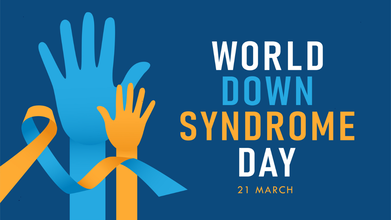
Down Syndrome is a common genetic disorder in which an extra copy of chromosome 21 (Trisomy 21) causes mild-to-moderate intellectual disabilities, developmental delays, and characteristic physical traits.
Every year, World Down Syndrome Day is observed on March 21 every year to raise public awareness about the condition, which deserves more than medical care.
The theme for World Down Syndrome Day 2026 is 'Together Against Loneliness,’ and it focuses on raising awareness of how loneliness disproportionately affects people with Down syndrome and other intellectual disabilities, as well as their families.
According to the UN data, the estimated incidence of Down syndrome is between 1 in 1,000 -- 1 in 1,100 live births worldwide. Each year, approximately 3,000 to 5,000 children are born with this chromosome disorder.
In India, about 30,000 babies are born with Down syndrome every year.
While Down Syndrome is not preventable, in a video post on the social media platform X, Dr. Neerja Gupta from AIIMS Delhi highlighted the importance of early detection, screening, and long-term support for better outcomes.
Dr. Gupta, Professor, Division of Genetics at AIIMS's Department of Pediatrics, also explained the causes of the condition and shared tests that can help eliminate the risks in future babies.
“Down syndrome is a common chromosomal disorder in which chromosome 21 is present in three copies instead of two. Normally, every human cell has 46 chromosomes. However, in Down syndrome, there are 47 chromosomes because the 21st chromosome is present in three copies instead of two,” she said.
Due to the increase in the number of chromosomes, the child may:
- presents with mild to moderate intellectual disability,
- have problems related to the heart,
- have problems of hearing,
- have vision problems
- have problems related to thyroid.
"The sooner we can catch them, the earlier we can begin the intervention, resulting in better health outcomes," Dr Gupta said.
Types Of Down Syndrome
Down syndrome can occur in three types, depending on how the extra copy of chromosome 21 is present. In all cases, chromosome 21 appears in three copies, but this can happen in different ways.
- Trisomy 21 -- the most common type, where all cells have three copies of chromosome 21.
- Translocation -- when part of chromosome 21 is attached to another chromosome. In this, the recurrence risk increases in the next child.
- Mosaic -- It occurs in about 1 percent of children with Down syndrome. In this type, there are two cell lines—some cells have the normal 46 chromosomes, while others have 47 chromosomes (with an extra copy of chromosome 21).
Down syndrome: Early Screening Tests
Dr Gupta noted that the problem of Down syndrome is usually associated with the age of the mother."As the mother’s age increases, the risk of Down syndrome also increases. Today, there are several prenatal tests available to detect this condition during pregnancy," the expert said.
- The chromosomal disorder can be identified by doing a chromosome test called Karyotyping.
- The NT scan (Nuchal Translucency scan) is an important test done between 11 to 13 weeks. The ultrasound test measures fluid at the back of the baby’s neck. Increased thickness may indicate a higher risk of Down syndrome.
- The Dual Marker Test -- a blood test done during early pregnancy (11–13 weeks), often in combination with the NT scan.
- The quadruple test -- a blood test done during the second trimester (usually 15–20 weeks of pregnancy) to screen for chromosomal abnormalities.
"In this, the DNA is seen in the fetal baby's stomach through the mother's blood, to check whether the chromosomal copies are in the right number or not," she said.
The expert noted that this screening test is highly accurate, but if the results indicate a high risk, diagnostic testing of the fetus is recommended.
Why Your Skin Deserves a Qualified Dermatologist: The Risks of Unregulated Cosmetic Procedures

Credit: Canva
Cosmetic treatments are no longer rare or exclusive. A quick search online reveals hundreds of options promising smoother skin, sharper features, or younger-looking results. Walk through any city, and you’ll find salons and aesthetic studios advertising fillers, lasers, chemical peels, and anti-ageing injections. On the surface, it all looks routine. But for many doctors, this growing trend has also raised an uncomfortable question: who is actually performing these procedures?
The skin is considered a cosmetic surface that can be polished or fixed quickly. In reality, skin is the largest organ of the body and is closely related to other deeper structures like the blood vessels, nerves, and muscles. Procedures that alter or inject into these layers require medical knowledge and technical training.
When carried out by individuals without proper qualifications, even treatments marketed as “simple” can turn risky.
The Rise of Unregulated Aesthetic Treatments
In recent years, cosmetic procedures have moved far beyond hospitals and specialised clinics. Many services are now offered in beauty salons or small aesthetic centres that operate with very little medical know-how.
The treatments themselves may sound harmless: lip fillers, Botox injections, laser resurfacing, or skin tightening.
Unfortunately, the procedures done are not merely surface-level. For example, injectables are not something done without considering the underlying structures and related anatomy. A small error or poor technique can result in uneven, unbalanced results, or prolonged swelling or more serious complications such as blocked blood vessels.
Laser treatments also require expertise. Different skin types react differently to energy-based devices. Incorrect settings can result in burns, pigmentation changes, or scarring that may take months to correct.
Medical Expertise Matters
Qualified dermatologists and plastic surgeons approach cosmetic procedures with a very different mindset. The process rarely begins with the treatment itself. It begins with evaluation.
A trained specialist looks at the patient’s medical history, skin condition, lifestyle habits, and expectations before recommending any intervention. Sometimes the safest recommendation is to delay a procedure or choose a less aggressive approach.
Patients should also take a moment to verify the doctor's qualifications to perform the procedure. A qualified plastic surgeon typically holds an MCh or DNB degree in plastic surgery, whereas a dermatologist holds an MD or DNB in Dermatology. The risks of choosing a provider on the basis of cost or accessibility can expose patients to unnecessary risks.
Medical training also prepares specialists to recognise complications early and manage them effectively. Even well-performed procedures can occasionally cause reactions. The difference lies in how quickly those issues are identified and treated.
There is a Hidden Cost to “Convenient” Treatments
Lower prices and easy accessibility often attract people toward unregulated services. What many do not realise is that fixing a poorly performed cosmetic procedure can be far more complex than the original treatment.
Corrective procedures may involve dissolving fillers, repairing damaged skin, or undergoing additional medical care to restore normal appearance. Apart from the financial cost, these situations can also affect confidence and emotional well-being.
Choosing Safety Over Convenience
Cosmetic procedures can be safe and effective when performed by trained medical professionals. Patients should feel comfortable asking about qualifications, experience, and the type of equipment being used. A responsible practitioner will always prioritise safety, proper consultation, and realistic expectations.
Aesthetic treatments may focus on appearance, but the responsibility behind them is medical. Your skin deserves expertise, careful judgement, and the assurance that every step is taken with your health in mind.
Influencer Asks PM Modi To Address Sugar’s Health Risks For His Father, PM Responds

Credits: Instagram and Canva
A lighthearted Instagram reel by Delhi-based influencer Yuvraj Dua has turned into a broader conversation about the health risks of excessive sugar consumption after Prime Minister Narendra Modi responded with a public message urging people to cut down on sweets.
Dua made a humorous request to the Prime Minister about his father’s eating habits, explaining that his father is a devoted follower of PM Modi and tends to take his words very seriously.
He asked if the Prime Minister spoke against sweets during his monthly radio programme “Mann Ki Baat”, it might finally convince his father to control his sugar intake.
“If in the next Mann Ki Baat you say something against sweets, my father’s sugar will come under control,” he said in the video.
The reel quickly gained traction online and eventually caught the Prime Minister’s attention.
Responding to the post on Instagram, PM Modi on his Instagram story used the opportunity to deliver a broader public health message about the dangers of consuming too much sugar.
“On Yuvraj’s request, I urge his father and everyone out there to reduce sugar intake, be healthy and be happy,” he wrote.
The Prime Minister also warned that excessive sugar consumption is linked to several serious health conditions.
“Focus on your wellbeing. Eat well, eat healthy. Excessive sugar invites a range of diseases. Then there is the looming threat of obesity. Also, do make Yoga a part of your lives. It is a great way to remain fit and active,” he added.
India And Diabetes
India today carries one of the heaviest diabetes burden in the world. This is a crisis that is not just driven by genetics, but also by rapid urbanization, sedentary routines, shifting diets, stress, and late diagnosis. With over 101 million Indians currently living with diabetes in India, and 136 million in the pre-diabetic stage, as stated by the latest ICMR estimates, the country is facing an epidemic. This threatens to overwhelm the healthcare system in the coming years.
Diabetes is one of the chronic lifestyle conditions that most older adults fear developing, especially past the age of 40. This is when body's main source of energy or glucose is too high. However, recent cases show that diabetes may no longer be a disease of aging. While most people who are middle-aged or older adults develop Type 2 diabetes, there is in fact a rise in cases among the youth, including children.
In India too, there is a sharp rise in diabetes across all age groups, with many cases going undiagnosed until complications set in, says Dr Mayanka Lodha Seth, chief pathologist at Redcliffe Labs. " Diabetes cases are rising not just among older adults but also in children, teenagers, and youngsters in their 20s & 30s," says the doctor.
When large amounts of sugar are consumed regularly, the body experiences repeated spikes in blood glucose levels. Over time, this can lead to insulin resistance, a condition where the body’s cells stop responding effectively to insulin. This is one of the key mechanisms behind the development of type 2 diabetes.
Excess sugar intake is also strongly linked with weight gain. Sugary foods and beverages are often calorie dense but nutritionally poor, making it easy to consume large amounts of calories without feeling full.
Research has also shown that frequent consumption of sweets and sugary drinks can increase the risk of fatty liver disease and dental problems.
Public health organizations across the world recommend limiting added sugar in daily diets. The World Health Organization suggests that added sugar should make up less than 10 percent of total daily calorie intake, and ideally below 5 percent for additional health benefits.
Following the Prime Minister’s response, Dua reacted with amusement and relief, hoping that the message would finally persuade his father to change his habits.
“Now even Modi ji has said it. Papa, please listen,” he wrote in response.
- Follow Us :


© 2024 Bennett, Coleman & Company Limited