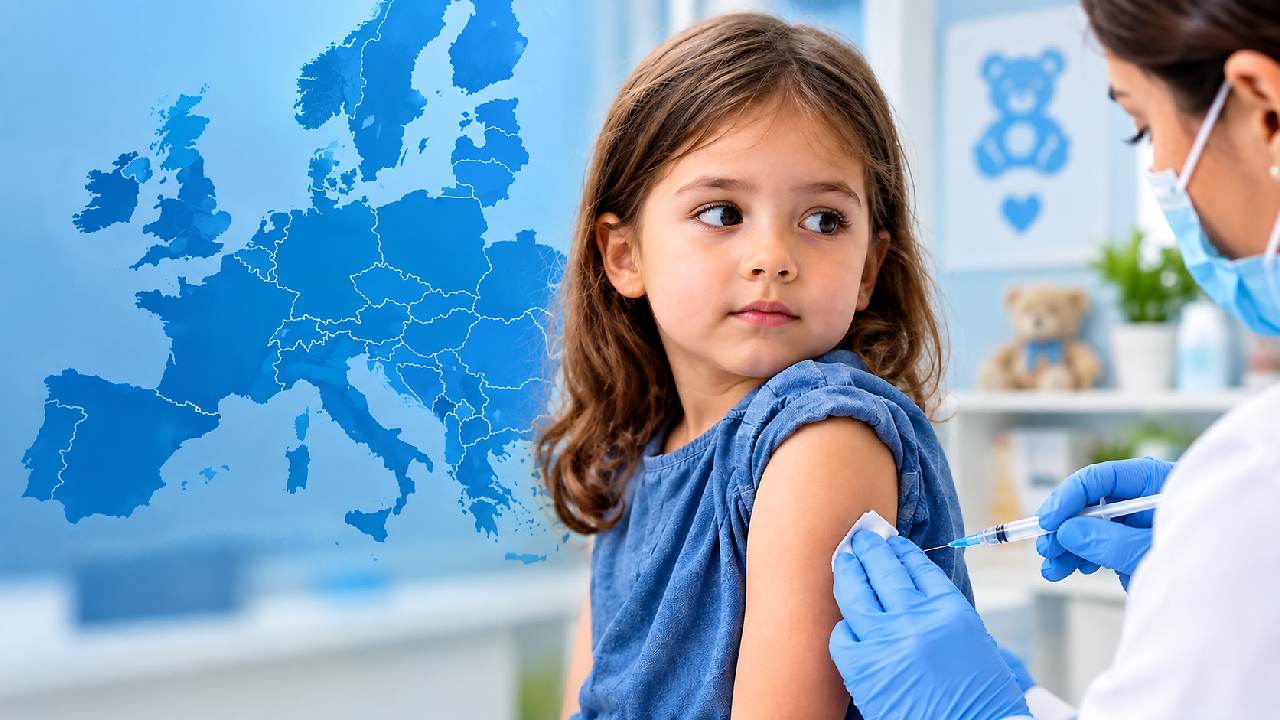
For decades, childhood vaccination was one of the clearest public health success stories in Europe. But a new study published in The Lancet Regional Health—Europe, suggests that progress has started to slip, and in some countries, it has slipped quite noticeably.The research led by a team from the Università Cattolica del Sacro Cuore in Rome looked at vaccination coverage across seven different vaccines in European Union countries, tracking data all the way from 1980 to 2024. What it found was not a sudden collapse, but something arguably more concerning: a slow, steady stall that has crept in over the last few years without much attention.Which Childhood Vaccine Rates Dropped?According to the research, recent declines were most widespread for vaccines against Hemophilus influenzae type b polio, hepatitis B diphtheria-tetanus-pertussis.Surprisingly, measles and rubella vaccination showed comparatively more favorable recent trends.Where the Decline Is HappeningSince 2019, sixteen countries have seen vaccination rates drop for four or more of the vaccines studied. Bulgaria, Cyprus, Ireland, the Netherlands, Romania, and Sweden stood out in particular, with all seven vaccines showing a downward trend in recent years.The pattern wasn't uniform everywhere, though. Germany and Spain saw declines in five of the seven vaccines, while France and Italy told a more mixed story, with four vaccines improving even as three others slipped.At the higher end, Luxembourg and Portugal managed to maintain at least 95 percent coverage across all seven vaccines, a benchmark most countries are still trying to reach. Romania, on the other hand, fell below 80 percent, making it the lowest performer in the study. Why This Is Happening NowAccording to the researchers, the timing of this decline is not a coincidence. Most of it began somewhere between 2019 and 2022, a period that overlaps almost exactly with the Covid-19 pandemic and its aftermath. Routine vaccination services were widely disrupted during that time, and the study suggests that many countries simply haven't fully recovered since.There's also a broader factor at play: vaccine hesitancy, which researchers describe as a growing contributor to the decline, separate from any pandemic-related disruption. In other words, this isn't only about missed appointments during lockdowns. It also reflects a shift in how some parents and communities are approaching vaccination altogether.What This Means Going ForwardVaccination remains one of the most effective tools available for preventing serious childhood diseases, and researchers are clear about what's at stake if this trend continues. A sustained drop in coverage doesn't just affect individual children; it also weakens herd immunity, making entire communities more vulnerable to diseases that had largely been kept under control for years.The study was direct about what needs to happen next, stating that international, national, and community-level action will be necessary to reverse these trends. Without it, the progress that took decades to build could continue to erode, quietly, one missed vaccination at a time.