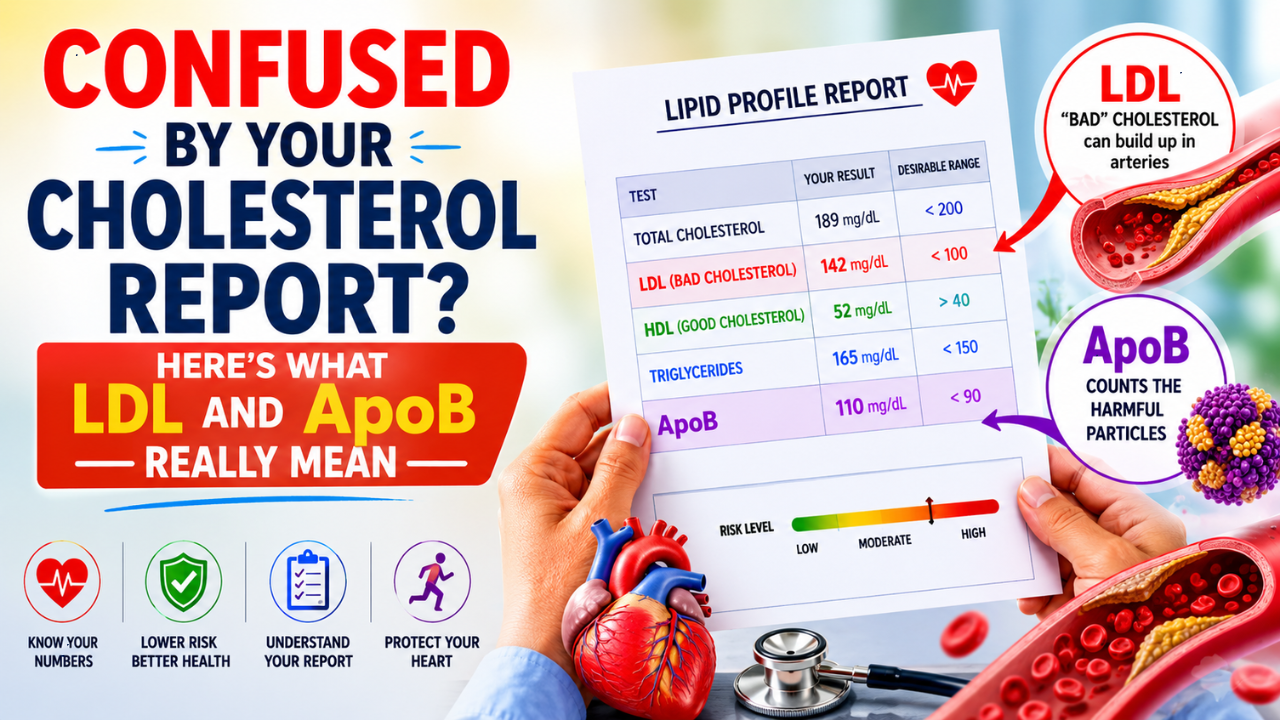
Every year, millions of people undergo routine health check-ups that include a lipid profile. Yet for many, the numbers on the report—Low-Density Lipoprotein (LDL), High-Density Lipoprotein (HDL), triglycerides, and increasingly ApoB—remain confusing.Most people know that cholesterol is linked to heart disease and that "good" cholesterol can be beneficial, while high levels of "bad" cholesterol may increase cardiovascular risk. However, understanding what the different lipid profile numbers mean—and which ones matter most—can make a significant difference to long-term heart health.Taking to the social media platform X, noted neurologist Dr. Sudhir Kumar said, "This is mainly meant for people who have NOT suffered a heart attack or stroke and are NOT already taking statins."How Often Should You Get Tested?Dr. Sudhir, Senior Consultant Neurologist at the Institute of Neurosciences, Apollo Hospitals, Hyderabad, shared that for most healthy adults, a lipid profile every two to three years is generally sufficient.However, more frequent testing may be necessary for people with:DiabetesHigh blood pressureObesityA history of smokingA family history of premature heart diseasePreviously abnormal cholesterol levelsLDL: Why This Cholesterol MattersAlso read: AHA’s New Dyslipidemia Guidelines Stress Early Screening, Lifestyle ManagementLDL cholesterol, commonly known as LDL-C, is often referred to as "bad cholesterol." The expert explained its key role in the development of heart disease."Excess LDL can enter artery walls and contribute to plaque formation. Over time, these plaques may narrow blood vessels or rupture, increasing the risk of heart attacks and strokes," Dr. Sudhir said.For most healthy adults, LDL levels below 100 mg/dL are considered desirable. Levels above this range gradually increase cardiovascular risk, particularly when elevated over many years.The lower the LDL, the lower the long-term risk of heart attack and stroke. On the other hand, persistently high LDL can increase the lifetime risk of:Heart attackStrokePeripheral artery diseaseTriglycerides: A Marker Of Metabolic HealthTriglycerides are another type of fat found in the bloodstream. High levels of triglycerides are often a marker of poor metabolic health, Dr. Sudhir said.He added that high triglycerides can indicate:Insulin resistanceObesityPrediabetesDiabetesPhysical inactivityExcessive alcohol consumptionDiets rich in refined carbohydrates and sugary beveragesWhat About HDL?High-density lipoprotein, or HDL, has long been known as "good cholesterol." Traditionally, higher HDL levels have been associated with lower cardiovascular risk.However, recent research has challenged the idea that simply raising HDL improves heart health. Several medications designed to increase HDL levels failed to reduce heart attack risk, prompting a shift in focus toward lowering harmful cholesterol particles rather than boosting HDL alone.As a result, the expert cautioned against judging cardiovascular health based solely on HDL levels.ApoB: The Emerging Risk MarkerRead More: Cardiovascular Diseases Lead As India’s Top Killer: US Cardiologist Points Out Risk FactorsOne of the most important developments in cardiovascular prevention is the growing recognition of Apolipoprotein B, or ApoB. Dr. Sudhir stated that ApoB is a protein found on potentially harmful cholesterol-carrying particles such as LDL and VLDL (Very Low-Density Lipoprotein, a type of "bad" cholesterol)."Think of ApoB as a count of the particles capable of entering artery walls and causing plaque. One ApoB is equal to one potentially harmful particle," the expert said.ApoB is important because two people may have the same LDL level, but only one may have many more cholesterol-carrying particles. That person will often have a higher ApoB level and potentially higher cardiovascular risk. ApoB often provides a more accurate assessment of risk than LDL alone, the neurologist explained.He suggested that ApoB testing should be considered by people with diabetes, prediabetes, metabolic syndrome, obesity, elevated triglycerides, or a strong family history of heart disease. How To Improve Lipid Profile Naturally?Dr Sudhir said that one should focus on long-term cardiovascular health, and not just a single laboratory number. He added that one can improve their lipid profile and thereby heart health by: Exercising regularlyMaintaining a healthy body weightAvoiding smokingLimiting sugary drinksReducing ultra-processed foodsEating more vegetables, fruits, and legumesChoosing healthier sources of fatPrioritizing good sleep.