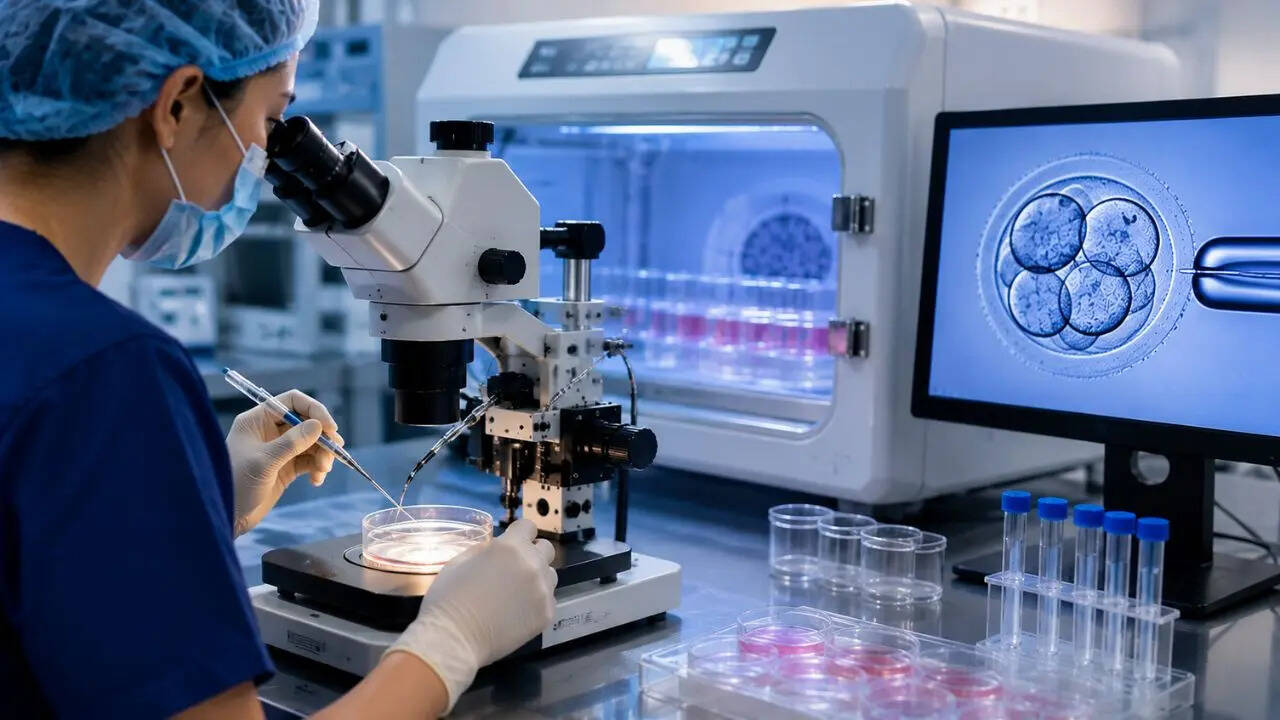
The IVF laboratory is a critical place where science and precision come together to help create embryos. Here, the expert explains the careful measures that take place inside the lab and the important role of the embryologist in helping couples achieve parenthood.Many couples are battling infertility and are advised to undergo in vitro fertilization (IVF) to conceive. The couples tend to focus on various factors such as doctor consultations, hormone injections, and embryo transfer. However, one of the most important parts of the treatment happens in the IVF laboratory. Couples are often unaware of what happens behind the closed doors in the IVF lab.The IVF Lab: A Highly Controlled EnvironmentDid you know? Highly trained embryologists work with advanced technology when it comes to handling the eggs, sperm, and embryos in the IVF laboratory. They are the ones who are responsible for planning and carrying out every step with accuracy to be able to give embryos the best possible environment for healthy development.The lab is a controlled and sterile space wherein the temperature, humidity, air quality, and lighting are strictly monitored to be able to protect the delicate eggs and embryos. Even small changes in the environment tend to impact embryo development, so strict quality standards are followed every day by the expert.Also read: From Hope To Parenthood: How IVF And Embryology Are Changing The Fertility Journey For CouplesFrom Egg Retrieval to FertilisationThe process commences after the woman's eggs are collected during a minor procedure. On the same day, the male partner will also provide a semen sample, or previously frozen sperm, if needed. The embryologist will examine both the eggs and sperm under a microscope to check the quality.Then the healthiest sperm are selected to fertilise the eggs. Fertilisation will occur after the egg and the sperm are placed together in a special culture dish or via a procedure known as Intracytoplasmic Sperm Injection (ICSI), wherein a single healthy sperm is directly injected into the egg. The expert will decide the method after knowing the couple's fertility condition.Also read: Delhi's Poor AQI, Monsoon Conditions Put Children's Lungs at Risk: Ways to Keep Kids SafeMonitoring Embryo DevelopmentWhen fertilisation happens, the embryos are placed in special incubators that closely mimic the conditions inside the human body. Over the next few days, embryologists monitor their growth and development, and some embryos may undergo genetic testing to identify certain inherited or chromosomal conditions before they are transferred. The Embryologist's Role in Ensuring Safety and SuccessUnderstand that the embryologist maintains detailed records and follows strict identification protocols to ensure every egg, sperm, and embryo is accurately matched with the correct patient. Hence, the embryologist plays a vital role in every successful IVF journey.