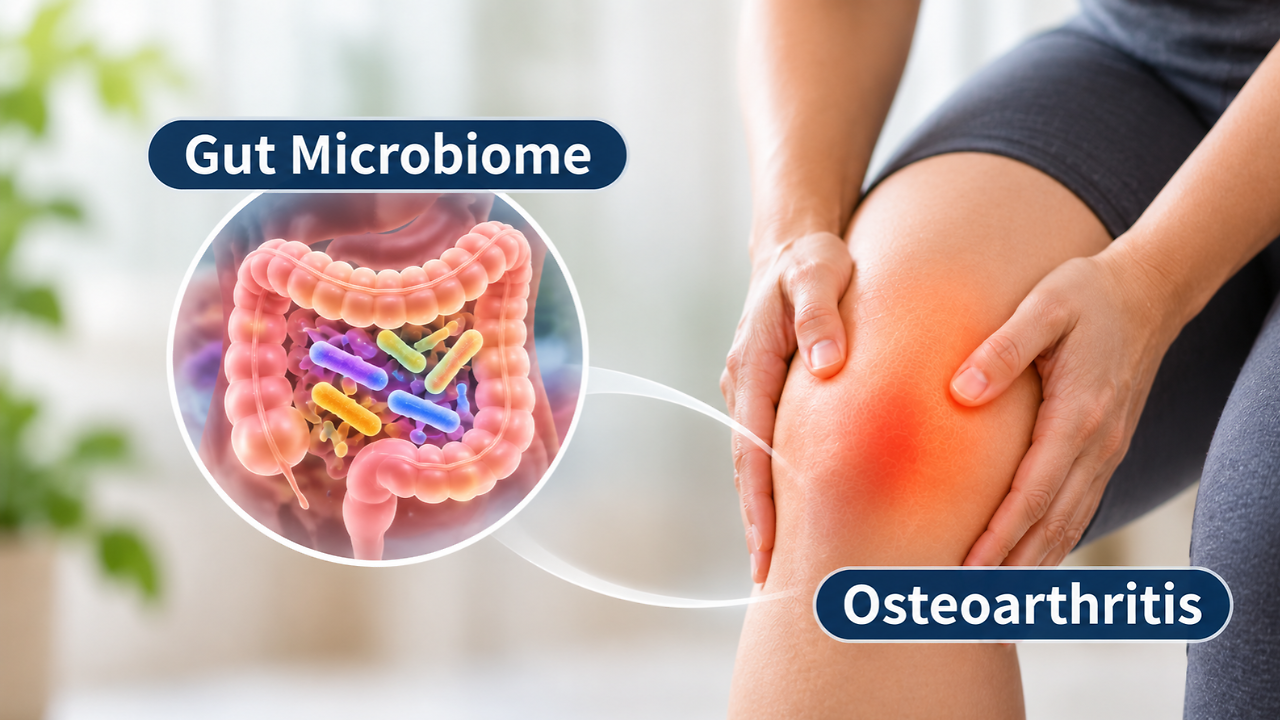
Osteoarthritis has often been considered as a disease of old age, resulting from years of joint wear-and-tear and cartilage damage. But research is looking deeper into causes of the disease that go beyond what happens inside the joints. One of the causes could be the trillions of microorganisms living in the gut, known as the gut microbiome. They are known to influence inflammation in the body and resultantly affect joint health.Scientists are turning their attention towards the gut-joint axis, which may interconnect the gut bacteria, immune system and inflammation in joint tissues. While the relationship is still being studied, early observation says that changes in gut bacteria may influence how osteoarthritis develops.Experts explain if poor gut health can increase the risk of arthritis and if improving gut microbiome can help protect the joints.Connection Between Gut Microbiome And OsteoarthritisOsteoarthritis develops when the protective cartilage cushioning the ends of bones gradually breaks down. This can cause pain, stiffness, swelling and difficulty moving the affected joint. Although physical strain and ageing are key drivers, inflammation and metabolic changes are also believed to influence the disease.Dr Vaibhav Bagaria, Director, Orthopaedics and Joint Replacement at Sir H.N. Reliance Foundation Hospital told HealthandMe that understanding surrounding osteoarthritis has evolved over the years.“In the past, osteoarthritis was thought to be a degenerative disease. But we now understand that it is a complex disease that involves inflammation, metabolism, aging and mechanical stress,” he explained.Emerging research, however, suggests that the gut microbiome could be another factor influencing this process. Gut bacteria help with digestion, produce metabolites and interact with the immune system. Changes in their gut bacteria may influence inflammatory responses in different parts of the body, including the joints.Dr Deepak Thakur, Principal Consultant, Orthopaedics and Joint Surgeon at Yatharth Super Speciality Hospital, Noida, told HealthandMe, “Studies have found associations between changes in gut bacteria and osteoarthritis, raising the possibility that the gut microbiome could influence the disease. But we are still learning how this relationship works, and we cannot yet say that changes in gut bacteria directly cause osteoarthritis.”Also read: Toddler’s Swollen Knee Turned Out To Be Juvenile Arthritis Diagnosis: Signs Parents Should Not IgnoreHow Gut Bacteria Affects Joint Health?The relationship between gut bacteria, intestinal permeability and inflammation could explain this scenario. A healthy intestinal barrier regulates what enters the bloodstream while keeping harmful substances within the gut. However, changes in the composition of gut bacteria may affect this barrier, increasing intestinal permeability. This is called a ‘leaky gut’.When the intestinal barrier becomes more permeable, bacterial elements like lipopolysaccharides (LPS) may enter the bloodstream and trigger an immune response. This could contribute to low-grade inflammation throughout the body, which could affect cartilage, the synovium (the tissue lining the joints) and other joint structures.Dr Bagaria explained, “Unhealthy gut flora could lead to increased intestinal permeability (or a ‘leaky gut’) that might cause entry of the bacterial components, like lipopolysaccharides, into the bloodstream causing systemic low-grade inflammation.”However, gut bacteria may also have protective functions. Dr Bagaria added, “The healthy bacteria release the short-chain fatty acids that modulate immune response and might affect cartilage degeneration, synovial inflammation and sensitivity to pain.”Talking to HealthandMe, Dr Debaditya Roy, Consultant Rheumatologist at CK Birla Hospitals, CMRI, Kolkata, also points to the possible role of microbial components and immune response.“Changes in the composition of gut flora can result in an altered synthesis of microbial products. In turn, increased permeability of the intestine can allow pro-inflammatory substances to enter the bloodstream. Subsequently, certain pathways of immune response can be activated, which influence the cartilage tissue, synovium and subchondral bone tissues,” he explained.Also read: Women And Arthritis: Why Risk Increases After 40Could Gut Bacteria Explain Why Osteoarthritis Is More Severe In Some People?People with similar risk factors like age, body weight or previous joint injuries, do not experience osteoarthritis in the same way. Some may have considerable pain and mobility problems, while others with similar joint damage experience mild symptoms.Differences in genetics, metabolism and inflammatory responses may explain this to some extent. Researchers are now exploring whether the gut microbiome could be another contributing factor.Dr Bagaria highlights an observation from his practice: “It is intriguing that in orthopaedics two patients who have the same X-rays may experience different severity of pain and disability. These differences depend on genetics, obesity, metabolism and inflammatory response but the gut microbiome could be another factor.”Different individuals have different compositions of gut bacteria, which may influence their metabolic and immune responses. Dr Roy believes the gut microbiome may help explain some of the differences between patients.“The involvement of the intestinal microbiome may provide some explanation regarding the heterogeneity of progression rates of the disease among different patients despite similarity of their risk factors (such as age, BMI, history of trauma). Different microbial compositions may be present in one person’s intestine compared to another. Patients may have different immune responses as well as metabolic outcomes.”Also read: Your Knees In Your 30s And 40s: Small Habits That Go A Long WayCan Improving Gut Health Help Prevent Or Treat Osteoarthritis? An emerging area of research, diet and probiotics can influence joint health. Scientists are also exploring whether changes in gut bacteria could help alleviate inflammation and improve osteoarthritis symptoms. But for now there is no established evidence supporting the same.Dr Bagaria said, “A high fibre diet with fruits, vegetables, whole grains and fermented foods is a healthy choice that benefits your metabolism and gut microbiome. Nevertheless, at the moment there is not enough evidence to suggest specific probiotics or microbiome interventions for osteoarthritis.”Dr Thakur stated that early clinical studies have shown some promise but the findings are not enough to support this. “We need larger, well-designed clinical trials to establish their safety, effectiveness and appropriate use. For now, patients should not replace their prescribed treatment with probiotics or supplements,” he said.Dr Roy also emphasises that dietary changes and microbiome-based interventions cannot currently be considered arthritis therapies.“A balanced and high-fibre diet may help improve one’s general well-being. However, this cannot be used as arthritis treatment.”