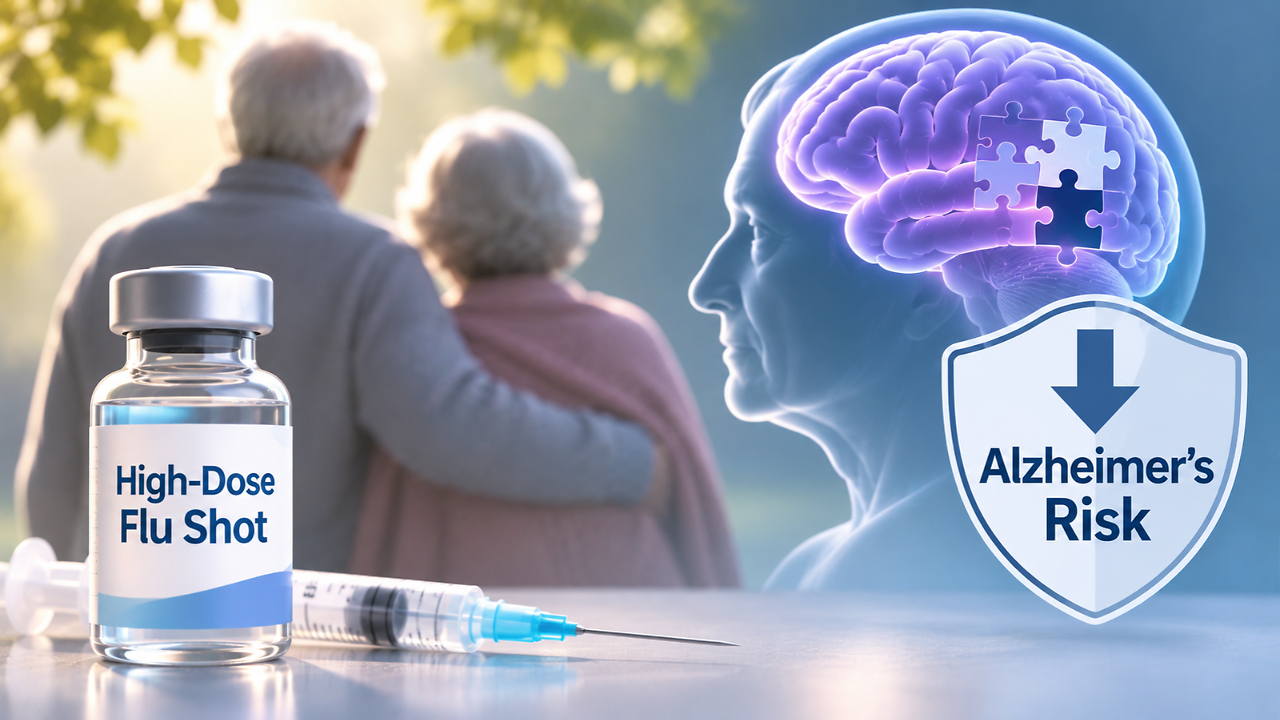
The type of flu vaccine older adults receive also has effects on their brain health. A study published in the journal Neurology has found that adults aged 65 and above who received a high-dose influenza vaccine had a lower risk of developing Alzheimer's disease compared to those who received a standard dose shot.The research, led by scientists at the University of Texas Health Science Center at Houston (UTHealth Houston), suggests that the higher-dose vaccine may offer an additional benefit in addition to protection against influenza. The effect was observed for up to 25 months after vaccination. The study reported nearly 55% lower risk of Alzheimer's linked with high-dose flu vaccination. What Did The Study Find?Also read: US Flu Cases Rising: What To Know About The New G155E H1N1 MutationResearchers analysed US healthcare claims data from adults aged 65 and older who received either a high-dose or standard-dose influenza vaccine between 2014 and 2019.The study included 120,775 people who received high-dose vaccines and 44,022 who received standard-dose vaccines. Participants were followed for up to three years to examine the risk of Alzheimer's disease.The researchers found that people who received the high-dose vaccine had a significantly lower risk of developing Alzheimer's compared to those who received the standard dose. The effect of the flu shot sustained for approximately 25 months in the primary analysis. The link between high-dose flu vaccination and lower Alzheimer's risk lasted longer among women than men.An earlier study by the same research group, published in 2022, had found that older adults who received an influenza vaccine had approximately 40% lower risk of developing Alzheimer's disease than those who did not receive the vaccine. The latest research examined whether a higher vaccine dose could help with an additional reduction in risk. Why High-Dose Flu Vaccine May Have A Different Effect? Also read: New COVID-19 Variant PJ.2.1 Spreads Globally: WHO Says Symptoms Resemble Cold, FluHigh-dose influenza vaccines are designed to generate a stronger immune response. They contain four times the amount of influenza antigen found in standard-dose vaccines.As people age, their immune systems may become less effective in responding to infections. A stronger vaccine formulation is therefore intended to improve protection against influenza in older adults.Paul Schulz, professor of neurology at McGovern Medical School and senior author of the study, explained how the research idea emerged, “The public health department had seen our vaccine research and asked if I could come down to talk to them about it,” Schulz said. “We went through the findings, and they asked if there was a difference with different dosages; I was confused.”He also recalled, “I was stunned that, as a physician, I didn’t know a higher dose was offered.” Researchers have offered several possible explanations. Better protection against influenza could reduce severe infections and the inflammation that accompanies them. Another possibility is that stronger immune response fights inflammatory processes involved in Alzheimer's disease.Flu Vaccines & Alzheimer's The study was retrospective and observational meaning researchers examined existing healthcare records rather than randomly assigning participants to receive different vaccine doses.Although statistical methods were used to account for differences between the groups, other factors could still have influenced the results. The researchers also noted that Alzheimer's disease develops over many years before symptoms become apparent. The study's follow-up period of up to three years is therefore too short to establish whether vaccination prevents the underlying disease or delays the appearance of symptoms.