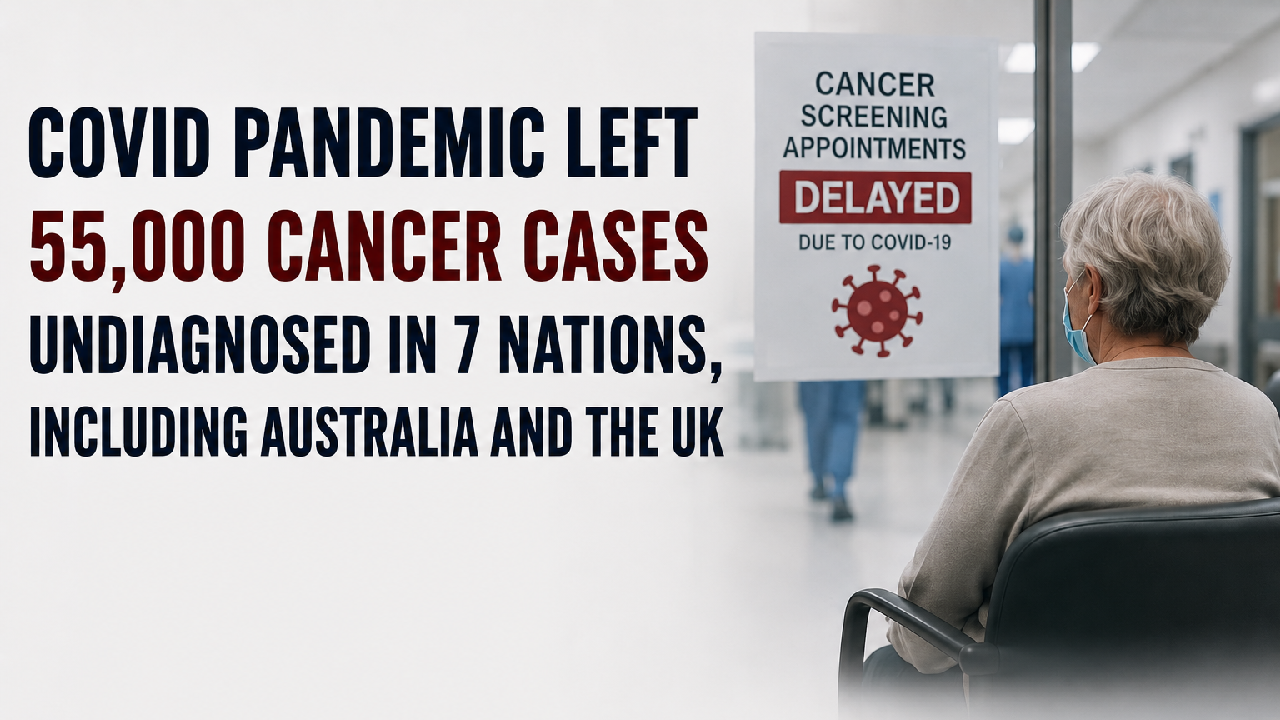
The COVID pandemic was a disastrous time for human civilization. The effects of that time are still observable to this day. The lockdown and other aspects of the period affected every stratum of society and life. And one of the most impacted sectors was the health care sector, which was at the forefront of the global crisis. Thus, other routine healthcare, as important as cancer, got neglected and caused pain and despair. A recent study by the International Agency for Research on Cancer in Lyon, France, published in The Lancet Oncology, sheds light on the magnitude of the healthcare disruption during the pandemic, as the research finds there were 55,000 cancers that remained undiagnosed due to the spread of COVID. The largest estimation at an international scale observed data from 2.6 million patients and 18 jurisdictions. The researchers saw that developed first-world countries like Norway and New Zealand suffered due to the crisis, though the health care systems there saw a smaller decline, which was followed by faster recovery. On the other side, even developed and economic powerhouses like the United Kingdom, Canada, and Australia got the worst of it, and recovery was also slower. According to the study, 16 percent of the cancer cases remained undiagnosed in nations like Australia, Canada, Denmark, Ireland, New Zealand, Norway, and the UK between April and December 2020. Though the biggest dip was seen in prostate cancer diagnoses, which fell by a massive 24 percent, followed by breast cancer and melanoma, both down 18 percent. Isabelle Soerjomataram, deputy head of the agency’s Cancer Surveillance Branch and the study’s senior author, said, “A more detailed understanding of why some health systems were better able to withstand the pressures of the Covid-19 pandemic could provide valuable lessons for future crisis preparedness.”Also Read: Football Legend Kevin Keegan Reveals Fighting Stage Four CancerWhat Is Prostate Cancer?The gland in the male reproductive system that makes seminal fluid is the prostate. This is the most common type of slow-growing cancer in men, which sees the abnormal growth of cells in the gland; if detected early, it is very much curable. Some early-stage symptoms of the disease are blood in the urine or semen, trouble urinating, and erectile dysfunction, and if you’re asking yourself, why you?You could probably blame age, family history or lifestyle choices. While we cannot change the ‘why’, we can master the ‘how’ of finding the right treatment in time. Step 1: Rule out the possibility of cancer with a simple Prostate-Specific Antigen (PSA) blood test.Also Read: Space Grown Stem Cells: How Are Expedition 74 Astronauts Helping To Fight Cancer?What Is Melanoma?Melanoma is a type of skin cancer that develops in melanocytes, the cells responsible for producing melanin, the pigment that gives skin its colour. It can occur anywhere on the skin but often develops on areas exposed to the sun, such as the face, arms, back, and legs. Melanoma can also appear in less-exposed areas, like the soles of the feet, palms, or under the nails, particularly in individuals with darker skin tones. Although rare, melanoma may develop in the eyes, mouth, or internal organs. The primary sign of melanoma is a new or changing mole, freckle, or skin lesion.