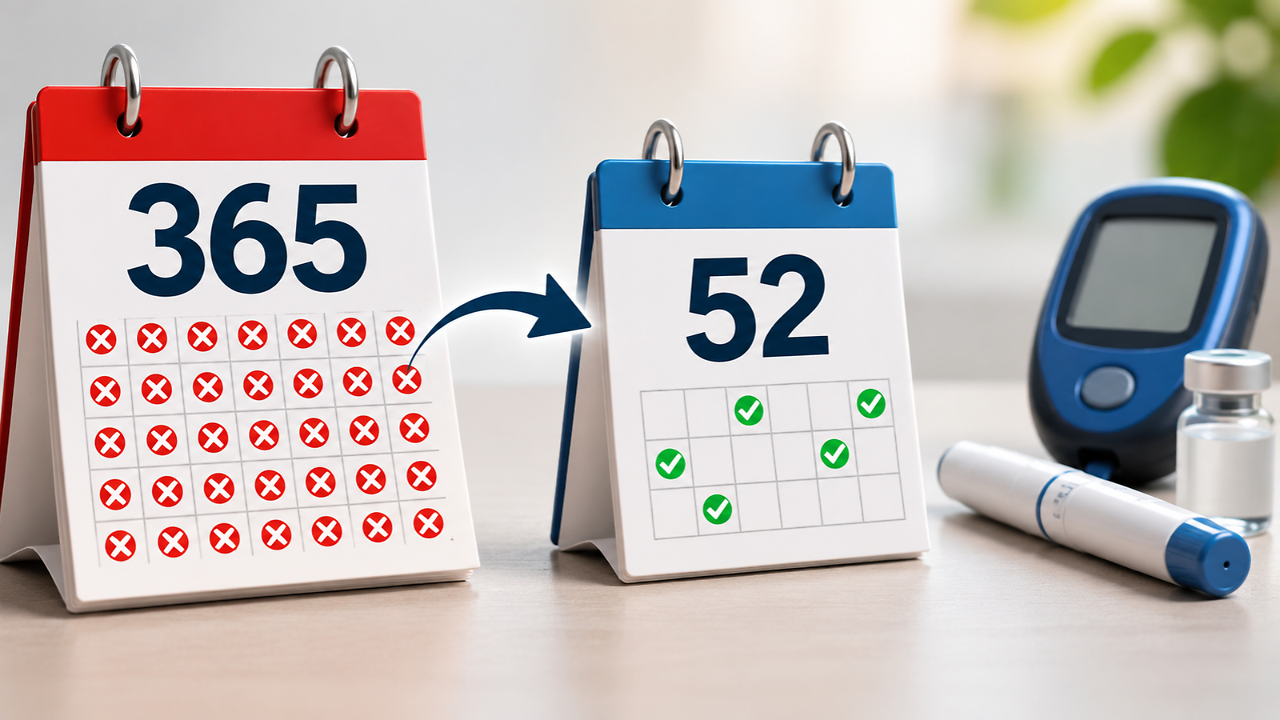
For many people living with chronic conditions, the hardest part of treatment is not understanding what to do, but managing the daily effort required to do it. When a health routine demands multiple pills, frequent injections, and rigid schedules, treatment fatigue quickly sets in. Over time, complicated routines lead to missed doses, inconsistent control, and growing frustration. This is not a personal shortcoming or a lack of discipline; it is simply what happens when medical care creates too much friction in everyday life.India’s Growing Diabetes BurdenThis challenge is clearly visible in India’s diabetes landscape. Data from the ICMR-INDIAB study revealed that more than 10.1 crore people in India live with diabetes, and another 136 million have prediabetes. Additionally, findings from the National Family Health Survey (NFHS-6) show that elevated blood sugar is rising rapidly across both cities and rural areas. Despite increased awareness of Type 2 Diabetes, more than 80% of people undergoing treatment continue to have blood sugar levels above the recommended target, as reflected by Glycated Hemoglobin (HbA1c) levels of 7% or higher. HbA1c reflects the average blood sugar levels over the past three months. Type 2 Diabetes is a progressive disease, and as the condition advances, many individuals may eventually require insulin therapy to manage their blood sugar levels.Also read: World Diabetes Day 2026: Is India's Toxic Air Adding To Its Diabetes Crisis? What Experts SayWhy Patients Delay Starting Insulin A primary contributor to this gap is the delay in starting essential therapies. On average, patients in India wait nearly 8.8 years before starting basal insulin. The hesitation stems from clear concerns: up to 93% of patients report a strong dread of daily needle pricks, while healthcare providers observe that hectic work and family schedules make daily injections difficult to sustain. During these years of delay, unmanaged high blood sugar silently raises the risk of long-term damage to the heart, kidneys, nerves, and eyes.Across modern medicine, research shows that simpler treatment plans consistently produce better outcomes. In cardiovascular care combining multiple medications into a single once-daily pill significantly improved adherence and reduced hospital visits. In metabolic health, long-acting, sustained-release tablets replaced the need to remember multiple midday doses. Whenever therapies adapt to human routines rather than forcing individuals to reorganize their days, patients stay on treatment longer and achieve steadier health results.Also read: Effect of Diabetes on Different Organs: Why the Damage Is Not the Same EverywhereOnce-Weekly Insulin: A Shift In Diabetes Management For over a century, basal insulin had to be administered as a once-daily injection with some cases, twice a day. Today, that clinical approach has shifted. Insulin Icodec, the world’s first once-weekly basal insulin analogue, was engineered specifically around the need for simplicity. Its formulation attaches to a neutral carrier protein - albumin- in the bloodstream, forming an inactive reserve that steadily releases active insulin across seven full days. This design reduces the basal insulin injection burden seven-fold, cutting injections from 365 a year down to just 52. Administered once a week through a FlexTouch® pen, this simpler routine does not compromise effectiveness. In the global clinical trial program “ONWARDS”, once-weekly insulin icodec demonstrated superior HbA1c reductions and significantly more Time-in-Range compared to standard once-daily basal insulin (glargine U100). Additionally, adults with type 2 diabetes were 49% more likely to reach HbA1c below 7% with insulin icodec without experiencing clinically significant or severe low blood sugar.Managing diabetes should never feel like a second job. When healthcare becomes less complicated, living well becomes far more achievable. If injection fatigue, busy schedules, or needle anxiety have delayed blood sugar control, simpler medical options now exist. Speaking with a doctor about simplifying daily care is an effective first step toward lasting health.