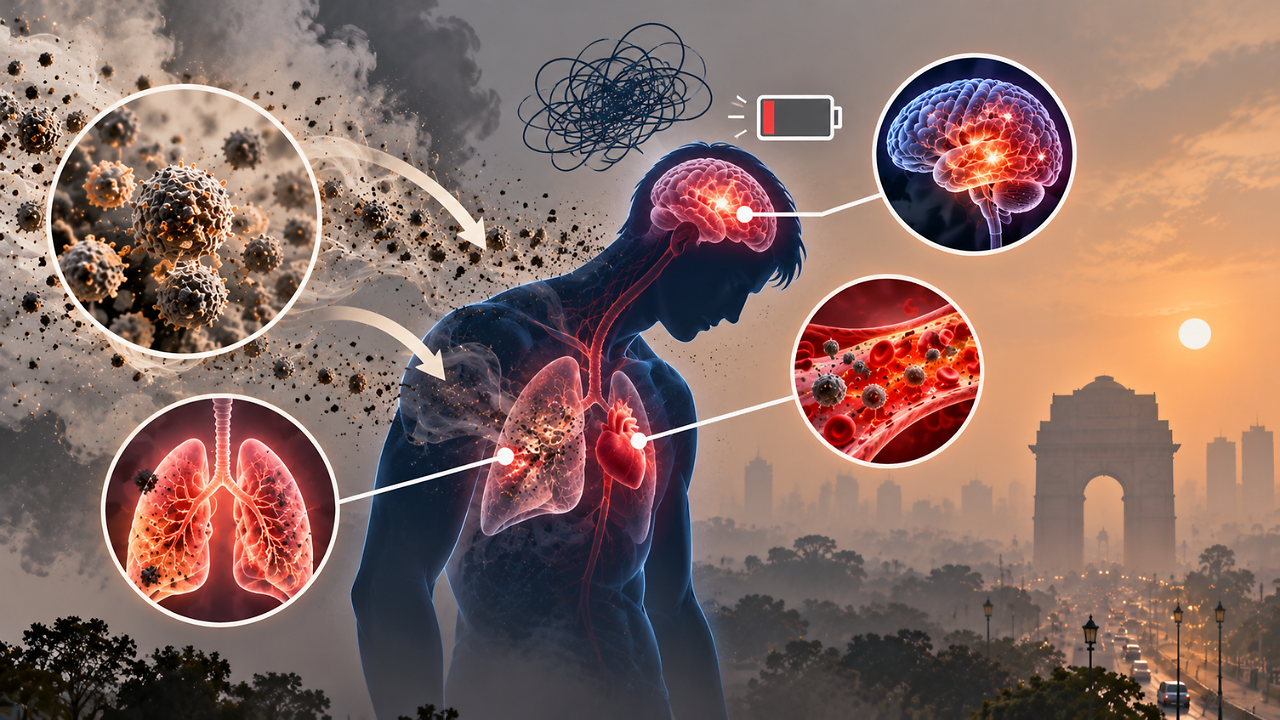
After Dussehra festivities, Delhi woke up to an alarming AQI of 300, maybe even more in some parts of the city. On October 21, pollution curbs under GRAP-1 were implemented, which are brought in force when AQI ranges between 201 and 300.As Delhi's air pollution increases, some people may experience uncommon symptoms like feeling unusually tired, sluggish or unable to concentrate. This is not just a coincidence. Even people without asthma or breathing difficulties can feel fatigue, especially during periods of high air pollution.Fine particulate matter (PM2.5) can penetrate deep into the lungs and trigger inflammation and physiological stress. Its effects may extend beyond the respiratory system, affecting blood vessels health, cardiovascular function as well as sleep.HeathandMe spoke to Dr Puneet Khanna, Chairman, Respiratory Medicine and Pulmonology, Manipal Hospital Dwarka, New Delhi, Dr. Puneet Gupta, HOD - Pulmonology, Intervention Pulmonology & Sleep Medicine, Yatharth Super Speciality Hospital, Noida Extension, and Dr Mrinal Sircar, Director, Respiratory and Sleep Medicine, Medanta, Noida, who explained why rising AQI can leave some people feeling exhausted, what can help and when chronic fatigue needs medical attention.High AQI May Make You Feel Tired Even Without Breathing ProblemsPoor air quality does not affect just the lungs. Dr Sircar explains that air pollution can cause symptoms even in people without a pre-existing respiratory condition.According to Dr Khanna, exposure to PM2.5 can trigger inflammation and oxidative stress, increase the body's workload and affect sleep quality. These changes may contribute to tiredness, headaches, low energy and reduced concentration, even in people with otherwise healthy lungs.“Exposure to polluted air may also affect sleep quality and increase the body's overall stress response, contributing to symptoms such as tiredness, reduced energy and difficulty concentrating,” he says.Dr. Gupta delves deeper into the process of PM2.5's attack and how the body responds to it. He explained, "Your immune system treats fine particles (PM2.5) as intruders and mounts a constant low-grade defence, which burns energy much like a mild infection. At the same time, irritated airways and gases like carbon monoxide can make oxygen delivery slightly less efficient. The most underrated cause is sleep: a dry throat, blocked nose, and mild night-time cough fragment your sleep, so you wake up unrefreshed without knowing why. Fatigue here doesn’t mean your lungs are weak. It means your body is working overtime quietly."Also read: Sky Turns Orange In Indonesia: How Toxic Smog From Wildfires Can Impact HealthCan PM2.5 Affect The Heart And Blood Vessels Too?PM2.5 particles are small enough to penetrate deep into the lungs. Some of its components can even enter the bloodstream. Exposure can trigger inflammatory and oxidative stress responses beyond the respiratory system.Dr Khanna says, “These changes may reduce physical endurance, increase feelings of fatigue, and contribute to symptoms such as brain fog, lethargy, and reduced exercise tolerance, particularly during periods of severe air pollution.”Dr. Gupta explained PM2.5 can create the same response from body as a common flu does. But the extent of these effects depends on pollution levels, duration of exposure and individual risk.He said, "PM2.5 is small enough that it, or the inflammatory chemicals it triggers, can enter the bloodstream. Signalling molecules such as IL-6 and CRP then travel through the whole body and produce the same “wiped out” feeling you get with the flu."He also said that particles also create oxidative stress, which damages mitochondria, the power plants of your cells. Blood vessels become stiffer, blood pressure can rise slightly, and the nervous system’s control of heart rhythm can be disturbed, which may feel like heaviness or palpitations. Inflammation can also reach the brain, causing fog and poor focus.Also read: Delhi Smog: Can You Really Tackle Pollution Season With An N95 Mask And Air Purifier?What Can Help?According to the doctors, the key is to reduce exposure to polluted air. Practical steps include:Limit exertion: Avoid strenuous outdoor activity when pollution levels are high, especially during periods of severe pollution.Wear a well-fitting N95 respirator: It can reduce exposure to fine particles when outdoors.Improve indoor air quality: Keep windows closed when outdoor air quality is poor and use a suitably sized air purifier with a HEPA filter where feasible.Maintain basic health routines: Get adequate sleep, stay hydrated and eat regular meals.Check AQI levels: Use local air quality updates to plan outdoor activities.Dr Khanna emphasises that these steps can help reduce exposure but cannot eliminate the effects of ongoing pollution. He also said that severe breathlessness, chest pain, fainting or sudden weakness requires urgent medical attention. Does Pollution-Induced Fatigue Go Away When AQI Improves? For many otherwise healthy people, symptoms can improve once air quality improves. Dr Khanna says recovery may occur within a few hours to several days, depending on pollution severity, exposure duration and individual health.However, there is no fixed recovery timeline. People with underlying respiratory or cardiovascular conditions may take longer to recover, while persistent tiredness may point to another health problem.Dr Sircar advises seeking medical advice if fatigue continues after air quality improves.The doctors also advise that if fatigue is chronic, recurrent, worsening or interferes with daily activities, medical evaluation should be sought rather than simply attributing it to air pollution.Dr Sircar also says that that a doctor may need to investigate other possible causes, including anaemia, thyroid disorders, sleep problems and cardiovascular conditions. Fatigue accompanied by a chronic cough, wheezing, breathlessness, chest problems or reduced exercise tolerance also needs intervention.