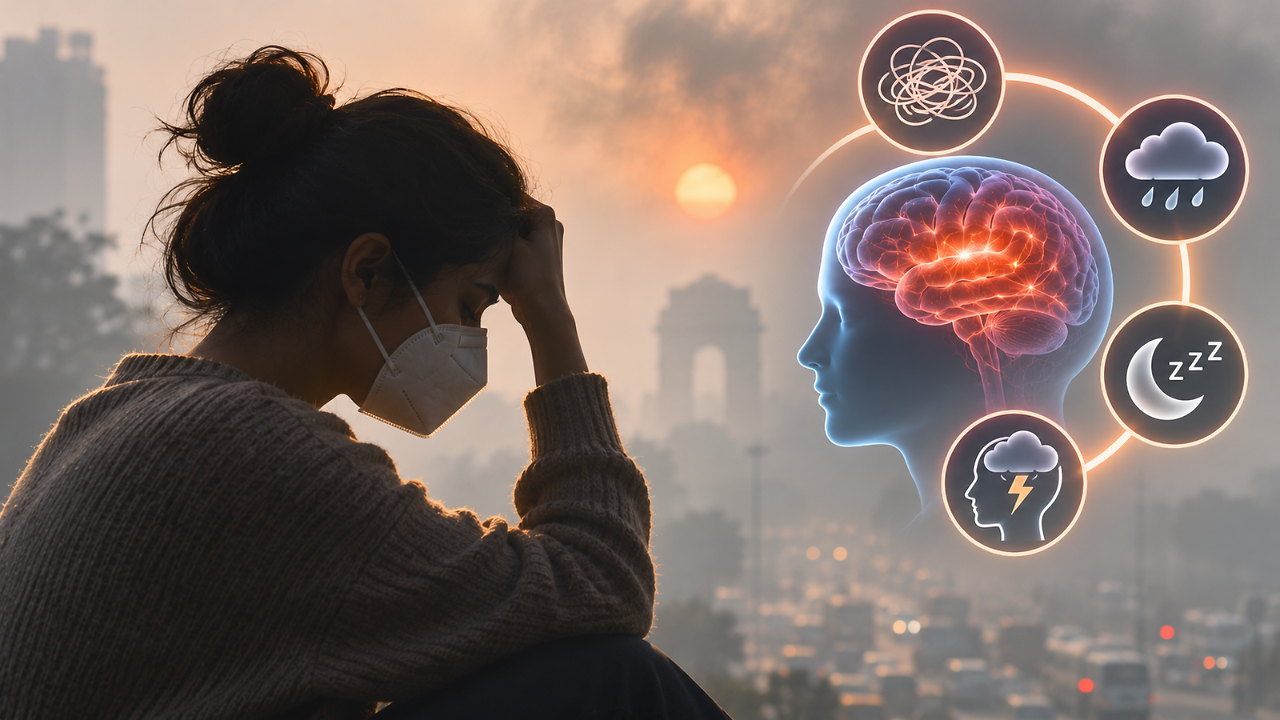
Ahead of Diwali festivities, Delhi is once again battling its annual air pollution crisis. The city's air quality index (AQI) - which measures PM2.5, fine particulate matter, has crossed 500 in some regions, entering the "hazardous" category, raising health concerns for millions in the capital.The effects of air pollution are not just limited to physical health. Apart from your lungs and heart, long-term exposure to toxic air can render you feeling anxious, stressed, demotivated and mentally fatigued. The reason behind this is not one-fold. The worsening of mental health due to air pollution is a culmination of many factors. From particulate matter triggering inflammation and negatively affecting the body’s stress response to restrictions on outdoor activities, disturbance in sleep and lack of physical activity, air pollution contributes to mental health burden in many ways.Dr Varsha Viswanathan, psychiatrist at Athulya Senior Care and Athulya Geriatric Care Hospital, Chennai, told HealthandMe that particulate matter in polluted air can enter the bloodstream and trigger inflammatory responses.She explained, “This may lead to oxidative stress and affect brain functions involved in mood regulation, attention, memory and emotional processing. Over time, these changes may contribute to increased irritability, mood disturbances and difficulty managing emotional responses.”Air Pollution & StressAlso read: Climate Crisis Is A Health Crisis: Just 6 Actions Could Save 1.6 Million Lives, Says WHOPM2.5, consists of tiny airborne particles that can penetrate into the lungs. Some can even enter the bloodstream and cause inflammation and oxidative stress. These effects may also affect the brain and its functions. Cortisol is a hormone related to the body’s response to stress. Changes in stress regulation due to pollution may make it harder for some individuals to manage everyday challenges. Dr Viswanathan explains that air pollution may also affect the body’s stress-response system.“Repeated exposure to environmental pollutants can affect the regulation of stress hormones such as cortisol. This may increase physiological stress and contribute to symptoms such as restlessness, heightened alertness, difficulty relaxing and persistent feelings of tension,” she says.Air Pollution & Anxiety Also read: Air Pollution In Delhi: Experts Warn Of Red Eyes, Itching, Watering In ChildrenApart from stress, living in highly polluted cities can also cause one to feel constantly uncomfortable, uncertain and anxious. Kakul Faruqi, Senior Consultant Psychologist at LH Hiranandani Hospital, Mumbai, told HealthandMe that pollution can become a source of fear and withdrawal.She said that someone who is prone to anxiety, breathing difficulty may be interpreted as a sign of immediate danger, which could trigger further fear and distress.“Psychologically speaking, pollution can be a source of discomfort, fear and withdrawal. A coughing fit, trouble breathing and insomnia can exhaust an individual, making it more difficult for him or her to cope with daily stresses. An individual who is susceptible to panic attacks can experience fear and negative interpretations of physical symptoms due to trouble breathing,” Faruqi explains.She also said that repeated exposure can also make the threat feel inescapable. Faruqi says that when individuals perceive pollution as a problem beyond their control, the resulting uncertainty can become extremely overwhelming.Lack Of Outdoor Time May Contribute To DepressionAlso read: Supreme Court Allows Green Crackers In Delhi-NCR Ahead Of Diwali: Are They Really Safe For Your Health?Faruqi explains that pollution can make it harder to engage in behaviours that support psychological health.When pollution levels are high, people normally avoid spending time outside socialising, exercising, walking, and spending time in green spaces. These activities often provide opportunities for physical movement, social connection and relaxation. Missing out on these activities can affect one emotional and mental well-being. “The reduction in outlets for relaxation, in addition to experiencing feelings of loneliness and frustration, can lead to depression,” she says.Dr Viswanathan also highlights how poor air quality can disrupt sleep, physical activity and normal social routines, which could further worsen mental well-being. “Inadequate sleep and reduced physical activity can, in turn, affect emotional regulation, concentration and the ability to cope with everyday stress,” she says.How To Protect Your Mental Health When AQI Is High?When AQI is high, it is important to reduce exposure but at the same time, maintaining routines that help psychological well-being is also important. Faruqi recommends checking air quality in one’s locality, adjusting exercise habits accordingly and making an effort to preserve sleep and social interaction.Some practical measures include:Adjust outdoor activities: Check local air quality levels and move exercise indoors when pollution is high. Avoid strenuous outdoor activity during severe pollution.Maintain physical activity: Indoor exercise can help preserve movement and routine when outdoor conditions are unsuitable.Protect sleep: Maintain regular sleep and wake times, and reduce indoor pollution where possible.Stay socially connected: Continue interacting with friends and family, even when outdoor meetings are difficult.Limit repeated pollution checking: Stay informed through reliable sources, but avoid continuously monitoring pollution levels without taking practical steps to reduce exposure.Seek professional support: Constant anxiety, depressive symptoms or difficulty carrying out everyday activities should not be ignored.Faruqi advises that “if one experiences persisting anxiety, depression, or impairment in functioning, a visit to a mental health professional would be advisable.”