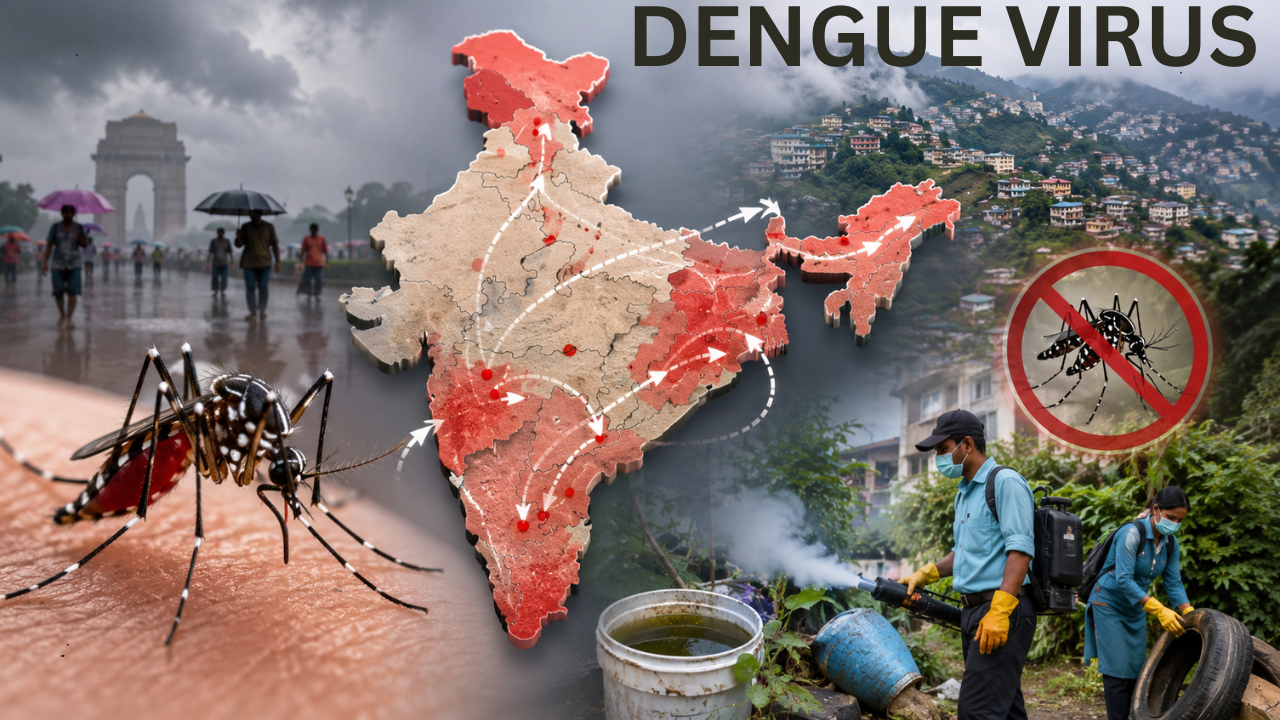
Climate change and rapid urbanization are changing mosquito habitats, and shifting dengue serotypes are reshaping the disease landscape in India. As a result, the country is now witnessing a transformation in how dengue spreads, who it affects, and how severe infections can become. Once considered a seasonal monsoon illness, dengue is now increasingly becoming a year-round public health challenge, extending into hill states, semi-urban regions, and previously low-risk geographies. In an exclusive interview with HealthandMe, Dr. Shikha Taneja Malik, Senior Scientific Affairs Manager, Drugs for Neglected Diseases initiative (DNDi), South Asia, discussed why India’s dengue numbers are likely being massively undercounted, how surveillance and diagnostic gaps are masking the real scale of the crisis, and why young adults are facing more severe infections due to changing serotypes. Dr. Shikha also explained the urgent global push for affordable therapeutics and the challenges India still faces in developing an indigenous dengue vaccine despite its strong manufacturing capacity. Here are the excerpts from the interview: Q. Dengue was always called a monsoon disease. Is that label now dangerously misleading? Dr. Shikha: Yes, I would argue that labels are not just outdated but risky, too. What we are seeing across India and across the region is a fundamental shift in the transmission pattern. Dengue used to follow a fairly predictable seasonal curve — cases would spike between July and November, track the monsoon, and then recede. That curve is flattening. We are now seeing cases in February, March, and May — months that were previously considered safe. Delhi, Mumbai, Bengaluru — cities that used to have clear off-seasons for dengue — are reporting year-round transmission. Warmer temperatures, altered rainfall patterns, unplanned urbanization, and poor sanitation have lengthened transmission seasons, making dengue a year-round systemic crisis. Models now predict year-round transmission in coastal regions, though monsoon months will retain the highest peak. Also read: National Dengue Day 2026: India Reports 6,927 Cases And 10 Deaths In 2026Q. Are serotype shifts driving changing dengue patterns, especially in young adults?Dr. Shikha: Yes, India is witnessing active serotype shifts, and they directly explain rising severity, especially in young adults. Initial infection with one of the four dengue serotypes results in lifelong immunity to that specific serotype. Whereas, a secondary infection with a different serotype can trigger Antibody-Dependent Enhancement (ADE). Young adults who were exposed to one serotype in childhood are now encountering a new dominant serotype, making them especially vulnerable to severe secondary infections. Q. Is India undercounting dengue cases? Why do so many cases go unreported?Dr. Shikha: The 2.89 lakh figure in 2023 is what our surveillance system captures, but it is almost certainly a fraction of the true burden. The Lancet has estimated that India accounts for around 33 per cent of the global dengue burden, and globally, we are looking at approximately 400 million infections every year. That puts India's real annual dengue burden potentially in the tens of millions — not hundreds of thousands. Few studies have shown that the estimates of actual cases are approximately 282 times higher. There are several reasons why cases go unreported, and they compound each other. A large proportion of infections are either asymptomatic or present as a generic fever — patients never seek formal care. Our surveillance system is passive and fragmented. Reporting is largely dependent on public health facilities. Confirmatory testing through NS1 antigen tests or PCR requires infrastructure that is not yet uniformly available at the primary health center level, particularly in rural and semi-urban areas. Q. Are previously dengue-free regions in India now reporting cases due to climate change?Dr. Shikha: Yes, the geographic spread is both significant and well-documented. Climate change is playing a major role in this shift. Rising temperatures, changing rainfall patterns, increasing humidity, and rapid unplanned urbanization are creating more favorable conditions for Aedes aegypti mosquitoes to survive and transmit the virus for longer periods each year. Since the mid-1990s, dengue has rapidly spread to regions where it was historically non-existent, including Odisha, Arunachal Pradesh, and Mizoram. In the early 2000s, dengue was endemic only in a few southern and northern states; it has since spread to many states, including union territories. Read More: Ebola Outbreak: Rare Bundibugyo Strain Confirmed In DR Congo And UgandaThe shift is particularly visible in hilly and cooler geographies such as Himachal Pradesh and Jammu & Kashmir. Climate modelling projects further expansion of Aedes albopictus into upper Himalayan regions, including Leh-Ladakh and Arunachal Pradesh, by 2050. Q. What are the biggest challenges in indigenous dengue vaccine production in India? Dr. Shikha: India has strong vaccine manufacturing capacity, but dengue remains scientifically complex. Existing vaccines have limitations and do not cover all vulnerable groups.India’s first Phase 3 trial for an indigenous dengue vaccine, DengiAll, is underway across 18 states. The Butantan vaccine candidate, originally developed by NIH, has been licensed to Indian companies, including Panacea, SIIPL, and Indian Immunologicals, with the ICMR-Panacea candidate being the most advanced.The recent DCGI approval of Qdenga is encouraging, but sustained financing and coordination between ICMR, DBT, and industry will be critical for developing a truly indigenous vaccine.