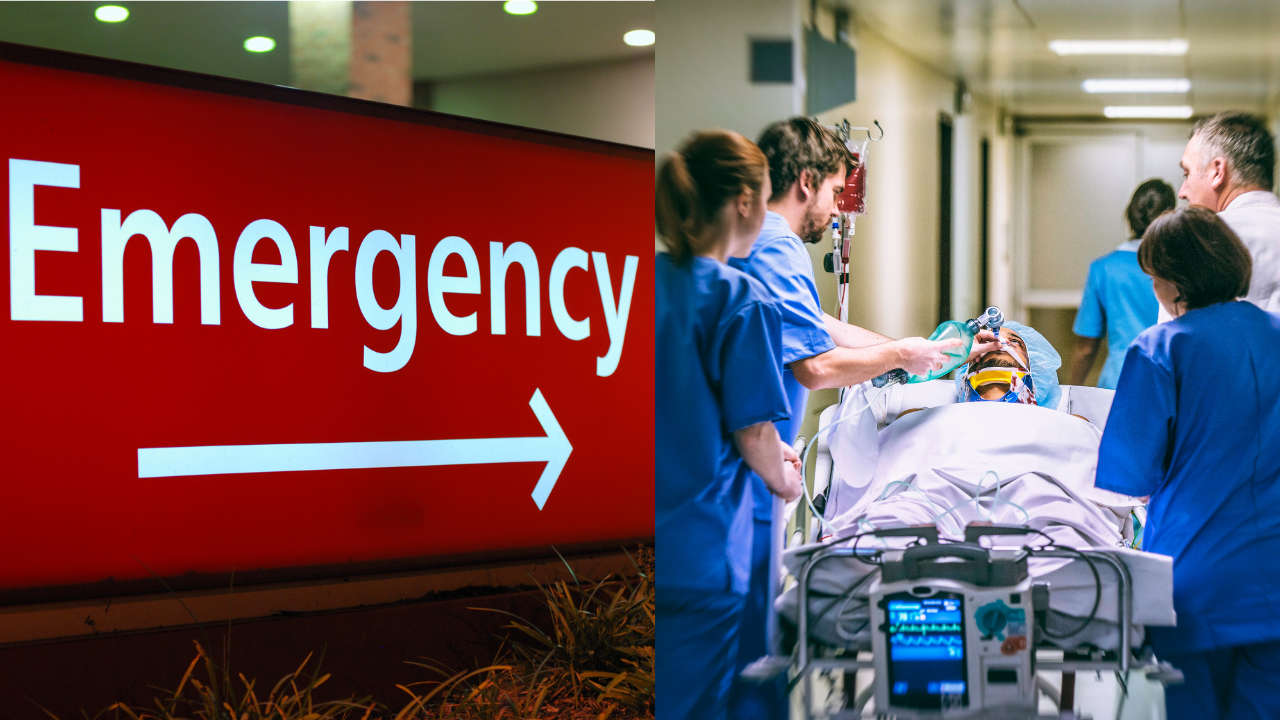
A visit to the emergency ward (ER) of a hospital can definitely feel scary, and you want every reason to avoid ending up there as a patient. From broken bones to life-threatening emergencies, it’s a place filled with urgency, uncertainty, and intense emotions. Imagine what doctors and other health workers face every day. However, while many cases are unavoidable, there are several that can be completely prevented, said doctors, while sharing a few. These include: Symptoms ignored for long From persistent pain to unusual fatigue to breathlessness, to unexplained weight loss, many people silently face these and tend to overlook. For some of its fear, for others it may be responsibilities. However, ignoring symptoms like a persistent stomachache or a nagging cough can allow a condition to worsen over time, eventually leading to an emergency. “People say, ‘It’s pretty mild. I’m not worried about it,’” Dr. Evelyn Huang, an emergency-room physician with Orlando Health, was quoted as saying to Time. “Days become weeks, weeks become months, and months can even become years, and by the time they're seeing me, these things have progressed so far that they’re now something dangerous.” Seeking timely medical advice and not delaying checkups can help prevent complications and avoid unnecessary ER visits, the expert said. Drowning It is the leading cause of death in children ages 1 through 4—and one of the most preventable.Dr. Cheyenne Falat, assistant medical director of the adult emergency department at University of Maryland Medical Center stated that every time a patient comes ER with a drowning case, he hears the same story. “I would have been watching them, but I thought the babysitter was watching them. I thought my spouse was watching them. I thought their grandparents were watching them.” The doctor recommended instead starting swimming lessons as early as possible. She also urged for fences with childproof gates near pools. Falling Another common reason to end up in ER includes falling off ladders, resulting in fractures, deep cuts, or head injuries. Frostbite and hypothermiaCold injuries like frostbite (when body tissues actually freeze) and hypothermia (a dangerous drop in core body temperature that can slow, and eventually stop, the body’s vital functions) can also create medical emergencies. People often don’t realize how quickly conditions can turn. “They think, ‘I won’t be at risk for hypothermia because it's a little warmer during the day,’” said Falat. “Then they sweat,” which can leave their clothing damp and their bodies more vulnerable once temperatures drop. Heat-related illnesses include mild dehydration to heat exhaustion and, in the most extreme cases, heat stroke, which can be deadly. Choking during sexDr. Jeff Yoo, an emergency specialist, noted about injuries during consensual choking during sex, which researchers have recently described as "prevalent" among young people in the US, the report said. Recently, for example, he treated a young woman who came to the ER with neck pain, a hoarse voice, and bruising; she assured Yoo that she had wanted her partner to choke her. “I’m not judging anyone who enjoys this, but it's way more dangerous than people think,” he said.Party drug A harmless party drug -- gamma-hydroxybutyric acid, or GHB -- can also turn life-threatening. It is a clear, odorless substance sometimes called “liquid ecstasy.” While in small amounts, it can make people feel relaxed or euphoric, but when taken in overdose, it can lead to unconscious and breathing difficulties. “It’s one of the most awful sights,” Yoo said , adding that in severe cases, some patients need to be put on a ventilator to survive.