
- Health Conditions A-Z
- Health & Wellness
- Nutrition
- Fitness
- Health News
- Ayurveda
- Videos
- Medicine A-Z
- Parenting
Eating a Vegetarian Diet? You can Reduce Risk Of 5 Cancers, Reveals Study

Credit: Canva
Worried that your vegetarian-only diet may not save you from cancer? A new study showed that a diet rich in fruits, vegetables, and fiber-containing foods, and no meat, can lower the risks of five cancers, namely breast cancer, prostate cancer, kidney cancer, pancreatic cancer, and multiple myeloma.
The study published today in the British Journal of Cancer, however, showed that vegetarians had nearly double the risk of squamous cell carcinoma of the esophagus, and a significantly higher risk of bowel cancer. This may be due to a lack of certain nutrients that are more abundant in animal foods, said the researchers from the University of Oxford, UK.
Also Read: Woman Lost Weight On Mounjaro But Her Breasts Didn't Stop Growing, This Is Why...
"Vegetarians typically consume more fruit, vegetables, and fiber than meat eaters and no processed meat, which may contribute to lower risks of some cancers,” said Aurora Perez Cornago, principal investigator of the study and formerly Associate Professor at Oxford Population Health.
“The higher risk of esophageal squamous cell carcinoma in vegetarians and bowel cancer in vegans may relate to lower intakes of certain nutrients more abundant in animal foods. Additional research is needed to understand what is driving the differences in cancer risk found in our study,” Cornago added.
The researchers advised eating meals around wholegrains, pulses, fruit and vegetables, and avoiding processed meat and limiting red meat to increase overall protection from cancer.
What Did The Study Find?
The findings are based on data from more than 1.8 million people from three continents.
Compared to meat eaters, about 72,000 vegetarians in the study had:
- 21 percent lower risk of pancreatic cancer
- 9 percent lower risk of breast cancer
- 12 percent lower risk of prostate cancer
- 28 percent lower risk of kidney cancer
- 31 percent lower risk of multiple myeloma
Tim Key, Emeritus Professor of Epidemiology at Oxford Population Health, and co-investigator, said the study helps to shed light on the benefits and risks associated with vegetarian diets.
The study found no statistically significant differences in risk for colorectal, stomach, liver, lung (in never smokers), endometrial, ovarian, mouth and pharynx, or bladder cancers, or non-Hodgkin lymphoma, leukemia, and esophageal adenocarcinoma in vegetarians.
Vegans had a statistically significantly higher risk of colorectal (bowel) cancer when compared with meat eaters.
Pescatarians had lower risks of breast and kidney cancers, as well as a lower risk of bowel cancer. Poultry eaters were found to have a lower risk of prostate cancer.
For the other cancers studied, there was no evidence that the risk in vegans differed from that of meat eaters, and for some less common cancers, there were too few vegan cases to analyze. Further studies are needed to confirm these results in the vegan population, the team said.
Global Cancer Burden: How Diet Influences Risk Worldwide
According to the World Health Organization (WHO), there were an estimated 20 million new cancer cases and 9.7 million deaths in 2022.
About 1 in 5 people develop cancer in their lifetime, approximately 1 in 9 men and 1 in 12 women die from the disease.
The American Cancer Society's guidelines for diet to prevent cancer include
- A variety of vegetables – dark green, red, and orange, fiber-rich legumes (beans and peas), and others
- Fruits, especially whole fruits in a variety of colors
- Whole grains
- Avoiding red and processed meats
- Sugar-sweetened beverages
- Highly processed foods and refined grain products
Data from the Indian Council of Medical Research also shows that one out of 10 cancers may be linked to diet, and over half of these are caused by eating less than five portions of fruit and vegetables a day.
It also advises against diets rich in saturated fats, red meat, and salt and poor in fiber, red, and processed meats.
Priyanka Chopra, Nick Jonas Open Up About Malti’s Premature Birth And NICU Battle

Credits: Canva
Priyanka Chopra and Nick Jonas, we all know them as a power couple. However, there are moments that have broken them and they both have talked about it. This was the moment of their daughter Malti Marie Chopra Jonas' birth.
On February 4 episode of the Jay Shetty Podcast, Jonas, 33, opened up about his daughter's birth. "She came to the world under sort of very intense circumstances, which I have not really talked about ever. She came out, she was one pound and 11 ounces, and purple basically. These angels at the NICU kind of resuscitated her in that moment, got her taken care of really quickly, and intubated and everything else."
In fact, recently a video has been circulating of Priyanka Chopra Jonas talking about the premature birth of her daughter too. She described this period as "tough" and said that it was extremely hard on her. She also called Malti a "miracle baby".
On the Jay Shetty podcast, she revealed that the couple were forced to announce her birth, whereas they wanted to wait till her health gets better. They had put everything on halt and visited the NICU every single day. "We received a text saying that her (Malti) birth would be out in the newspapers, if we don't, they are going to put it in within three hours. So we were kind of forced into announcing her birth because we wanted to control our own narrative. We weren't ready. We didn't know what would happen with her or how she would be."
Malti's Premature Birth
Priyanka shared that she was informed about her premature delivery in the 27th week. This is what made her completely "shut down". She also recalled sitting in front of the fireplace for nine hours and was not able to process the situation.
Like Jonas, Priyanka too noted that Malti was purple at birth and required immediate NICU attention. She also said that the nurses' fingers were too big for her small mouth. She recalled feeling "numb" at that time.
However, Jonas shared that Priyanka and him "had a lot of tough conversations day in, day out about caring" for Malti. He also appreciated his wife's strength on handling the situation. "The way in which she handled it was so inspiring to me, and you know, allowing for those days to be tough, but to be tougher for our little girl was the focus."
Malti received six blood transfusions and gained weight in the hospital. After nearly three and half months, she was able to go home.
Priyanka reveals that in her house there is a "big mandir" with "a large Shiv Ji murti". This is where everyone sat as a family and she cried not out of fear, but out of gratitude. "Gratitude that she survived, that she was home, that she chose us, and that we were able to make it happen. IVF is tough."
Read: What Parents of Premature Babies Must Know About the NICU, According to a Neonatologist
What Parents Of Prematurely Born Babies Must Keep In Mind?
Health and Me had earlier spoken to Dr Sanjay Wazir, Medical Director, Neonatology and Pediatrics at Motherhood Hospitals, Gurugram who pointed out that Neonatal Intensive Care Unit or the NICU may seem overwhelming, however, it must be seen as a sanctuary of healing.
"In the NICU, premature or unwell newborns receive specialized medical attention, constant monitoring, and compassionate care from expert hands. Here, the mother and the baby are well taken care of. This will help the baby lead a healthy life. Hence, NICU care is important for all the premature or unwell babies," he says.
What Happens Inside The NICU?
The doctor explains that the NICU provides a controlled and nurturing environment where babies can grow stronger outside the womb. "It helps maintain their body temperature, supports breathing, and ensures proper nutrition through feeding tubes if necessary," he says.
Every machine in the NICU is for a specific purpose, right from oxygen support to heart rate monitoring, ensuring that each baby receives precisely what they need. Parents often find comfort knowing that the experts in the NICU are constantly watching over their child’s progress, explains the doctor.
The doctor points out that parents are essential part of the NICU journey. "Your touch, your voice, and your calm presence can help your baby feel safe and comforted," he tells to all the parents. However, what is extremely important is to maintain hygiene guidelines, staying involved in daily care, and communicating regularly with the doctors and nurses to "strengthen your bond and confidence as caregivers." The doctor says that during this time, the mother will also be taught about Kangaroo care, which is skin-to-skin contact that helps the mother bond with her baby.
Study Reveals The Worrying Reason You Should Protect Yourself From Scrub Typhus
Credit: Pixabay
Cases of scrub typhus, one of the deadliest infections affecting multiple organs, or even death, have significantly increased from previous year. Once relevant to people working in fields, new studies show it migrating to human settlements.
In 2025, Andhra Pradesh reported 1,566 scrub typhus cases, and nine suspected deaths, according to data from the Integrated Health Information Platform, Integrated Disease Surveillance Programme (IDSP-IHIP) on 8 December. Followed by Karnataka with 1,870 cases, Tamil Nadu 7,308 cases, and Telangana, 309 cases.
What Is Scrub Typhus?
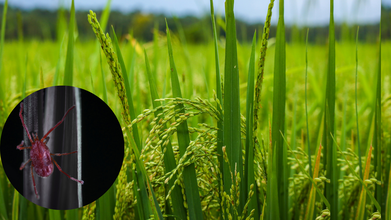
Scrub typhus, also known as bush typhus, is a bacterial infection caused by bacteria infection, caused by bacterium Orientia tsutsugamushi. It is spread through bites of infected larval mites, Chiggers.
Most cases of scrub typhus occur in rural areas of Southeast Asia, Indonesia, China, Japan, the Indian subcontinent and northern Australia. Until now, it was believed that chiggers only lurked in the tall grasses of remote paddy fields or dense forests. Due to this, it is commonly known as "farmers' disease", only confined to the fields.
However, new PLOS study data revealed the opposite. The study is led by researchers from Christian Medical College (CMC) Vellore and international collaborators and suggests that the bulk of infections are now even occurring within human settlements.
The study monitored over 32 000 people in Tamil Nadu, which led to the conclusion that agricultural activities, long considered the primary risk factor, were only weakly associated with the disease in high-prevalence areas.
How are Human Settlements A Prime Factor?
Risk for scrub typhus is significantly higher for those living in clustered houses or homes with fewer rooms. If the micro environment around the residence is unmaintained, gardens are patched, or even the damp corners of a courtyard, it could lead to breeding ground for the mites and the rodents that carry Chiggers.
Who Is At Most Risk?
It was once believed that working-age men were the most affected, but the new study tells otherwise. According to the new data, women over 60 are at the highest risk of infection.
As women spend most of their time in and around the home, due to household work, from the kitchen to the laundry, these activities are now the primary cross point of contact with infected mites.
What Is the Risk Factor Of Infection?
As initial symptoms of infection, such as fever, headache, and muscle pain, are the same as viral flu or dengue, many first seek help from untrained practitioners or local pharmacies.
By the time they reach the hospital, the disease has already progressed to severe complications like acute respiratory distress syndrome (ARDS), Kidney failure, or Meningoencephalitis, which is inflammation of your meninges and brain at the same time, a life-threatening condition.
Not only this, the researchers revealed that nearly 10 percent of affected households exceed 25 percent of their income in the treatment.
For severe cases, the cost of treatment can be up to approximately INR 110,000, a staggering sum for rural and peri-urban families earning a fraction of that monthly.
Prevention
- Do not let the grass grow tall around your house
- Tightly maintain kitchen gardens and remove piles of wood or debris where rodents (the primary hosts for mites) might nest.
- As chiggers are usually found close to the ground, do not sit directly on the grass or soil. Use chairs or mats. For children, make them wear socks and full- length trousers while playing in the yard.
- If you notice a small, dark, cigarette-burn-like mark, it is usually left behind by mites. It is most likely "Eschar". It is an important critical clue. As the bite is painless, it often goes unnoticed.
- Do a thorough skin check for an eschar, especially in warm, moist areas like the armpits, groin, or behind the knees.
Early intervention is necessary, as if a fever lasts more than two days, don't just treat it as "seasonal fever".
Consult a qualified doctor and specifically ask about scrub typhus. Infection can be treated with doxycycline common antibiotic, in the early stages. The case fatality rate in this study was 1.5 percent, hospital based studies in South India have previously recorded mortality rates as high 30 percent when treatment is delayed
Study Reveals The Worrying Reason You Should Protect Yourself From Scrub Typhus
Credit: Pixabay
Cases of scrub typhus, one of the deadliest infections affecting multiple organs, or even death, have significantly increased from previous year. Once relevant to people working in fields, new studies show it migrating to human settlements.
In 2025, Andhra Pradesh reported 1,566 scrub typhus cases, and nine suspected deaths, according to data from the Integrated Health Information Platform, Integrated Disease Surveillance Programme (IDSP-IHIP) on 8 December. Followed by Karnataka with 1,870 cases, Tamil Nadu 7,308 cases, and Telangana, 309 cases.
What Is Scrub Typhus?
Scrub typhus, also known as bush typhus, is a bacterial infection caused by bacteria infection, caused by bacterium Orientia tsutsugamushi. It is spread through bites of infected larval mites, Chiggers.
Most cases of scrub typhus occur in rural areas of Southeast Asia, Indonesia, China, Japan, the Indian subcontinent and northern Australia. Until now, it was believed that chiggers only lurked in the tall grasses of remote paddy fields or dense forests. Due to this, it is commonly known as "farmers' disease", only confined to the fields.
However, new PLOS study data revealed the opposite. The study is led by researchers from Christian Medical College (CMC) Vellore and international collaborators and suggests that the bulk of infections are now even occurring within human settlements.
The study monitored over 32 000 people in Tamil Nadu, which led to the conclusion that agricultural activities, long considered the primary risk factor, were only weakly associated with the disease in high-prevalence areas.
How are Human Settlements A Prime Factor?
Risk for scrub typhus is significantly higher for those living in clustered houses or homes with fewer rooms. If the micro environment around the residence is unmaintained, gardens are patched, or even the damp corners of a courtyard, it could lead to breeding ground for the mites and the rodents that carry Chiggers.
Who Is At Most Risk?
It was once believed that working-age men were the most affected, but the new study tells otherwise. According to the new data, women over 60 are at the highest risk of infection.
As women spend most of their time in and around the home, due to household work, from the kitchen to the laundry, these activities are now the primary cross point of contact with infected mites.
What Is the Risk Factor Of Infection?
As initial symptoms of infection, such as fever, headache, and muscle pain, are the same as viral flu or dengue, many first seek help from untrained practitioners or local pharmacies.
By the time they reach the hospital, the disease has already progressed to severe complications like acute respiratory distress syndrome (ARDS), Kidney failure, or Meningoencephalitis, which is inflammation of your meninges and brain at the same time, a life-threatening condition.
Not only this, the researchers revealed that nearly 10 percent of affected households exceed 25 percent of their income in the treatment.
For severe cases, the cost of treatment can be up to approximately INR 110,000, a staggering sum for rural and peri-urban families earning a fraction of that monthly.
Prevention
- Do not let the grass grow tall around your house
- Tightly maintain kitchen gardens and remove piles of wood or debris where rodents (the primary hosts for mites) might nest.
- As chiggers are usually found close to the ground, do not sit directly on the grass or soil. Use chairs or mats. For children, make them wear socks and full- length trousers while playing in the yard.
- If you notice a small, dark, cigarette-burn-like mark, it is usually left behind by mites. It is most likely "Eschar". It is an important critical clue. As the bite is painless, it often goes unnoticed.
- Do a thorough skin check for an eschar, especially in warm, moist areas like the armpits, groin, or behind the knees.
Early intervention is necessary, as if a fever lasts more than two days, don't just treat it as "seasonal fever".
Consult a qualified doctor and specifically ask about scrub typhus. Infection can be treated with doxycycline common antibiotic, in the early stages. The case fatality rate in this study was 1.5 percent, hospital based studies in South India have previously recorded mortality rates as high 30 percent when treatment is delayed
- Follow Us :


© 2024 Bennett, Coleman & Company Limited