
- Health Conditions A-Z
- Health & Wellness
- Nutrition
- Fitness
- Health News
- Ayurveda
- Videos
- Medicine A-Z
- Parenting
Emotional Body Chart: Where Emotional Feelings Like Anxiety, Joy, And Anger Are Felt In Your Body
Have you ever described feeling “cold feet,” “a gut instinct,” or “a shiver down your spine”? These common expressions might seem trivial, but they reflect something real. Emotional body mapping can help explain why.
Just as anxiety or depression can show up as physical symptoms, our emotions often register in specific areas of the body. Emotions guide much of how we experience the world, yet many of us rarely stop to notice how they affect us physically.
If you struggle to put your feelings into words, learning how emotions manifest in the body can help you connect more deeply with yourself.
Where Are Emotional Feelings Felt In Your Body?
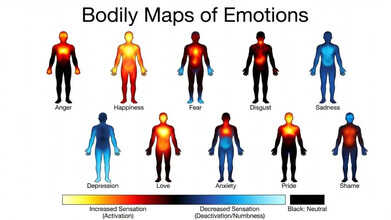
A 2014 study by Glerean and colleagues identified 13 emotions and the specific areas of the body they activate—or don’t. Similar to a heat map, warmer colors (red, orange, yellow) indicate increased activity, while cooler colors (blue, green, indigo) indicate decreased activity.
If these maps resonate with your own experiences, they can provide insight into how emotions influence your body and overall well-being.
How Was This Tested?
The researchers proposed that each emotion triggers distinct physical reactions. They asked 701 participants to shade regions on a body silhouette where they felt heightened or reduced activity in response to various stimuli.
These stimuli mirrored real-life experiences: clips from films, conversations, and unexpected facial expressions. Across the participant pool, emotions consistently affected similar areas of the body.
A follow-up study in 2018 by the same team found that the intensity of bodily sensations mirrored the intensity of the emotion in the mind. In other words, stronger physical feelings were linked with stronger mental experiences.
From this, researchers categorized feelings as:
- Negative (unpleasant): anger, fear, anxiety, shame
- Positive (pleasant): happiness, love, pride
- Other categories: illness, homeostasis, cognition
Few emotions, such as surprise, were found to be neutral. Participants also reported that pleasant and controllable states occurred more often than unpleasant and uncontrollable ones. Anyone who has experienced overwhelming anxiety or depression will recognize that feeling of being out of control.

Emotional Body Chart
Certain emotions trigger strong physical responses, often preparing the body for action, such as the fight-or-flight response.
- Happiness: This emotion lights up the body the most. Warm sensations spread throughout, especially in the head and chest, signaling energy, vitality, and a sense of well-being.
- Anger: Activation is intense in the upper body—the head, chest, and arms. The hands are especially bright, reflecting the impulse to clench fists or act aggressively.
- Fear: Like anger, it activates the head and chest (heart racing). However, the feet are cold (blue), suggesting blood is being redirected from the extremities to vital organs.
- Anxiety: Almost entirely focused in the chest, representing tightness, rapid heartbeat, or difficulty breathing.
- Love & Pride: Both emotions show strong activation in the chest and head, associated with warmth, heart swelling, or the sensation of “puffing up” the chest.
Deactivation Emotions (Mostly Blue):
These emotions involve a withdrawal of energy and sensation from the body.
- Depression: The most deactivated state. Limbs are entirely blue, showing heaviness, numbness, and a lack of energy to move. The torso shows very little activation.
- Sadness: A mix of responses. The chest and eyes show some activity (linked to crying or heartache), but the arms and legs are cool, reflecting slowing or weakening of the body.
Other Specific Reactions:
- Disgust: Activation is concentrated in the digestive system—the throat and stomach—indicating nausea or physical aversion.
- Shame: A complex pattern appears. The chest and cheeks are warm (blushing), while the extremities are cold, reflecting internal turmoil paired with external withdrawal.
Understanding where emotions manifest in the body can help us become more aware of our physical and mental states. From the warmth of happiness in the chest to the heaviness of depression in the limbs, our bodies carry the signals of our feelings. Paying attention to these sensations not only deepens self-awareness but can also guide us in managing stress, improving well-being, and responding to emotions more mindfully.
Bob Harris: BBC Radio 2 Host Hospitalized For Prostate Cancer Treatment

Credit: Bob Harris/Instagram
Bob Harris, the renowned BBC Radio 2 host, has informed his listeners of being hospitalized again for prostate cancer treatment.
Posting on social media platform Instagram, Harris said he is receiving treatment for an issue that has developed over the past few weeks.
“As many of you know, I suffer from prostate cancer, and every now and again I experience setbacks that need attention. Now is one of these moments,” he wrote, along with a picture of himself lying in a hospital bed while smiling for the camera.
Harris noted that he’s taking short break away from his programs. However, he confirmed that this week’s Country Show is scheduled as planned, and his Sounds of the 70’s episode on 12th April will feature an 80th birthday celebration special he recorded before attending the C2C Festival with Zoe Ball.
Noting that he can’t state the day of his return as the host, he said: “I know that I will come back… and come back stronger”.
“I hate missing programs and I am keen to get back into the studio as soon as I can”.
Calling himself “blessed” for the support he received from friends and family and listeners of his show, Harris said that during his absence, Darius Rucker will guest on Country, while Shaun Keaveny will cover Sounds of the 70’s for a few weeks.
"I am so blessed to have the love of my family and the support of my friends who have rallied round me at what has proved to be an unexpectedly testing time,” Harris said.
Prostate Cancer: The UK’s Most Common Male Cancer
Prostate cancer remains the most common cancer among men in the UK, with around 55,000 cases diagnosed every year. Despite this, there is currently no national screening program because of concerns over the accuracy of PSA tests.
In November 2025, former UK Prime Minister David Cameron revealed his prostate cancer diagnosis and also called for a targeted screening.
Also read: Joe Biden Is Diagnosed With Aggressive Prostate Cancer: All That You Need To Know
In an interview with Times, he said, "You always hope for the best. You have a high PSA score - that is probably nothing. You have an MRI scan with a few black marks on it. You think, ‘Ah, that’s probably OK.’ But when the biopsy comes back, and it says you have got prostate cancer. You always dread hearing those words. And then literally as they’re coming out of the doctor’s mouth you’re thinking, ‘Oh, no, he’s going to say it. He’s going to say it. Oh God, he said it.’"
The former PM, said that he had a prostate-specific antigen (PSA) test for the screening that looks for proteins associated with the form of the disease. His result was high, and a biopsy after that revealed his cancer.
In October 2024, six-time Olympic gold medallist Chris Hoy revealed he had been diagnosed with terminal stage 4 cancer. His prostate cancer had spread to his shoulder, pelvis, hips, ribs and spine.
Health Tests Every Woman Should Do Once A Year
Credit: iStock
A woman’s health check-up is not about being paranoid. It's about refusing to treat your body as an afterthought.
You may not be able to control every diagnosis you ever get. But you can control how late you meet it. That's what preventive care is all about. Early detection through these screenings helps manage hormonal changes, cancer risks, and metabolic health.
From routine blood tests to specialized screenings, Dr. Supriya Bali, Director, Internal Medicine, Max Super Speciality Hospital, Saket, spoke to HealthandMe on specific tests crucial for women, right from their 20s
In Your 20s: Laying A Strong Foundation
Your 20s are all about establishing healthy habits that will carry you through life. Even if you feel great, this is a crucial time to get in the habit of seeing your doctor regularly.
Recommended screening includes:
- Blood pressure check – Every 1-2 years if normal; more often if elevated
- Pap smear – Start at age 21 (or by age 25 if you’ve never been sexually active); every three years if results are normal
- Chlamydia and gonorrhea screening – Annually for sexually active women under 25
- HPV vaccine – If not already completed by 26
- Skin check – Monitor moles and sun damage, especially if you tan easily
- Mental health screening – Don’t ignore stress, anxiety, or depression
In Your 30s: Reproductive And Preventive Health In Focus
As the body begins to undergo subtle changes in the 30s, regular screenings, hormonal health checks, and lifestyle adjustments are increasingly important.
Recommended screenings in 30s include:
- Pap + HPV co-test – Every 5 years starting at 30 (or Pap every 3 years)
- STI screening – Based on risk factors and symptoms
- Blood pressure and cholesterol check – Especially if you have a family history
- Blood sugar test – Especially if you’re planning a pregnancy or have had gestational diabetes
- Breast exam – Regular self-monitoring and breast ultrasound if you suspect a lump.
- Mental health and sleep – Ongoing check-ins with your doctor
- Fertility discussions – If you're planning or delaying pregnancy
Also read: 'Husband Stitch': A Medical Necessity Or Just A Tool To Objectify Women's Bodies?
In Your 40s: Monitoring Long-Term Risk Factors
This is a time when early signs of chronic conditions may start to show up, especially if there’s a family history of heart disease, diabetes, or cancer.
You should get these screenings at certain times:
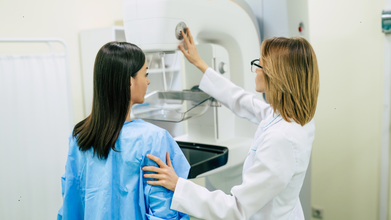
- Mammography screening: Begin at 40 years of age (earlier if you have a family history of breast cancer).
- Pap smear & HPV test: Pap and HPV every 5 years or Pap alone every 3 years.
- Cholesterol & Blood Pressure Testing: Every 1-2 years.
- Blood glucose test (diabetes screening): especially if you're overweight or at risk for diabetes.
- Thyroid function testing is optional—especially if you feel tired, cold, or have been losing weight or have changes in your bowel habits.
- Weight discussions regarding healthy nutrition and active lifestyle—assist with maintaining a healthy weight.
- Perimenopause begins in your 40's; if you experience mood swings or changes in sleep, hot flashes, or irregular cycles, please speak with your doctor.
Also read: What Your Mammogram Says About Your Heart?
In Your 50’s: Maintain Strength, Stay Ahead of Aging
Maintaining your strength, the ability to prevent illness/disease from affecting you, and remaining proactive against the challenges that arise due to aging will be your focus at this stage.
Every individual will have their own unique series of recommended screenings; however, everyone will benefit from some type of recommended screening.
Some commonly recommended screenings include:
- Mammogram screening program; every 1-2 years.
- Colorectal cancer screening, beginning at age 45 through age 75.
- Bone density scan-if at high risk.
- Hearing/Vision checks annually or as required (on an as-needed basis).
- Blood pressure, cholesterol, and diabetes screening every year.
- Lung cancer screening among those with a history of smoking.
- Vaccines--including shingles, pneumonia, flu, and COVID-19 booster.
- Cognitive screening - to discover memory concerns, changes in mental sharpness, or cognitive function.
Vaping Becomes Major Nicotine Threat Among Children Under 5 in US, Warns Study

Credit: iStock
Vapes were marketed as a safer option than cigarettes, but research now shows they carry serious health risks -- from lung damage to meningitis to cancer.
Vaping has been a serious concern in the United States, with New York Attorney General Letitia James in 2025 filing a lawsuit against e-cigarette manufacturers and distributors.
The lawsuit accused the companies of fueling a youth vaping crisis, alleging that these companies that manufacture vapes, especially with flavors, have misled consumers about the safety of their products while deliberately targeting young people through deceptive marketing.
Now, a new study, published in JAMA Network Open, has for the first time assessed trends in young children's nicotine exposures across all types of products.
Shockingly, electronic cigarette-related incidents increased 243 percent over the past eight years in young children, especially among those under five years of age, said researchers from the Rutgers New Jersey Medical School.
In contrast, tobacco exposures from conventional products such as cigarettes decreased by 43 percent.
Unlike cigarettes, these devices are often ready to use, brightly colored, require little effort to activate, and appear more like toys than a harmful product.
"This significant spike in children breathing in these substances tells us the risk has changed: It's no longer just about a toddler swallowing something they found on the floor," said lead author Perry Rosen, who conducted the research at the New Jersey Poison Control Center.
"Many recent cases involve children actively using e-cigarette devices after gaining access to them," Rosen added.
Key Findings
The findings were based on an analysis of more than 92,000 reported nicotine exposures in children ages 5 and younger between 2016 and 2023.
The researchers noted that vaping risks often involved children who inhaled the vapors directly from the devices. They also found that children exposed to e-cigarettes were more likely to require a visit to a health care facility compared with those exposed to cigarettes.
According to researchers, young children naturally mimic the behaviors they see around them. So, parents and caregivers must keep vaping devices away from the reach of young children.
Previous research has shown that even moderate ongoing nicotine exposure can lead to lasting health effects on developing lungs, including increased risk of bronchitis and worsening asthma.
"When children see caregivers or older family members vaping, they may copy that behavior—bringing the device to their mouth and inhaling—without any understanding they are exposing themselves to a harmful substance," said Diane Calello, executive and medical director of the New Jersey Poison Control Center.
Vaping: A Concern
Vaping has become a more common form of tobacco use among American middle and high school students.
As per the US Centers for Disease Control and Prevention (CDC), nearly 1.6 million students used e-cigarettes in 2024, with 87.6 percent of them opting for a flavored product.
It is the flavor that makes it even more addictive, and people want to keep smoking it, resulting in it being emptied and refilled way more quickly.
This means those who smoke flavored cigarettes consume more tobacco than those who smoke unflavored ones.
- Follow Us :


© 2024 Bennett, Coleman & Company Limited