
- Health Conditions A-Z
- Health & Wellness
- Nutrition
- Fitness
- Health News
- Ayurveda
- Videos
- Medicine A-Z
- Parenting
Endometriosis Month: Busting Common Myths Around This Condition

Credits: Canva
The month of March is women's month, highlighting their struggle to earn an equal status in the position. Not only in society, but also in medicine, they have been long ignored. Many conditions are not studied deeply, most of which are associated with women. The month of month is also endometriosis month. Thus, it makes a lot more sense to talk about the common myths around endometriosis and to bust them all at once!
What is Endometriosis?
It is a chronic condition where tissue similar to the uterine lining grows outside the womb. It also causes extreme pain and other complications. While this is a serious condition, many times women's concerns are sidelined calling it a "bad period" or an overly painful period, which delays its diagnosis.
Here are some of the common misconceptions about endometriosis:
Myth: Periods Are Normally Very Heavy and Painful
Busted: While many menstruating individuals experience cramps, endometriosis-related pain can extend beyond periods, affecting ovulation, urination, bowel movements, and even other parts of the body. Some people with endometriosis may have mild periods, while others experience severe discomfort unrelated to menstruation.
Myth: Pregnancy Cures Endometriosis
Busted: Hormonal changes during pregnancy might temporarily relieve symptoms for some, but it does not have scientific evidence to support that it eliminates the condition or prevents its progression.
Myth: Hysterectomy Cures Endometriosis
Busted: A hysterectomy removes the uterus but does not always eliminate endometriosis, especially if lesions exist outside the reproductive organs. Even removing the ovaries may not guarantee relief, as some endometriotic tissue remains hormone-sensitive.
Myth: Menopause Stops Endometriosis
Busted: Though estrogen levels decline post-menopause, some individuals continue to experience endometriosis-related pain. In rare cases, the condition can even develop later in life. Seeking medical advice remains crucial for managing symptoms.
Myth: Abortion Causes Endometriosis
Busted: The exact cause of endometriosis remains unknown, but genetic factors are believed to play a role. No research supports the claim that abortion triggers or worsens the condition.
Myth: Birth Control Pills Can Cure Endometriosis
Busted: While hormonal contraceptives can regulate cycles and reduce pain, however, it cannot eliminate the endometriotic tissue or stop the disease from progression.
Myth: High Estrogen Levels Cause Endometriosis
Busted: High levels of estrogen could play a role in development and progression of endometriosis, however, the condition is more influenced by immune responses and inflammation. Treatments that target estrogen only help manage the symptoms, but does not cure the condition.
Endometriosis is a serious condition and must be taken seriously. The pain that menstruators go through has led to them switching for less paid jobs, which is more flexible and does not require you to be in office all time. This helps those who experience this excruciating pain. As per the study published in the Office for National Statistics, titled The impact of an endometriosis diagnosis on monthly employee pay and employee status, England: April 2016 to December 2022 highlight how women suffer in work and payment, especially since their jobs are not accommodative of their conditions, meaning that they would have to switch for flexible and lower-paid jobs due to endometriosis. Experts have also suggested that following a diagnosis, many women find themselves working less hours due to the challenging posed by the debilitating condition.
Varun Dhawan Reveals Daughter’s Struggle with Hip Dysplasia, Says It Impacted Her Walking

Credit: Instagram
Bollywood actor Varun Dhawan recently opened up about the diagnosis of his 2-year-old daughter with Developmental Dysplasia of the Hip.
Varun, who welcomed his daughter Lara in 2024 along with his wife, Natasha Dalal, shared that the condition affected her ability to walk and run normally.
In a recent episode of Be A Man, Yaar!, Varun noted that the toddler’s condition was diagnosed when she was around one-and-a-half years old.
"My daughter was diagnosed with DDH, in which the hip slips out of the hip socket. Ek pair lamba chota hojaata hai jiski wajah se walk tedi hojaati hai (One leg becomes shorter than the other, which causes an uneven limp while walking). You can't walk or run properly," he said.
The Badrinath Ki Dulhania actor noted that Lara did not need surgery, but underwent a procedure that put her hip back.
“But she had to be in a spica cast. That means she had to be in a cast for 2.5 months. Which is extremely difficult. To put her under anesthesia, and then she woke up in a cast. Now the cast is out,” he said, adding that the baby is now in recovery.
The Border 2 actor said he chose to speak about Lara’s diagnosis to raise awareness among parents. He urged them to closely observe their children’s movements and consult a paediatrician if they notice anything unusual.
Also read: US FDA Approves Drug To Treat Rare Childhood Syndrome
What Is DDH? How Can It Be Diagnosed?
The UK NHS explains that Developmental dysplasia of the hip (DDH) is a condition where the "ball and socket" joint of the hip does not properly form in babies and young children.
The congenital multifactoral disease has about a 30 per cent increased risk if a family member is affected.
The hip joint typically connects the thigh bone (femur) to the pelvis. Its upper end, called the femoral head, is shaped like a ball and fits into a cup-like socket in the hip.
However, in children born with DDH, this socket is not deep enough to securely hold the femoral head, resulting in an unstable joint.
Also read: Child Deaths Fall In India Since 2000 But Progress Slows, Says UN Report
In more severe cases, the ball can slip out of the socket completely, leading to dislocation.
DDH may affect 1 or both hips, and is more common in:
- girls
- firstborn children
- families where there have been childhood hip problems
- babies born in the breech position
While some babies born with a dislocated hip will show no outward signs, common signs to look includes:
- Legs of different lengths
- Uneven skin folds on the thigh
- Less mobility or flexibility on one side
- Limping, toe walking, or a waddling gait
DDH: Is The Condition Treatable
Early detection is helpful and boosts treatment. When detected at birth, DDH can usually be corrected with the use of a harness or brace.
In cases where the hip is not dislocated at birth, the condition may not be noticed until the child begins walking. In such cases, treatment may be more complicated, with less predictable results.
The Health Problems Women Normalise, But Gynaecologists Do Not
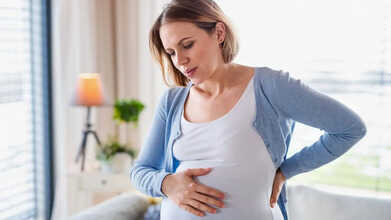
Even during pregnancy, extreme discomfort must not be normalised. (Photo credit: iStock)
Many women silently accept certain health issues as a normal part of life. However, many of these symptoms, such as painful menses and fatigue, can indicate underlying medical conditions that need attention. So, women shouldn’t neglect their health and seek timely help. Dr Payal Narang, Consultant Obstetrician & Gynaecologist, Motherhood Hospital, Pune, in an interview with Health and Me, spoke about the health problems that women often normalise, but that can become catastrophic in the long run.
Read more: Three Health Checks Every Woman Should Do Each Month, According To Experts
Women often juggle multiple responsibilities that include work, family, and household duties and neglect their own health. They are busy due to professional and personal life commitments and often fail to go for regular health check-ups. Moreover, they also experience menstrual problems and ignore symptoms such as painful periods, constant fatigue, heavy menstrual bleeding, and urinary leakage after childbirth. Women should consult a doctor instead of normalising these symptoms, which can delay diagnosis and treatment of important health issues. Paying attention to these signs and seeking medical advice can help women maintain better health and quality of life.

Concerning symptoms that women shouldn’t ignore at all
- Painful menses that can interfere with the daily routine: Many women believe that severe menstrual pain is a natural part of having periods. Period pain is unavoidable. While mild cramps can be common, intense pain that interferes with daily activities may indicate conditions such as endometriosis, fibroids, or hormonal imbalance that need prompt treatment. Persistent pain should be evaluated by a doctor.
- Fatigue: Feeling tired sometimes is normal, especially due to hectic schedules or traveling. However, constant fatigue that does not improve with rest may raise the chances of anemia, thyroid problems, nutritional deficiencies, or even stress. So, beware and pay attention to the symptoms.
- Heavy menstrual bleeding: So, if bleeding lasts more than 7-8 days, requires frequent pad changes, or causes weakness and dizziness, it can be due to hormonal imbalance or fibroids. Heavy bleeding can also increase the risk of anemia if left untreated. So, address this problem with the help of an expert.
- Urinary leakage after childbirth: Urinary leakage after childbirth is a concerning problem quietly accepted by women due to fear of being ridiculed, embarrassment, judgment, or shame. This can take a toll on the woman’s emotional well-being. She will avoid socializing due to the fear of leakage. It is commonly seen in a large number of women because of weakened pelvic floor muscles after childbirth. Various options, such as pelvic floor exercises, physiotherapy, and medical guidance, can help women to manage this condition and improve their quality of life.
Women, listening to the body, don’t just Google and try any remedies on your own. It is necessary to follow expert-recommended guidelines for tackling these problems.
Checking BMI For Body Weight? It Can Wrongly Mark You As Overweight or Obese, Says Study
Credit: iStock
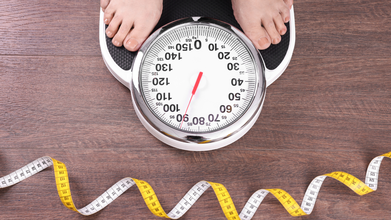
Long considered a standard tool for assessing body weight, Body Mass Index (BMI) may not be as reliable as once believed. A new study shows that relying on BMI can incorrectly classify people as overweight or obese.
When a team of Italian researchers used the gold standard technique of dual-energy X-ray absorptiometry (DXA) to measure body fat in the general population, they found that the traditional WHO-approved BMI classification system misidentified a significant number of people as having overweight or obesity.
How Is The BMI Wrong?
A total of 1,351 adults of mixed gender aged between 18 and 98 years were checked for their body weight using the DXA system.
The results, published in the journal Nutrients, revealed that more than one-third (34 percent) of those with obesity defined by BMI had been misclassified and should be in the overweight category.
For those with an overweight BMI, DXA showed that more than half – 53 percent – had been misclassified – three quarters of those misclassified fall into the normal weight category, while the other quarter should have been classified as having obesity.
The DXA analysis found that the prevalence of overweight and obesity across the cohort was around 37 percent overall (23.4 percent overweight, and 13.2 percent obesity, compared to 26.2 percent and 14.1 percent with BMI).
“In the past few years, there has been a lot of criticism of the BMI system due to its inability to accurately capture body fat percentage or distribution, to correctly categorise weight status based on adiposity,” said Professor Marwan El Ghoch, of the Department of Biomedical, Metabolic and Neural Sciences, University of Modena and Reggio Emilia, Modena, Italy.
Also read: Your BMI Does Not Reflect Your Health: New Study Warns How It Misses A Key Health Aspect
Despite these concerns, BMI as a weight classification system continues to be used in the general population in primary healthcare (i.e., general practitioners) and non-clinical (i.e., policy and health insurance) settings, he added.
The researchers urged revising public health guidelines to consider combining direct body composition or their surrogate measures, such as skinfold measurement or body circumference, with the waist-to-height ratio, with BMI, while assessing weight status in the general population.
Waist-to-Height Ratio May Be More Accurate: The India Story
In January 2025, India revamped its obesity guidelines, and the new approach focused on abdominal obesity and comorbid diseases, rather than just BMI.
According to the redefining team, it was essential to move beyond BMI-only approaches to tackle the ever-growing number of people related to other major health risks. They stated that while BMI can be a screening tool, obesity must be defined by body fat.
“BMI should be used for screening purposes, but obesity should be confirmed ideally by a measure of body fat wherever feasible, or another measure such as waist circumference, WHR, or Waist-to-height ratio,” Dr. Naval Vikram, Professor of Medicine, at AIIMS, New Delhi, was quoted as saying to IANS at the time.
Also read: 41 million children aged 5-19 living with high BMI in India: Study
What Do The New Guidelines Say
It recognizes abdominal fat — closely linked to insulin resistance — as a key factor in the diagnosis. It integrates the presence of comorbidities — such as diabetes and cardiovascular disease — into the diagnostic process.
The revised guidelines also introduce a two-stage classification system, addressing both generalized and abdominal obesity.
Stage 1 Obesity: Increased adiposity (BMI > 23 kg/m²) without apparent effects on organ functions or routine daily activities.
Stage 2 Obesity: Advanced state of obesity with increased BMI more than 23 kg/2, and abdominal adiposity; excess Waist Circumference or Waist-to-Height Ratio.
- Follow Us :


© 2024 Bennett, Coleman & Company Limited