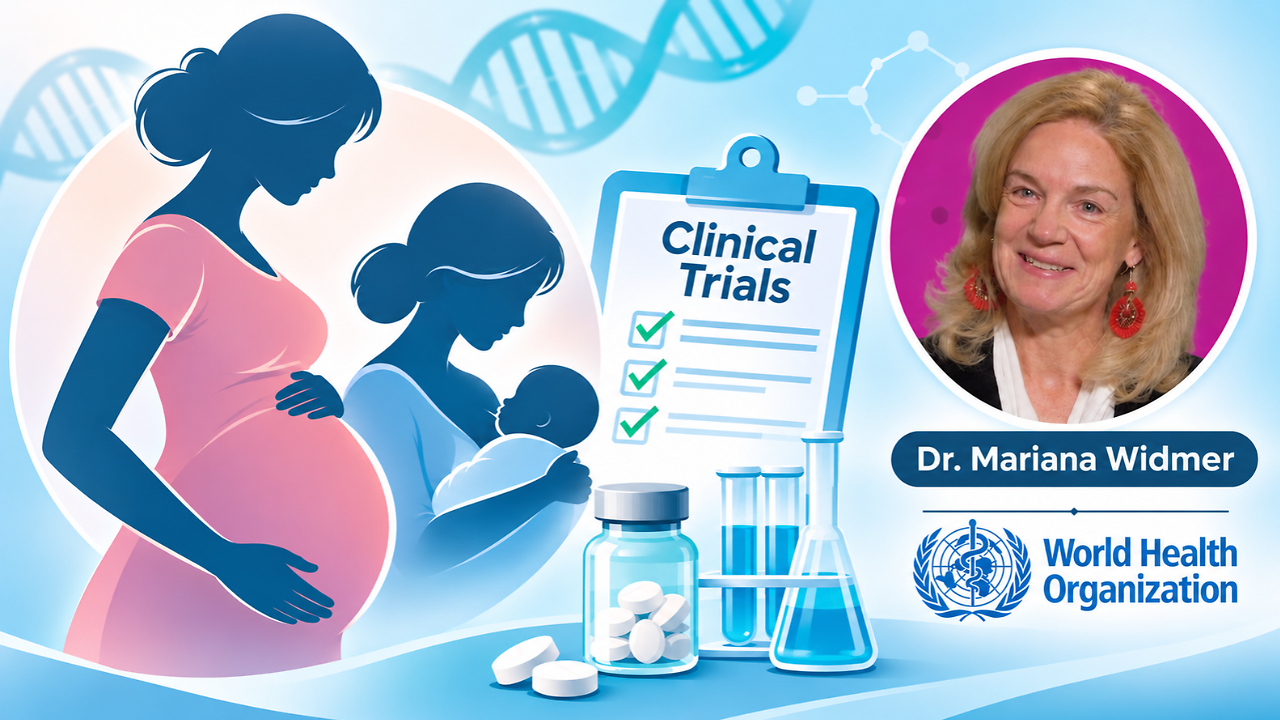
There is a longstanding gap in medical research in pregnancy and lactation which is caused due to systemic exclusion of pregnant and breastfeeding women from clinical trials. The exclusion was driven by an intent to protect women and their babies from adverse effects. But this has led to a paradoxical healthcare issue. In an interview with HealthandMe, Dr. Mariana Widmer, Maternal & Perinatal Health Scientist at the World Health Organization (WHO) and the Human Reproduction Programme (HRP), explains how the agency wants to address the gap in evidence. Medical decisions during pregnancy are critical as the consequences impact two lives. Yet when a pregnant woman needs medication for an infection, a chronic illness or another medical condition, doctors may have limited evidence to guide treatment. Without adequate research, healthcare providers may have to prescribe medicines without knowing how pregnancy alters their effects, the appropriate dose or the potential risks to the developing baby. “Exclusion does not eliminate risk. Instead, it can shift that risk from a carefully controlled and monitored research environment into routine clinical practice, where treatment decisions may need to be made in the absence of adequate evidence,” says Dr. Widmer. Why Pregnant And Breastfeeding Women Are Excluded From Clinical Trials? Also read: US Woman Runs 7 Marathons While Pregnant: How Can It Affect Mother And Baby?Pregnancy changes how the body absorbs, metabolises and eliminates medicines. These changes can affect how a drug works. A medicine could also affect fetal development or a breastfeeding infant. Widmer said, “Historically, the exclusion of pregnant and breastfeeding women from clinical research has largely been motivated by the intention to protect women and their babies from potential harm. However, exclusion does not eliminate risk.” The agency says exclusion does not eliminate risk. Instead, it can shift the uncertainty into routine clinical care, where pregnant women may need to decide whether to take medication without sufficient information about its potential effects. She explained that leaving out expecting and lactating mothers can shift the risk from a safer, carefully controlled and “monitored research environment to routine clinical practice” where pregnant women may need to decide whether to take medication without sufficient information about its potential effects. Without enough evidence, women and their babies are exposed to adverse effects that can be prevented, ineffective treatment, or the consequences of untreated illness. WHO also says that this could lead to off-label prescribing or the use of medicines without adequate evidence about their safety, effectiveness or correct doses during pregnancy and breastfeeding. How Can WHO’s Knowledge Portal Help? Also read: 1 In 2 Indian Women And Nearly 1 In 2 Girls Have Anemia: New ICMR Survey Reveals Burden In Young Children TooAn analysis of clinical trials registered in the WHO International Clinical Trials Registry Platform found that only around 4% of trials over the past decade allowed pregnant women to participate. Widmer said, “There is growing international recognition that pregnant and breastfeeding women should no longer be routinely excluded from clinical research. Yet existing scientific, ethical, regulatory and operational guidance is often dispersed across multiple sources, making it difficult for stakeholders to identify and apply relevant recommendations consistently.” The lack of inclusion can leave women with chronic conditions, infections or pregnancy complications without proven treatment options. The scientist explained, “Through this knowledge portal, WHO and the Human Reproduction Programme (HRP) bring together guidance, tools, resources and examples in one accessible location. The portal is designed to support researchers, product developers, regulators, ethics committees and policymakers in making informed decisions about when and how pregnant and breastfeeding women can be included in clinical research safely.” WHO says pregnant women have the right to access medicines that have been especially studied for their needs. The new knowledge portal aims to change research practices. It covers: Ethics: How to balance risks and potential benefits while protecting participants' rights and well-being. Nonclinical research: What preclinical evidence should be considered before enrolling pregnant or lactating participants. Clinical trial design: How to develop protocols, select participants and consider pregnancy stages. Regulation and surveillance: How regulatory frameworks and safety monitoring can support inclusion. Community engagement: Involving pregnant women, families, patient advocates and communities in research planning. Epidemic preparedness: Supporting inclusion during public health emergencies, when treatment and vaccine decisions may be particularly urgent. Biggest Barriers For Researchers & Pharma Companies Also read: 112 Pregnant Women, 13 Newborns Infected With Measles In US Since 2025: CDCThe expert said that by facilitating access to existing knowledge and advocating for inclusion, WHO and HRP aim to encourage pharmaceutical companies and other stakeholders to consider the evidence needs of pregnant and breastfeeding women from the outset of medical product development, rather than addressing these needs years after products have entered the market. But they face certain hindrances in bringing this into practice. Widmer said, “One of the biggest barriers is the longstanding perception of risk associated with including pregnant and breastfeeding women in clinical research. We need to move towards a more balanced approach that recognizes the importance of protecting women through ethically conducted research, rather than simply excluding them from it.” She said that considering both the risks of research participation and the risks of not generating the evidence is key to implementing this measure. Certain scientific and operational barriers can also complicate designing such clinical trials. Widmer said, “High research costs, limited commercial incentives and insufficient investment remain significant challenges. Overcoming them requires coordinated action across multiple stakeholders, greater alignment in the interpretation and application of existing guidance, increased investment in research and capacity strengthening, and meaningful engagement with women and communities.” She also said that pregnant and breastfeeding women’s autonomy and their ability to make informed decisions about research participation should also be focused upon. What Are WHO’s Goals? WHO hopes that this initiative will encourage more trials to include pregnant and breastfeeding women where appropriate, generate safety and efficacy data earlier, and increase investment in research addressing their healthcare needs. Ultimately, the goal is to make pregnancy less of a blind spot in medicine. The impact will need to be measured not simply by how many people access the portal, but by whether its resources translate into changes in research practice. This could include tracking trial participation, when women are included during product development and how quickly evidence becomes available. Widmer said, “Ultimately, success would mean that when new medicines become available, pregnant and breastfeeding women and their healthcare providers have the evidence needed to make informed treatment decisions, rather than having to wait years for that information to be generated. This is fundamental to equitable access to medicines and better health outcomes for women and their babies.”