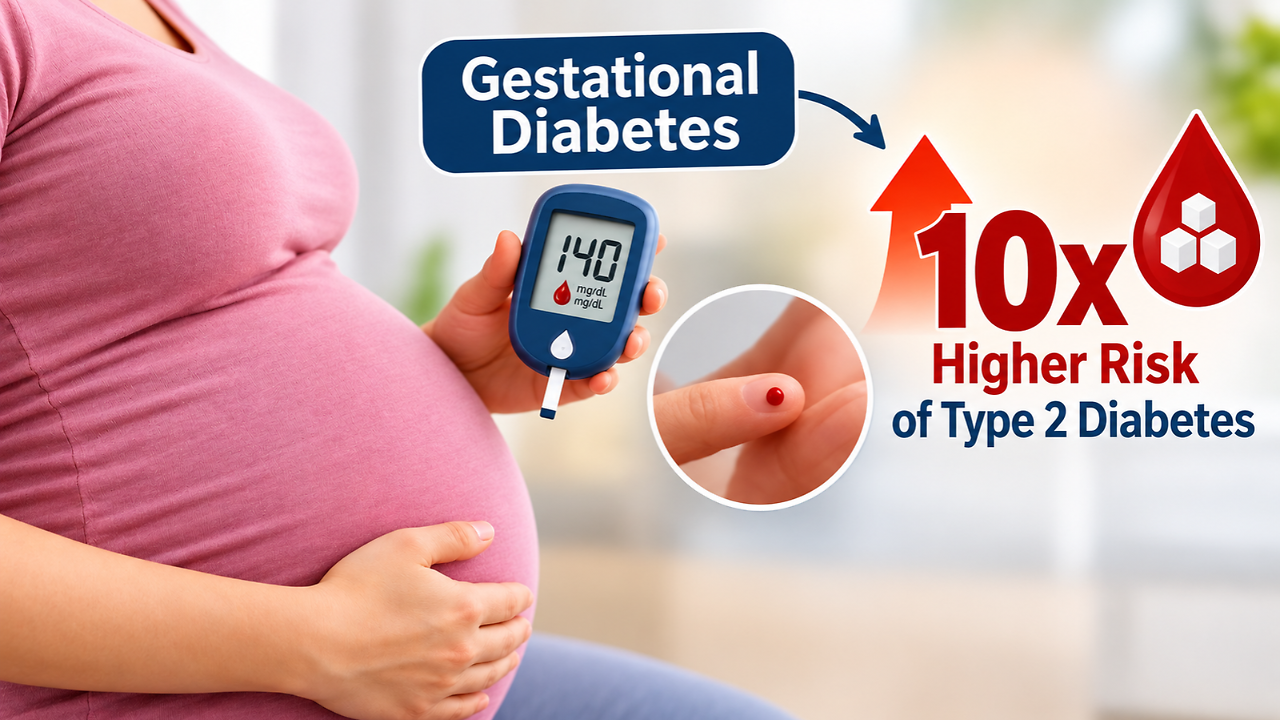
Gestational diabetes is considered a condition related to pregnancy that resolves after childbirth, especially when blood sugar levels return to normal. But a history of gestational diabetes (GDM) may have long-term consequences for a woman long after pregnancy, increasing her risk of developing type 2 diabetes and cardiovascular disease in the future.A new review published in Nature Reviews Endocrinology focuses on the long-term health effects of gestational diabetes for mothers and their children, talking about the importance of postpartum screening, monitoring and lifestyle changes to prevent future disease.Women with a history of gestational diabetes have a seven to 10 times higher risk of developing type 2 diabetes than women who did not have it. Their risk of cardiometabolic disorders, including cardiovascular disease and hypertension, is also higher."Gestational diabetes gives clinicians a window into future health risk at a relatively young age," said Dr Gang Hu, the review's corresponding author and director of the Chronic Disease Epidemiology Laboratory at Pennington Biomedical Research Center."Rather than waiting until diabetes or cardiovascular disease develops years later, we have an opportunity to begin prevention much earlier, when interventions may benefit not only the mother but potentially her child as well," he added.Why Does Gestational Diabetes Increase Future Diabetes Risk?Also read: US Woman Runs 7 Marathons While Pregnant: How Can It Affect Mother And Baby?Gestational diabetes develops when the body cannot produce enough insulin to compensate for the increased insulin resistance that naturally occurs during pregnancy. As a result, blood glucose levels rise.Dr. Narendra BS, Lead Consultant – Endocrinology & Diabetology, Aster Whitefield Hospital, told HealthandMe, “During pregnancy, the placenta produces large amounts of hormones, which act as a natural stress test on the body and significantly increase insulin resistance. In order to keep our blood sugars in a normal range, the pancreas needs to produce even larger amounts of insulin in order to get rid of the extra glucose circulating in the blood. We call this an insulin drive. In women who have gestational diabetes, the pancreatic insulin producing cells (beta cells) may be unable to produce enough insulin in response to this extra drive.” After childbirth GDM may resolve but the risk remains for some time. The review also says that the risk of developing type 2 diabetes is particularly elevated during the first three to six years after childbirth.Dr Dheeraj Kapoor, Chief - Endocrinology, Artemis Hospital, Gurugram, told HealthandMe, “In many cases, blood sugar levels return to normal after the baby is born, but the problem of insulin resistance remains. Pregnancy may not be the only cause, but it could reveal an underlying tendency to develop type 2 diabetes.” Women with a history of GDM also face a higher risk of cardiovascular disease and hypertension, making long-term monitoring important.Can Gestational Diabetes Affect The Child's Future Health?Also read: Nearly 1 In 3 Newborns Did Not Get Hepatitis B Vaccination In The US, Study RevealsBabies who are exposed to high blood glucose levels in the womb have been associated with greater body fat, poor metabolic markers and an increased risk of cardiovascular problems in children as they grow older.Dr Narendra said, “Those babies who are born to a mother who had a high blood sugar level are at a higher risk of developing childhood obesity, impaired glucose tolerance and type 2 diabetes, although this is not certain.”However, researchers say that it is difficult to separate the effects of exposure during pregnancy from shared genetics, maternal health, family lifestyle and environmental factors after birth.Dr Yun Shen, first author of the review and assistant professor at Pennington Biomedical, said, "Gestational diabetes does not develop the same way in every patient.”What Should Women Do After Gestational Diabetes?The review mentioned a clinical trial involving 1,180 women with a history of gestational diabetes. Those who received personalised guidance on weight management, physical activity and healthy eating had a 46% lower incidence of type 2 diabetes than those receiving usual care over an average follow-up of 4.5 years.Even if blood sugar levels return to normal after delivery, it does not mean that future diabetes risk has disappeared. Dr. Kapoor said, “Prevention starts before conception. Women with risk indicators for diabetes, such as weight, family history, and presence of risk factors, should discuss with their health care providers whether they need to be tested.”The expert also said that women should undergo glucose testing after childbirth to check whether blood sugar levels have returned to normal. He added, “It is important to eat a healthy diet of vegetables, whole grains and protein as well as get the screening tests, do pregnancy-safe exercise regularly and check blood glucose levels as instructed during pregnancy. It is also important to have a glucose tolerance test 4 to 12 weeks after delivery and then subsequently every one to three years. Other lifestyle recommendations that may be useful include exercise, breastfeeding, and blood glucose monitoring.”Dr Narendra focused on the importance of maintaining weight during pregnancy. He also said that breastfeeding can lower future diabetes risk.He advised, “During pregnancy you are advised to attain the recommended weight range for pregnancy, be active which includes walking and pregnancy exercise classes and eating a healthy diet with foods high in fibre and nutrients and participate in gestational diabetes screening between 24-28 weeks or as advised by your doctor, earlier if you have risk factors.” He explained further, “Breastfeeding, if possible, and gradually returning to a healthy weight and eating a healthy diet, being physically active, can help you to further reduce the risk of type 2 diabetes.”