
- Health Conditions A-Z
- Health & Wellness
- Nutrition
- Fitness
- Health News
- Ayurveda
- Videos
- Medicine A-Z
- Parenting
Fact Check: Do Heart Attacks Peak in the Early Morning? Here’s What a Doctor Says

Credits: iStock/Canva
If heart attacks feel more common in the early hours of the day, it is not just an impression. Cardiologists have long observed a clear spike in heart attack cases between 4am and 9am, a window when the heart is biologically more vulnerable. In fact, the time between 7am to 11am is called the morning danger hours. In fact, many research, along with many experts, including Robert Manfredini, professor of internal medicine at the University of Ferrara in Italy, also noted that heart attacks risk is 40% during these hours, which could extend up to noon.
To understand what makes one more vulnerable to heart attacks in the morning, Health and Me spoke to Dr. Ashish Agarwal, Director and Unit Head of Cardiology at Aakash Healthcare, this pattern is driven by a combination of the body’s internal clock and everyday lifestyle triggers that converge in the morning.
“The human body follows a circadian rhythm that regulates blood pressure, heart rate, hormone release, and even how flexible our blood vessels are across a 24-hour cycle,” he explains. “The early morning is a particularly sensitive phase for the heart.”
The Morning Hormone Surge and Sudden Cardiac Stress
As the body prepares to wake up, stress hormones such as cortisol and adrenaline are released in higher amounts. These hormones are essential for alertness and energy, but they also increase heart rate and blood pressure.
“This sudden hormonal surge puts an abrupt workload on the heart,” says Dr. Agarwal. “In people with existing coronary artery disease, where blood vessels are already narrowed, this increased demand can overwhelm the heart and trigger a heart attack.”
In simple terms, the heart is asked to work harder at a time when it may already be compromised. For someone who has plaque buildup in the arteries, even a small increase in demand can be dangerous.
Why Blood Is More Likely to Clot After Waking Up
Another critical factor behind early morning heart attacks is the way blood behaves after sleep. Research shows that platelet activity increases soon after waking, while the body’s natural systems that prevent clotting are relatively less active.
“This creates a hypercoagulable state, meaning the blood is thicker and more prone to forming clots,” Dr. Agarwal explains. “If a cholesterol plaque in a coronary artery ruptures during this time, a clot can form rapidly and block blood flow to the heart.”
This is why some people who feel perfectly fine at night may experience chest pain or collapse shortly after waking up. The shift in blood chemistry happens quickly and often without warning.
The Dangerous ‘Morning Surge’ in Blood Pressure
Blood pressure naturally dips during sleep, giving the heart a brief period of rest. However, upon waking, blood pressure rises sharply, a phenomenon known as the morning blood pressure surge.
“In people with hypertension, diabetes, or stiff arteries, this surge can be exaggerated,” says Dr. Agarwal. “The sudden spike in pressure can place stress on fragile plaques inside the coronary arteries and lead to plaque rupture.”
Poor medication adherence makes this risk even higher. Skipping blood pressure medicines or taking them irregularly can leave the heart unprotected during the most vulnerable hours of the day.
Sleep Disorders That Quietly Raise Risk
Sleep quality also plays a major role. Obstructive sleep apnea, a condition where breathing repeatedly stops during sleep, is strongly linked to early morning cardiac events.
“Sleep apnea causes repeated drops in oxygen levels, increases inflammation, and overstimulates the sympathetic nervous system,” Dr. Agarwal notes. “This often leads to morning hypertension and abnormal heart rhythms.”
Even without diagnosed sleep apnea, chronic sleep deprivation, disturbed sleep, or high stress levels at night can leave the cardiovascular system strained when morning arrives.
Lifestyle Triggers That Act as the Final Push
Biology sets the stage, but lifestyle habits often act as immediate triggers. Early morning smoking, sudden intense physical activity right after waking, emotional stress about work, or even rushing through the morning routine can all provoke a cardiac event.
“Dehydration is an underestimated risk,” says Dr. Agarwal. “After hours without water, blood becomes more viscous, increasing the chances of clot formation.”
Cold weather can also play a role. On chilly mornings, blood vessels constrict, adding yet another layer of stress on the heart, particularly in older adults and those with existing heart disease.
What This Pattern Teaches Us About Prevention
The early morning spike in heart attacks highlights the importance of round-the-clock cardiovascular care, not just daytime health awareness.
“Regular monitoring of blood pressure, blood sugar, and cholesterol is essential,” Dr. Agarwal emphasizes. “Equally important are consistent medication use, proper hydration, good sleep hygiene, and stress management.”
Understanding that the heart is biologically more vulnerable in the early hours can help people take smarter precautions, from taking medicines on time to avoiding sudden exertion immediately after waking up.
Heart attacks may strike suddenly, but the risks build silently. Recognizing why mornings are dangerous gives patients and doctors a crucial opportunity to intervene before the heart reaches its breaking point.
Ozempic Burps Decoded: Diabetes Expert Reveals What Doctors Won’t
Credit: Canva
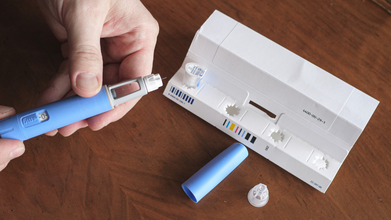
Been wondering what are Ozempic burps and how the drug works inside your body?
In a podcast episode of The Diary Of A CEO, insulin resistance expert Dr Benjamin Bikman explains how the blockbuster GLP-1 drug can alter the digestion process in your body to reduce weight.
Dr Bikman, a Professor of Cell Biology and Physiology at Brigham Young University in Utah explained: "GLP-1 is primarily a satiety hormone. It'll tell the brain that we're done eating and it will slow down the intestines significantly."
Ozempic (semaglutide) is a prescription injectable GLP-1 medication primarily approved for adults with Type 2 diabetes to manage blood sugar levels. However, the drug has gained immense popularity among those trying to lose weight as it can reduce hunger and help people feel full for longer, which forces the body to burn fat deposits to stay functional.
Also Read: UK Toddler Dies Of Rare Kawasaki Disease: What You Need To Know
In clinical trials, people with obesity using semaglutide have shown to lose an average of about 15% of their body weight over 68 weeks. Most people begin to see noticeable results within 8 to 12 weeks of taking the drug.
The official price in India for a once-weekly Ozempic injection pen ranges from approximately ₹8,800 for the 0.25 mg dose to around ₹11,175 for the 1 mg dose per month. Insurance coverage is generally inconsistent for weight loss indications.
How Does Ozempic Change Your Digestion?
According to Dr Bikman, ingested food sits in the stomach and intestines for about six hours on average for digestion. However, when the body receives GLP-1 hormones from injections, the body will considerably slow down the digestion process and food can stay in the body for about 24 hours.
"If we injected ourselves with a GLP-1 drug, which puts an artificial amount of GLP-1 in our body, boom, we shoot it in. Then it would it slows down people's intestines so much that they'll have food sitting in there for 24 hours," he said during the episode.
Experts have previously noted that slowing down the digestion process on purpose using drugs is unhealthy and risky unless done under strict medical supervision to treat a specific condition (such as chronic diarrhea or dumping syndrome as it can lead to gastroparesis.
Gastroparesis is a condition that occurs when the stomach muscles become weak and slow, failing to move food into the small intestine which can reduce nutrient absorption in the body and severe constipation. It can also form a hard mass called a bezoar, which can cause blockages and may require surgery.
What Are Ozempic Burps?
As the food continues to sit in the body, it create bubbles and gas inside the stomach which leads to intense burps also know as Ozempic burps."So, one of the things people talk about is what's called Ozempic burps where they just have this kind of belching bubbling gas because the food is sitting in the stomach for way longer than it's supposed to.
"So, no surprise the people are less interested in food. GLP-1 tells the brain they don't need to eat as much and slows down the intestines," Dr Bikman noted.
READ MORE: Wegovy 7.2 mg: Higher-Dose Weight-Loss Jab Cleared For Launch In UK
Can You Regain Your Ozempic Weight?
Yes. A new BMJ study has found that people who stop using weight-loss medications can regain weight and return their original size within two years.
Researchers have found that those who lose weight using blockbuster GLP-1 drugs such as Ozempic could regain about 0.4kg every month after quitting these treatments. In contrast, those who lost weight through exercise, diet and other factors only gained 0.1kg.
UK Toddler Dies Of Rare Kawasaki Disease: What You Need To Know

Credit: Canva
A two-year-old boy from Bristol, UK has died from a rare heart disease, known to mostly affect children with only flu-like symptoms, on January 8.
Hudson Martin had been diagnosed with Kawasaki disease when he was seven months old and was placed on lifelong medication including aspirin and blood thinners to reduce the risk of clots. Since then, he had been living a normal and happy life, according to father Damien Martin.
He told Bristol Live: "You’d never know anything was wrong from pictures or videos. He bounced off everything. He loved climbing, dancing, music, he was a proper daredevil."
But days before his third birthday, he suddenly collapsed while playing at home. Despite being given CPR by paramedics for an hour, his heart did not restart and he passed away.
Also Read: Ozempic Burps Decoded: Diabetes Expert Reveals What Doctors Won’t
“They did absolutely everything they could,” Damien said. "His heart just wouldn't come back."
What Is Kawasaki Disease?
Also known as mucocutaneous lymph node syndrome, Kawasaki disease causes inflammation in the walls of small to medium-sized blood vessels that carry blood throughout the body which can damage to the heart and blood vessels, mostly in children younger than five years old.
When this happens, the heart doesn't work as well to pump blood to the body and could burst (coronary artery dilation and aneurysms). It also causes swelling in the lymph nodes and mucous membranes inside the mouth, nose, eyes and throat.
Apart from a 102.2 degrees Fahrenheit (39 degrees Celsius) fever that can last for five days, children with Kawasaki may also experience some or all of the following symptoms:
- Rash on the main part of the body or in the genital area
- Swelling and redness of their hands and feet
- Irritation and redness of the whites of their eyes
- Swollen lymph glands in the neck
- Irritation and inflammation of the mouth, lips, and throat
It remains unknown what causes Kawasaki disease in children and if it affects adults.
Diagnosis involves ruling out other diseases that cause the same symptoms which include:
- Scarlet fever
- Juvenile rheumatoid arthritis
- Stevens-Johnson syndrome (a disorder of the mucous membranes)
- Toxic shock syndrome
- Measles
- Some illnesses caused by ticks, such as Rocky Mountain spotted fever
Is It Curable?
While this non-contagious disease can be treated with a mixture of antibodies given through the veins (intravenous immunoglobulin) and aspirin, it remains uncurable. Doctors may also advice steroids if intravenous immunoglobulin is not effective.
After receiving treatment for Kawasaki disease, most children recover fully and long-term follow-up care remains unnecessary. However, children who have suffered through aneurysms or other complications related to the disease will need lifelong monitoring with a cardiologist.
Scabies UK: Can Ivermectin Help Treat Scabies In Children Safely?
Credits: AI Generated
Cases of scabies, a highly contagious skin condition caused by microscopic mites, continue to remain higher than normal across England this winter, according to the latest surveillance data. Recent findings from the Royal College of General Practitioners’ Research and Surveillance Centre indicate that scabies has been spreading more widely than expected over the past few months, with infections steadily increasing through autumn and winter.
Overall, reported cases have stayed above the usual five-year average, with the sharpest rise recorded during the final four months of last year, particularly across northern regions of the country. With scabies infections continuing to climb, concerns are growing around which treatments are safe to use, especially when it comes to children.
What Is Scabies?
Scabies is caused by a microscopic parasite known as Sarcoptes scabiei. This mite burrows into the top layer of the skin to lay its eggs, triggering severe itching and a red, spotty rash that often becomes more intense at night. Although the mites are too small to be seen easily, measuring less than half a millimetre, the body reacts to their saliva, eggs, and waste, leading to an allergic response.
Scabies spreads through prolonged skin-to-skin contact and can affect people of all ages. According to the NHS, it is most commonly transmitted through close household contact, including between partners, family members, people living together, and during sexual activity.
How Is Scabies Spreading In The UK?
UK Health Security Agency surveillance data shows that scabies cases reported through sexual health services remained relatively stable before the COVID-19 pandemic, but numbers began rising sharply from 2022 onwards. Diagnoses increased from 3,393 cases in 2023 to 4,872 cases in 2024, marking a 44 per cent rise.
- London accounted for roughly one-third of all cases recorded in 2024.
- The steepest percentage increase was seen in the North East, where reported cases nearly doubled.
- Young adults aged 20 to 24 made up 41 per cent of diagnoses, while those aged 25 to 34 accounted for 31 per cent.
Scabies UK: What's Behind The Surge In Cases?
Both the UKHSA and the British Association for Sexual Health and HIV (BASHH) suggest several reasons could be driving the surge:
- Increased social interaction and physical contact following the pandemic, after years of reduced mixing.
- Greater awareness of scabies and more testing taking place at sexual health clinics.
- Overcrowded housing and the ongoing cost of living crisis, which may delay access to prompt treatment.
Experts also caution that the actual number of cases is likely much higher, as the available data only reflects diagnoses made in sexual health settings.
Scabies UK: Can Ivermectin Treat Scabies In Children Safely?
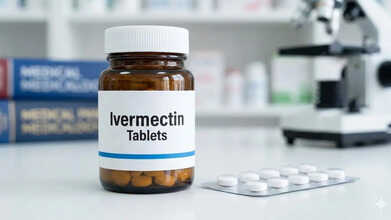
Ivermectin is an oral antiparasitic medicine used to treat scabies by paralysing the mites. It offers a systemic alternative to topical creams and is often considered in cases that are widespread, severe, or involve institutional outbreaks. Because the drug does not kill scabies eggs, a second dose is usually required after seven to fourteen days to target newly hatched mites.
According to the Centres for Disease Control and Prevention, ivermectin is generally well tolerated, improves treatment compliance compared to creams, and has been widely used in mass drug administration programmes, though repeat dosing is important due to its limited effect on mite eggs.
Despite its broad use in programmes targeting conditions such as river blindness, intestinal worms, and scabies, ivermectin has traditionally not been recommended for children weighing under 15 kilograms, largely due to limited safety data. However, researchers revisited this concern following a systematic review and meta-analysis that suggested the drug could be safe even in children weighing as little as 11 pounds.
In a double-blind clinical trial, researchers assessed the safety, effectiveness, and pharmacokinetics of ivermectin in young children with scabies. A total of 240 children weighing between 11 pounds and under 33 pounds in The Gambia, Kenya, and Brazil were randomly assigned to receive ivermectin at doses of 200, 400, or 800 micrograms per kilogram alongside a placebo cream, or placebo tablets alongside permethrin cream. Blood samples were collected on days 0, 3, 7, 10, and 14 to monitor biochemical markers, drug levels, and blood health.
Ivermectin: Only One Serious Adverse Event
The findings showed that ivermectin was effective in treating scabies, with just one serious adverse event reported. This involved a temporary increase in liver enzymes, which returned to normal levels within 32 days. All other side effects possibly linked to the treatment were mild, resolved on their own, and were similar to those seen in children weighing more than 33 pounds.
“Outcomes from the Ivermectin Safety in Small Children trial will hopefully provide greater reassurance that ivermectin can be safely used in children weighing less than 15 kilograms,” said lead study author Kevin Kobylinski, PhD, an honorary visiting research fellow at the University of Oxford with the Mahidol Oxford Tropical Medicine Research Unit in Bangkok, in an ASTMH press release.
- Follow Us :


© 2024 Bennett, Coleman & Company Limited