
- Health Conditions A-Z
- Health & Wellness
- Nutrition
- Fitness
- Health News
- Ayurveda
- Videos
- Medicine A-Z
- Parenting
Feeling Tired And Foggy? It Could Be Vitamin B12 Deficiency
Credit: Canva
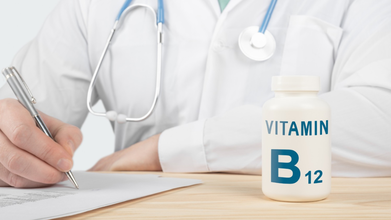
Vitamin B12 might sound like just another nutrient on a health label but it plays a major role in how your body works. The vitamin is crucial in helping the body produce red blood cells, supports your nervous system and essential for making DNA, which is the genetic material inside all your cells.
Symptoms of a Vitamin B12 deficiency often appear slowly. You may not notice them at first, or may blame them on stress, lack of sleep or a busy schedule. However, if this deficiency continues for too long, it could lead to serious health problems.
Here are three key signs to look out for:
1. Ongoing Fatigue and Weakness
Vitamin B12 is extremely crucial for making red blood cells who are responsible for carrying oxygen from your lungs to the rest of your body. Oxygen is what your cells need to produce energy.
Without adequate levels of B12, the body cannot produce enough healthy red blood cells, leading to a condition called anemia.
This can make you feel constantly exhausted, even after getting enough sleep. You may also feel weak, short of breath or find that everyday tasks feel harder to do than they generally are.
If the fatigue feels persistent and does not improve with rest, it is important to seek a consultation with a doctor.
2. Tingling or Numbness in the Hands and Feet
Vitamin B12 is also essential for maintaining the myelin sheath, a protective covering around your nerves. You can think of it like the protective plastic that we see around electrical wires. It helps nerve signals travel quickly and correctly between your brain and the rest of your body.
When B12 levels are too low, this protective layer can become damaged and subsequently lead to nerve signals slowing down or misfiring. This may lead you to feel pins and needles, tingling or numbness in your hands and feet. Some people also experience burning sensations or difficulty with balance.
At first, it may seem minor, such as your foot ‘falling asleep’. But if these sensations happen often or without a clear reason, they should not be ignored. Long-term B12 deficiency can cause permanent nerve damage, which is why early medical consultations are important.
3. Brain Fog, Memory Problems or Mood Changes
Your brain also depends on vitamin B12. It helps your body produce neurotransmitters, which are chemicals that allow brain cells to communicate with each other. These chemicals influence memory, focus and mood.
When B12 levels are low, communication between brain cells may not work as efficiently. You may notice difficulty concentrating, forgetfulness or a feeling of mental fog. Some people feel more irritable, anxious or unusually low in mood.
As these symptoms are common during stressful times, they are often dismissed. However, if you feel mentally different from your usual self for a long period, it is important to investigate the cause.
Why Does B12 Deficiency Happen?
Vitamin B12 is mainly found in animal-based foods such as meat, fish, eggs and dairy products. People who follow vegetarian or vegan diets may need fortified foods or supplements to get enough.
Absorption is also a key factor. Vitamin B12 needs a special protein in the stomach called intrinsic factor to be absorbed properly. Certain medical conditions, medications, or aging can reduce absorption. This means that even if someone eats enough B12, their body may not absorb it efficiently.
When to See a Doctor
If you experience ongoing fatigue, tingling sensations or noticeable changes in memory or mood, consult a healthcare professional. A simple blood test can measure your B12 levels.
The good news is that Vitamin B12 deficiency is usually treatable. Treatment may include dietary changes, oral supplements or, in more severe cases, injections. When identified early, most people recover well.
The Bottom Line
Vitamin B12 supports your blood, nerves and brain. A deficiency can quietly affect your energy, sensation and thinking over time.
Pay attention to persistent changes in your body. If something feels consistently wrong, it is important to seek medical advice. Early detection can prevent long-term complications and help restore your health.
Women's Day 2026: Why Women Fear Taking The Pap Smear Test
Credit: iStock
Vaccinated for human papillomavirus (HPV)? Now, take that Pap smear test. This is the most common advice women hear to prevent the risk of cervical cancer that annually causes around 6,60,000 new cases and around 350,000 deaths worldwide.
However, it's easier said than done for most of the fairer sex.
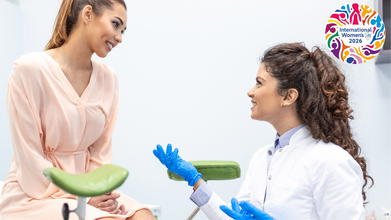
A Pap smear is typically a gynecological examination where a speculum is inserted to collect cells from the cervix.
Although the procedure is brief and generally safe, the discomfort discourages many from getting screened. Fear of pain, anxiety of the results, form the common psychological barriers worldwide, and is followed by shame, cultural attitudes, and concerns with male clinicians.
A study in Iran, published in the BMJ Open journal in January 2024, showed that psychological stress, cultural issues, and fear, along with limited information and health services, were the biggest hindrances to getting Pap tests.
Another research published in the BMC Women's Health in December 2022, focusing on Africa, Asia, and South America, reported that many women avoided or delayed Pap smears because they are afraid the procedure will hurt. Many also reported being embarrassed about the pelvic exam or fear of having a stranger see their private areas. Some also worried that the test could damage the uterus.
A Pap Smear test, however, is proven to be safe and is recommended for every woman above the age of 21 years.
“A Pap smear is a rapid, safe, and painless screening procedure that detects irregular cellular changes well before they become malignant. The ability to treat at this pre-cancerous stage of disease provides an excellent outcome,” Dr. Tirathram Kaushik, Senior Consultant GI, HPB, Gastrointestinal & Thoracic Oncology and Robotic Surgery, HCG Cancer Centre, Borivali, told HealthandMe.
A 2025 study, published in the Journal of Contemporary Clinical Practice, showed that pap smears are excellent at ruling out precancerous risks. It also remains a valuable screening tool where molecular testing is limited.
There are many myths about Pap smears that make people anxious or avoid screening. Let’s clear up the most common ones:
Pap Smears Are Painful
The most common myth regarding pap smear screening is that it is painful, unnecessary, or only required when symptoms are present.The Pap smear procedure, which takes only a few minutes, is often described as uncomfortable. While some feel like a quick pinch, others experience slight discomfort or spotting. Severe pain is not considered normal.
“From an oncology perspective, this myth results in a delay in diagnosis. Cervical cancer often occurs silently in its early stages, without any noticeable symptoms,” Kaushik said.
I Am Healthy, So I don’t need A Pap Smear
Some people believe that if they feel healthy, they don’t need a Pap smear. However, HPV can cause early cervical cell changes, which usually produce no symptoms.While individuals may feel completely well, they still have abnormal cells developing silently. As a result, regular Pap smear screening is important because it detects these changes early -- before they turn into cervical cancer.
“The HPV infection and subsequent changes that lead to cervical cancer happen slowly over many years. HPV infection is also very common, and one in two women is likely to get infected. Regular screening by a Pap smear will help to catch infection early before it can convert into cancer,” Dr. Deepak Jha, Chief - Breast Surgery & Sr. Consultant Surgical Oncology, Artemis Hospitals, told HealthandMe.
I Have Only One Partner, So I don’t need Screening
HPV can be transmitted even in monogamous relationships. Your partner may have been exposed to HPV before, and the virus can stay in the body for years without symptoms.“HPV doesn’t need penetrative sex for infection. It can be transferred if there is any contact of bodily fluid. It’s always safe to test and be assured rather than repent later,” Dr. Jha said.
Testing Means Cervical Cancer
Many women worry that testing automatically means cancer, which is not true. Screening is preventive, and most results are normal.“Even if HPV is detected, it usually indicates a pre-cancerous stage that is highly treatable,” Dr. Parminder Kaur, Consultant Gynecologic Oncologist at CK Birla Hospital, Delhi, told HealthandMe.
Moreover, a Pap smear only screens for cervical cancer; it can’t detect other gynecological cancers such as cervical, ovarian, uterine (endometrial), vaginal, and vulvar cancers. So, screening and appropriate tests for those will be required, irrespective of the Pap smear.
I Am old, So I don’t need A Pap Smear
HPV infection happens at an early age, so merely old age is not enough to stop Pap smear. At least three consecutive negative screens (minimum three-yearly Pap smears or five-yearly HPV screens) would be needed in this situation.I Got Vaccinated, So I Do Not Need A Pap Smear
The vaccine covers the major variants of the HPV virus, but there is still a small probability of cervical cancer due to the uncommon HPV variants.Irrespective of vaccinated status, a woman should go for regular screening between the ages of 25 and 79. Also, if a woman already had HPV exposure before being vaccinated, she would not benefit, the experts said.
“Screening is not just a routine procedure - it is a preventive measure. In the treatment of cancer, early detection alters the disease course, whereas waiting for symptoms to develop means the disease is likely to be already advanced,” Dr. Kaushik said.
Dr Kaur called for more awareness and stated that open discussion are key to help more women take the important screening test.
When To Get Screened
The United States Preventive Services Task Force (USPSTF) and the American Cancer Society (ACS) recommend getting your first Pap test at age 21, followed by Pap testing every 3 years. Even if you are sexually active, you do not need a Pap test before age 21.
- Individuals must start getting Pap tests at age 21. If the result is normal, repeat the test after three years.
- For individuals aged between 30 and 65 years old, doctors are likely to recommend an HPV test along with a Pap test. If both are normal, repeat after five years.
In women older than 65, you don't need to be screened anymore if:
- You have had at least three Pap tests or two HPV tests in the past 10 years, and the test results were normal or negative, and
- You have not had a cervical precancer in the past, or
- You have had your cervix removed as part of a total hysterectomy for non-cancerous conditions, like fibroids.
Ever Felt Pins And Needles On Your Body? Science Tells You Why
Credits: Canva
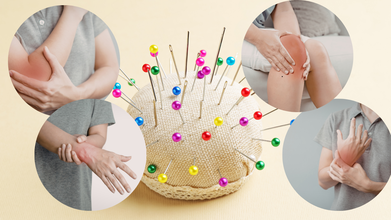
If you have ever slept on your arm and your leg, you might feel like a pins and needles sensation. Some people describe it as a fuzzy numbness, while for others it could be a prickling sensation. Medically, this term is known as paresthesia, which literally translates to "abnormal feeling". In many ways, it actually is the way we feel due to the changes in nerve function.
What Causes this Feeling?
Before we get into that, let's identify how can you take a note of it:
- where you feel the sensation
- how long does the sensation last
- when it first started
- whether or not it is associated with certain positions or postures
Pressure
If you notice that sensation is associated with specific position like sitting or crossing your legs, then it could be related to pressure. When you put pressure on certain areas of your body, it can lead to compression of both, a nerve and its blood supply. Therefore, it temporarily interferes with nerve's function and you experience paresthesia.
Medicines
There are certain medicines for conditions like HIV and cancer can affect nerve function and could lead to paresthesia. Certain supplements too can contribute to paresthesia. A bodybuilding supplement called beta-alanine is also known to cause pins and needles sensation.
As per a 2012 study titled Mechanisms of Itch Evoked by β-Alanine showed that beta-alanine makes your nerves more sensitive, resulting in itching and tingling sensations. There are long-term supplementation of vitamin B6 can also cause you to feel the sensation, especially if you feel numbness in hands and feet.
Other causes
There are other causes which are also related to such feeling:
- stroke or transient ischemic attack
- head or limb trauma
- vitamin B12 deficiency
- multiple sclerosis
- panic attack
- diabetes
- alcohol abuse
- carpal-, cubital-, or tarsal tunnel syndrome
- sciatica
- thoracic outlet syndrome
- sjogren’s syndrome
- systemic sclerosis
- vasculitis
- rheumatoid arthritis
- lupus
- encephalitis
- Lyme disease
- HIV
- heavy metal toxicity
- tumor
Is This Pins And Needles Feeling Dangerous?
This feeling is usually not dangerous, however, if there are underlying cause, it could be worrisome.
Concerning symptoms may include:
- fever
- fatigue
- weakness
- unintended weight loss
- night sweats
- body aches
- changes in vision, hearing, or speech
- changes in appetite or thirst
- dizziness
- light-headedness
- anxiety
- pain from a recent injury to the area
- recent or current illness
What Does This Feel Like?
The pins and needles feels like burning, pricking, itching, and crawling. The most common way people describe this as is "fallen asleep" of a certain body part. It starts as a tingling numbness and becomes a bit dull, and fuzzy feeling.
What can be done when such happens all over your body?
Usually, this sensation is rare in all over your body and it only affects a couple of your body parts. For instance, in vitamin B6-related paresthesia, you feel the sensation in your hands and feel but not in other body parts.
However, if you do feel so, you can first try to reposition yourself, and do some stretches which will help you improve your blood circulation. If changing positions does not work, go see your healthcare professional and consult with them for any medication.
Is Self-Cooling Fabric A Dream Come True? Scientists' New Invention Could Beat The Heat Soon

Credits: Representational image from Canva; University of Alabama
Summers are approaching and what would be better than having your own clothes that keep you cool? Scientists at the University of Alabama at Birmingham in the United States are working on innovations and have also applied for a patent. The research team led by Dr Vinoy Thomas, who is a native of Valakam in Kottarakkara. The findings have been published in the journal of the American Chemical Society.
What Is The New Finding Of Self-Cooling Fabric?
The researchers did not create a brand-new cooling fabric. Instead, they introduced a technique that transforms regular textiles into heat-regulating materials. This is done using two processes: electrospinning and plasma surface modification.
The first technique allows boron nitride nanoparticles to be evenly spread across the surface of the fabric. The second method uses low-temperature plasma (LTP) treatment to embed silicon oxide nanoparticles into the stitching threads.
Both boron nitride and silicon oxide are known for their heat-resistant qualities. By combining these two methods, researchers have created a coating that significantly lowers heat. The nanoparticles act as an added protective layer on the fabric.
Testing showed that the coating remains effective even after five to eight washes and does not affect the fabric’s original properties. Although its performance gradually decreases with repeated washing, researchers suggest applying a double-layer surface coating to improve durability.
Commercial production is expected to start once the patent is approved. In experiments, the coated garments reduced an external temperature of 35°C by 15°C, lowering it to 20°C. According to the researchers, this technique can be applied to any type of fabric.
Unlike earlier studies that focused on inventing entirely new heat-resistant materials, this innovation modifies existing fabrics. The study states that this approach is more efficient and cost-effective than current technologies.
The research team also includes Dr Ranjith Rajanpillai, Dr Kannadasan Appavu, Dr Claudiu T Lungu, and Dr Sanjay K Behura from the Department of Mechanical and Materials Engineering.
Innovations For Sizzling Summers

In Japan, something similar happened when former Sony engineer Hiroshi Ichigaya came up with kuchofuku or "fan jackets". This garment has a built-in feature, powered by battery, which is a fan at the lower back. This helps the circulation of air and to evaporate sweat and cool workers. These jackets are commonly used by construction workers, delivery partners, and people working in factory to combat extreme heat.
- Follow Us :


© 2024 Bennett, Coleman & Company Limited